
Table of Contents
Every enterprise deploying machine learning or generative AI eventually hits the same wall: nobody can say with confidence which models are running, who approved them, or whether they comply with regulations. This is exactly the gap an AI governance platform is built to close.
As AI adoption accelerates across industries, choosing the right governance solution has become less of a nice-to-have and more of an operational necessity. Boards are asking pointed questions about accountability, regulators are drafting new rules faster than most legal teams can track, and engineering teams are quietly deploying copilots and agents without a formal review process. Left unaddressed, this gap between AI ambition and AI oversight tends to surface at the worst possible moment, during an audit, a data incident, or a regulatory inquiry.
What Is an AI Governance Platform?
An AI governance platform is a software solution that helps organizations monitor, control, and enforce policies around how AI systems are built, deployed, and used. Rather than treating oversight as an afterthought, an AI governance platform embeds accountability directly into the AI lifecycle, from model development through production monitoring.
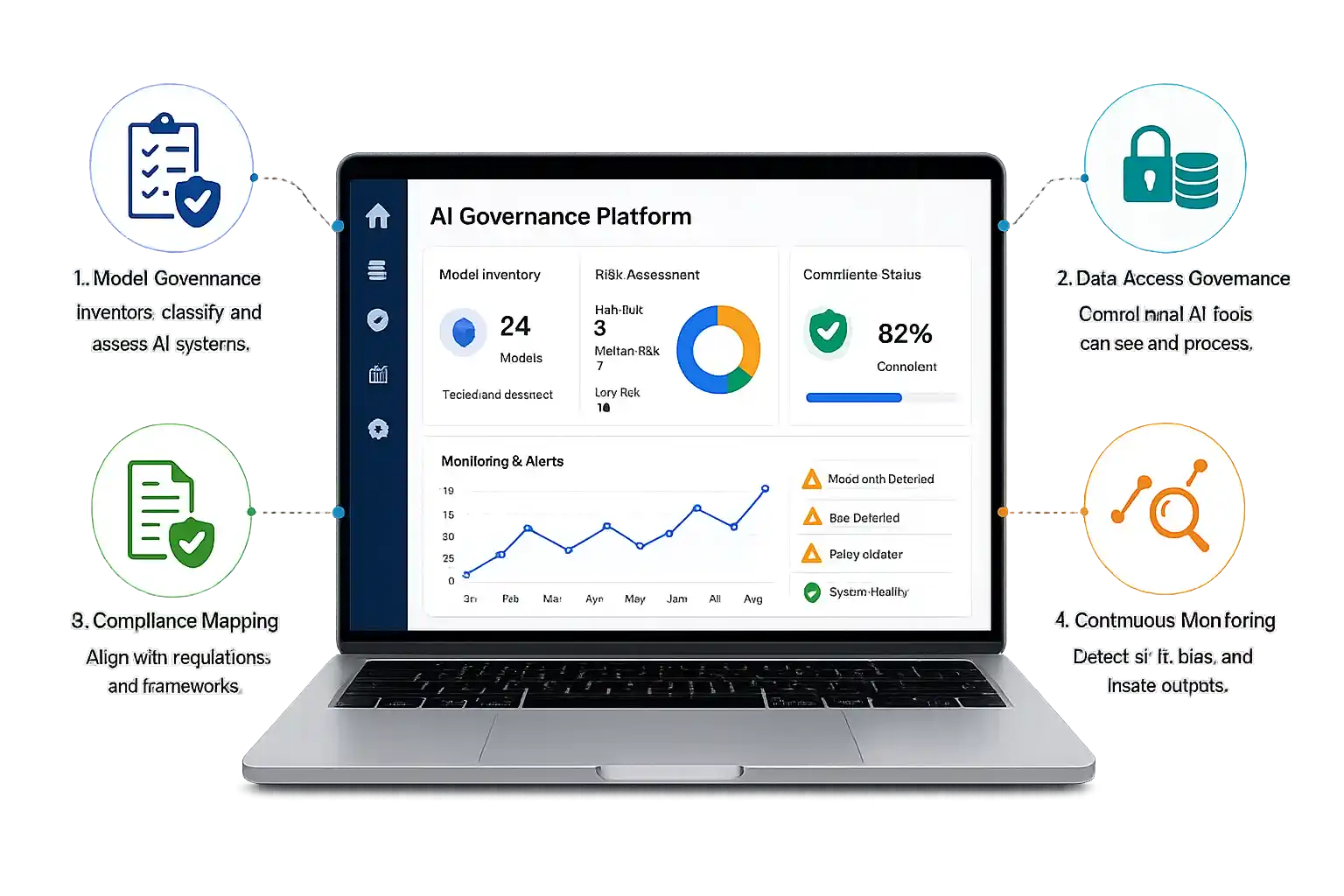
At its core, a strong AI governance platform typically covers four layers: model governance (inventorying systems and classifying risk), data access governance (controlling what AI tools can see and process), compliance mapping (aligning with frameworks like the EU AI Act, NIST AI RMF, and ISO 42001), and continuous monitoring (catching drift, bias, or unsafe outputs before they cause harm).
Why Organizations Need an AI Governance Platform Now
The shift toward generative AI, autonomous agents, and embedded copilots has changed the risk calculus. Legacy oversight processes built for a handful of predictive models simply cannot scale to a workforce experimenting with dozens of AI tools, sanctioned and unsanctioned alike. An AI governance platform addresses this by giving compliance, legal, and engineering teams a shared source of truth.
- Discover shadow AI usage across the organization before it becomes a liability
- Maintain audit-ready documentation for regulators and internal review boards
- Detect bias, drift, and hallucination issues in production models
- Enforce access controls over sensitive data used in AI workflows
- Standardize risk classification across every deployed model or agent
Key Features to Look For in an AI Governance Platform
Not every governance solution is built the same way, and the right fit depends heavily on your organization’s maturity and regulatory exposure. Before evaluating vendors, it helps to define what “good” looks like for your team.
Model Inventory and Risk Classification
A capable AI governance platform should automatically catalog every model and agent in use, then classify each by risk tier so higher-stakes systems get proportionally stronger scrutiny.
Data Access Controls
Look for granular controls over what data AI tools, copilots, and agents can access, process, and surface, since uncontrolled data exposure is one of the most common governance failures.
Monitoring and Explainability
Real-time drift detection, bias monitoring, and human-readable explanations for model decisions all help teams catch problems before they reach end users or regulators.
Regulatory Mapping
An AI governance platform should translate abstract regulatory language into concrete, trackable controls, reducing the manual burden on compliance teams.
7 Leading AI Governance Platforms Compared
Here’s a practical look at seven established AI governance platforms, each broken down using the same framework, overview, key features, and best-fit use case, so you can compare them side by side before you shortlist vendors.
1. IBM watsonx.governance
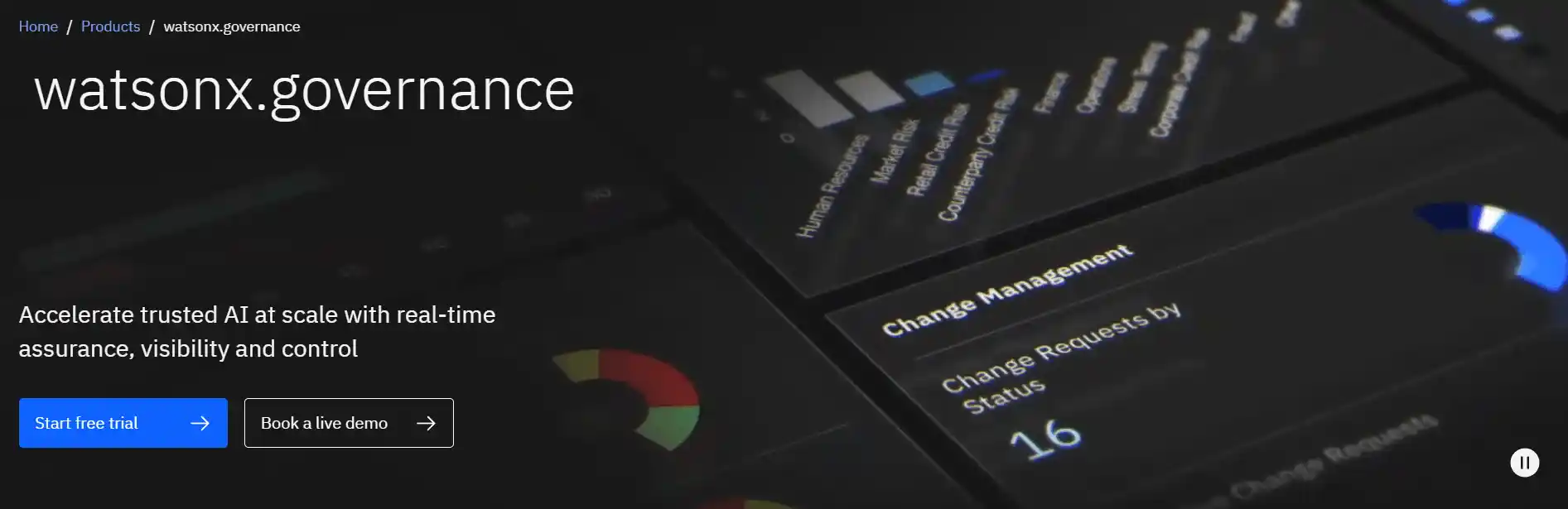
Overview: One of the most complete enterprise AI governance platform options available, combining model risk management, automated documentation, and compliance workflows aligned to major regulatory frameworks.
Key features:
- Automated model documentation and audit trails
- Risk tiering aligned to regulatory frameworks
- Deep integration with the broader IBM data and AI stack
Best for: Large enterprises already invested in the IBM ecosystem that need end-to-end model risk management.
2. Credo AI
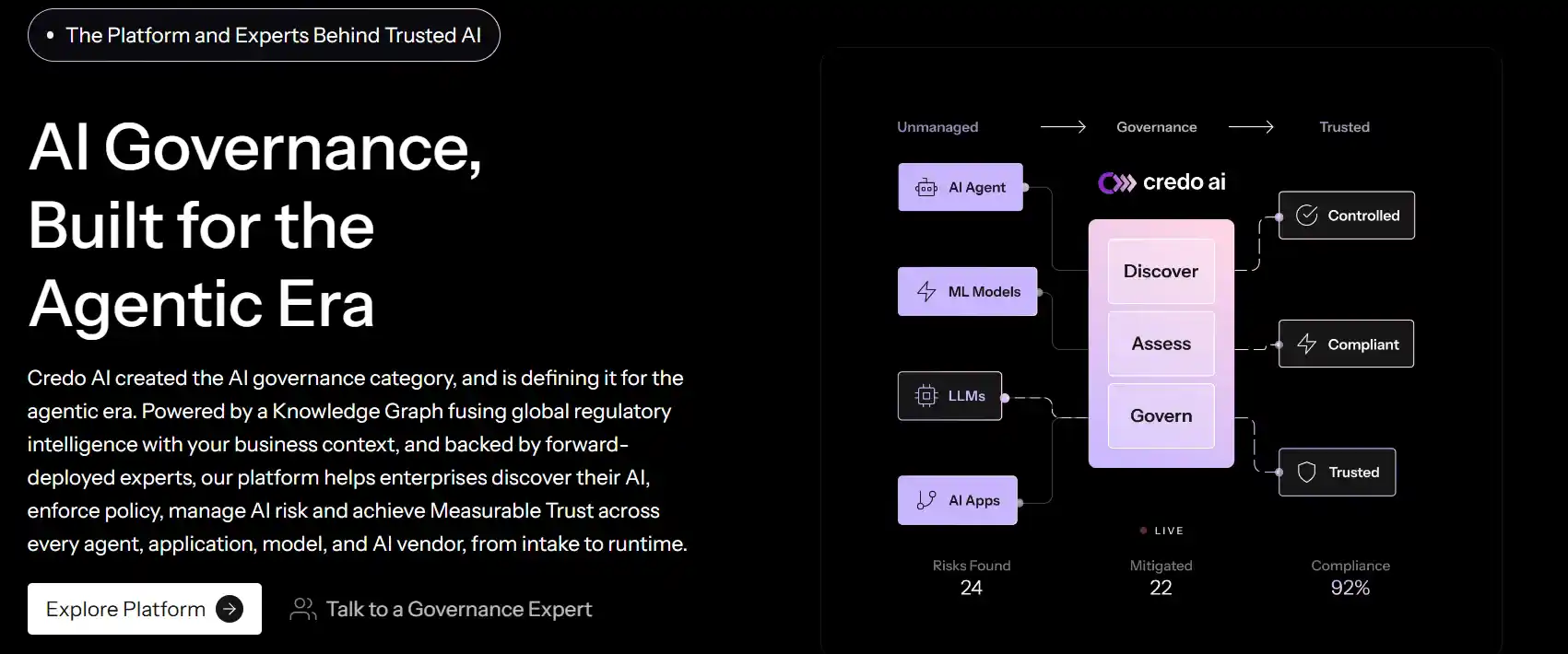
Overview: A governance-focused AI governance platform built around policy-as-code, letting teams encode responsible AI requirements directly into engineering workflows.
Key features:
- Policy-as-code enforcement integrated with CI/CD pipelines
- Automated responsible AI assessments
- Configurable risk scoring per use case
Best for: Organizations that want governance embedded into engineering workflows rather than bolted on afterward.
3. OneTrust AI Governance
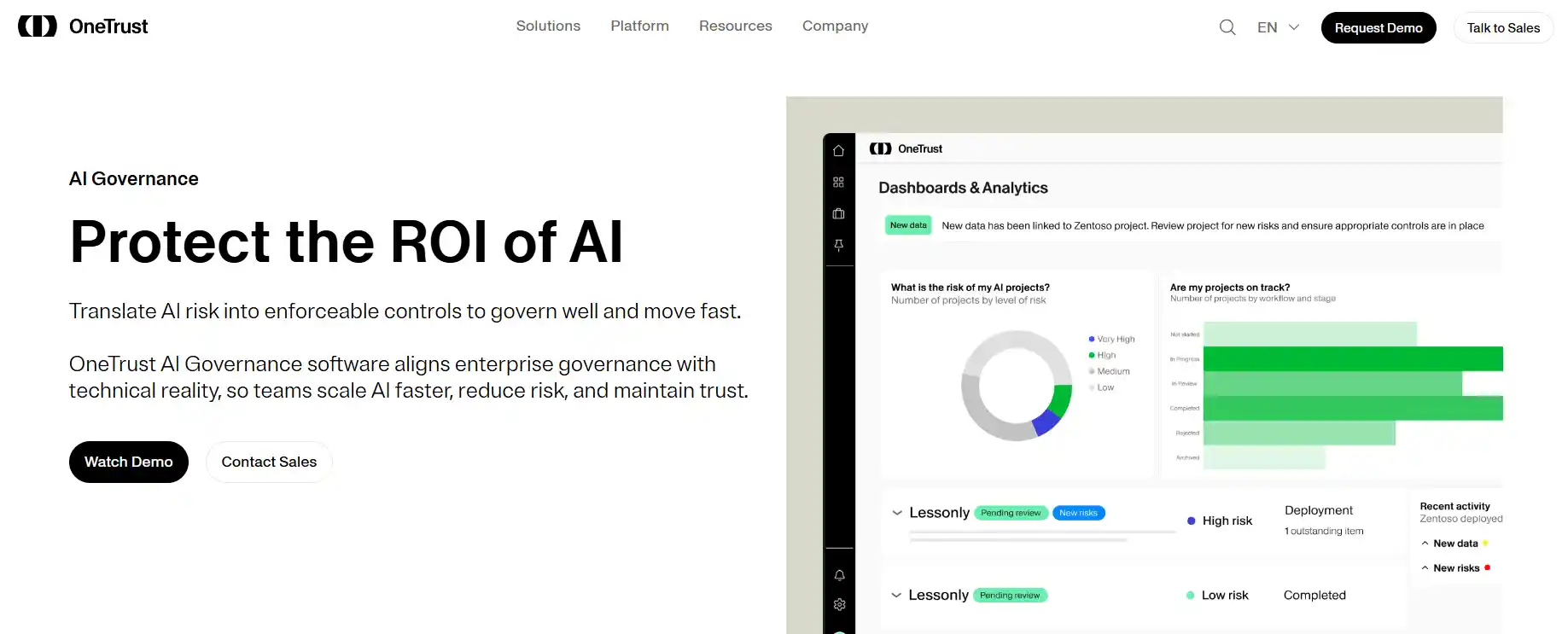
Overview: Extends OneTrust’s established privacy and GRC platform into AI system inventories, risk assessments, and vendor management.
Key features:
- Unified privacy and AI governance workflows
- Third-party AI vendor risk assessments
- Continuous monitoring and AI agent detection
Best for: Teams already using OneTrust for data privacy who want AI oversight in the same platform.
4. Fiddler AI
Overview: An observability-first governance solution focused on real-time monitoring, explainability, and bias detection for models in production.
Key features:
- Real-time drift and bias monitoring for ML and LLM systems
- Model explainability engine for individual predictions
- Coding agent oversight and observability
Best for: Enterprises running production ML and generative AI systems that need continuous performance and safety monitoring.
5. Microsoft Purview

Overview: Extends Microsoft’s familiar compliance tooling into AI-specific oversight, with a strong focus on shadow AI detection and data classification.
Key features:
- Shadow AI and unsanctioned tool discovery
- Sensitive data classification across Microsoft 365 and Copilot
- Native integration with existing Microsoft compliance tools
Best for: Organizations running Microsoft-centric environments that need Copilot-aware oversight.
6. Holistic AI
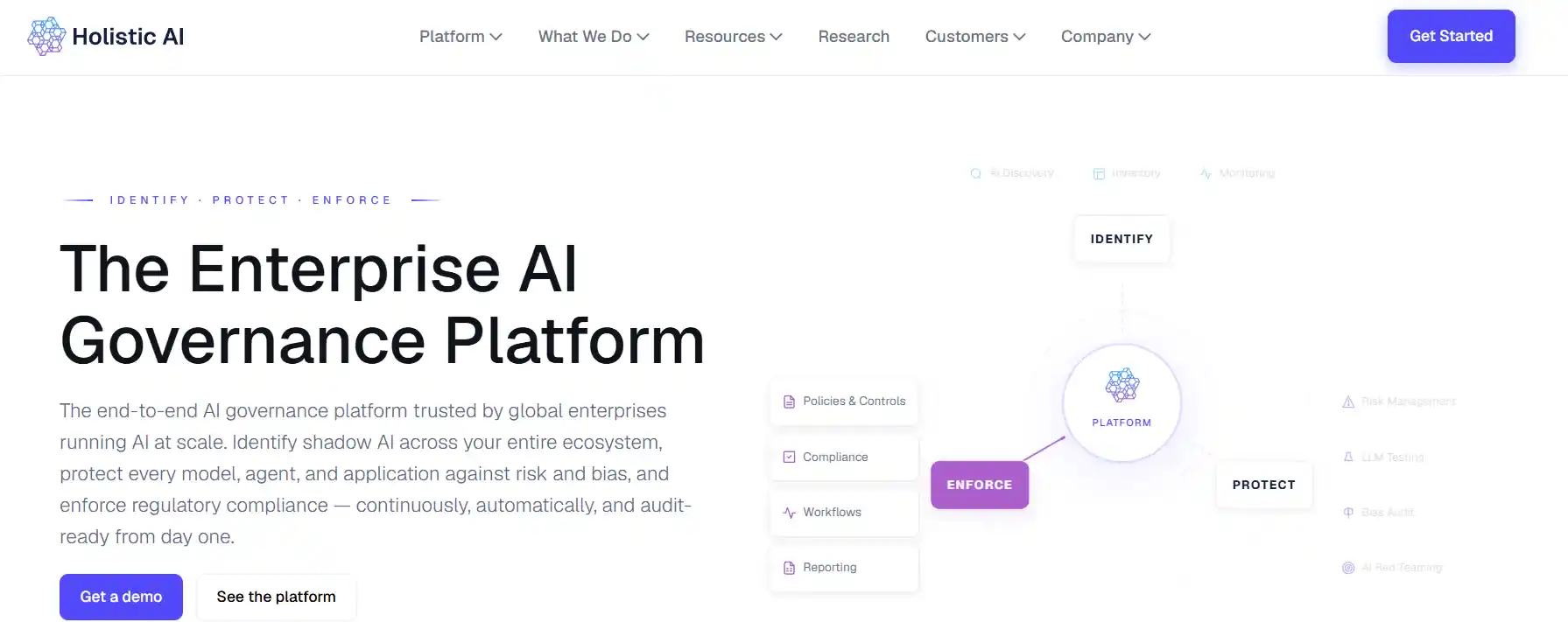
Overview: An AI governance and risk management platform designed to help organizations assess, monitor, and govern AI systems throughout their lifecycle.
Key features:
- AI risk assessment and management
- AI inventory and lifecycle monitoring
- Regulatory compliance and policy management
- Automated documentation and audit reporting
Best for: Enterprises and regulated organizations that need to manage AI risks, meet regulatory requirements, and establish responsible AI governance frameworks.
7. Domo
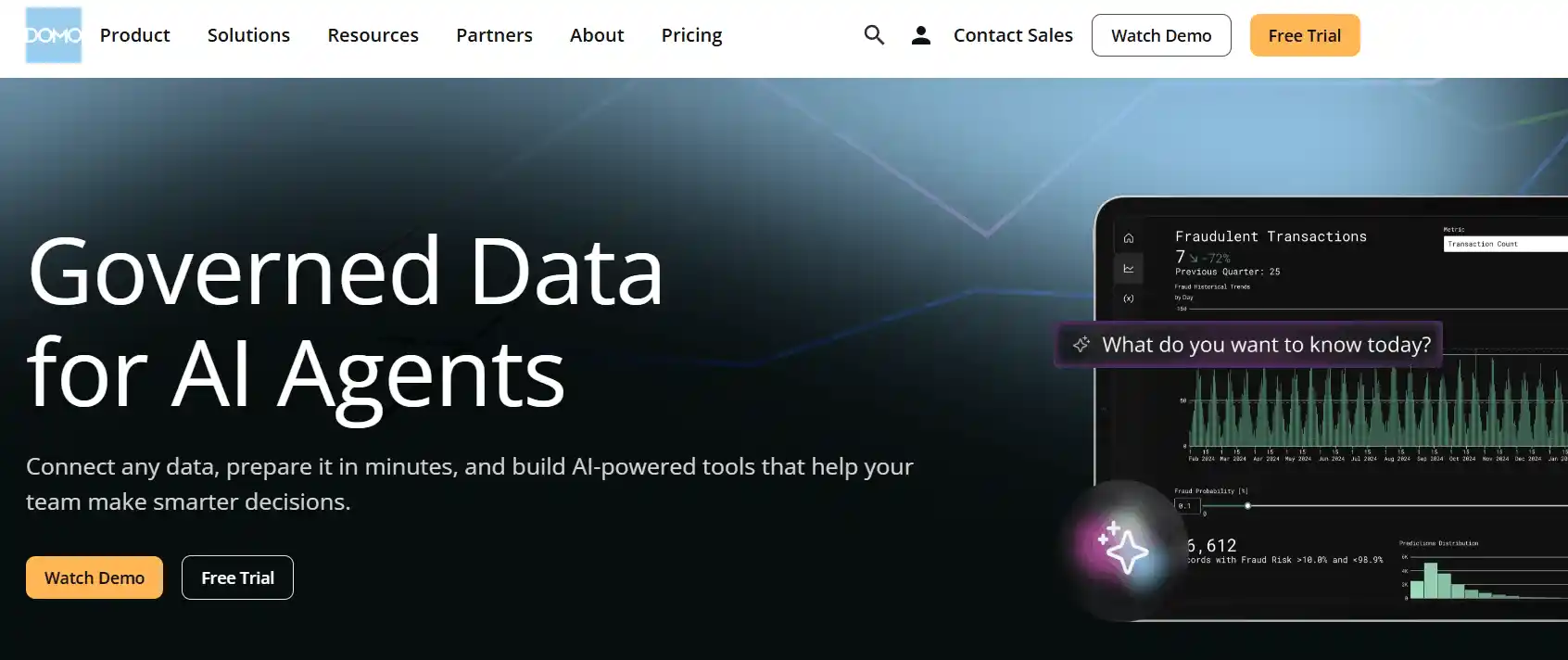
Overview: Takes a distinct, privacy-first architectural approach, transmitting only metadata rather than raw data when connecting to external AI models.
Key features:
- Metadata-only transmission to external AI models
- Secure registration and management of AI model connections
- Lighter-weight entry point compared to full GRC suites
Best for: Privacy-conscious teams that want AI-assisted analytics without exposing raw data to external systems.
How to Choose the Right AI Governance Platform
Use this checklist to evaluate any AI governance platform before you commit to a vendor:
✅ Confirm ownership and reporting lines: decide upfront who reviews alerts, approves exceptions, and owns the audit trail
✅ Map your risk surface first: identify whether your priority is shadow AI on employee devices, model risk in regulated decisions, or compliance documentation for auditors
✅ Match the platform to your industry: the right AI governance platform for a healthcare provider handling PHI looks very different from the right fit for a fintech startup optimizing internal copilots
✅ Insist on a structured pilot or POC: most vendors offer one, and it’s worth using it rather than relying on a sales demo alone
✅ Test against a real model from your portfolio: synthetic demo data rarely surfaces the edge cases that matter
✅ Run the compliance documentation workflow end-to-end: confirm it produces audit-ready output, not just dashboards
✅ Involve both legal and engineering in the evaluation: a governance solution that only compliance loves, or only engineers will use, ultimately fails to deliver organization-wide accountability
✅ Check integration with your existing stack: confirm it connects cleanly with the cloud, MLOps, and identity tools you already run
Getting Started with AI Governance
Rolling out an AI governance platform doesn’t have to be an all-at-once transformation. Many organizations start with a lightweight model inventory, then layer in risk classification, monitoring, and compliance mapping as the program matures. The goal isn’t perfection on day one; it’s building a foundation that scales as AI usage across your organization grows.
It also helps to assign clear ownership early. Governance programs that live solely within legal or solely within engineering tend to stall, while cross-functional ownership, with representation from compliance, data science, and business stakeholders, keeps the program moving and gives it the authority to actually enforce policy when it matters.
A platform can enforce a policy; it can’t write one that actually fits how the organization uses AI, which is the piece our AI governance and compliance services cover.
Frequently Asked Questions
What is an AI governance platform?
It’s a software solution that helps organizations monitor, control, and enforce policies around how AI systems are built, deployed, and used, covering everything from model risk classification to compliance documentation.
How is an AI governance platform different from MLOps?
MLOps focuses on deploying and running models; governance platforms add the compliance, risk, and audit layer on top.
Do I need an AI governance platform if I only use ChatGPT or Copilot, not custom models?
Yes, if usage is org-wide, since shadow AI and data exposure risks apply to third-party tools as well.
What’s the difference between AI governance and data governance?
Data governance covers data quality/security broadly; AI governance adds model risk, bias, and explainability.
How do these platforms detect “shadow AI”?
Typically via network traffic monitoring, API activity logs, and SaaS usage scanning.
What’s the difference between AI governance and AI security tools?
Security tools focus on protecting against attacks; governance is broader, covering policy, risk classification, and compliance documentation.