
Table of Contents
Is healthcare evolving fast enough to meet your needs? In recent years, the health care field has undergone a fundamental transformation, driven by technological advances and the growing need for effective, available, and affordable services. A standout innovation in this shift is telehealth. The benefits of telehealth are reshaping how patients and providers interact, promoting a noticeably higher quality of care. This article explores the benefits of telehealth and how it is driving smarter, more connected healthcare.
“The future of medicine is in your smartphone.” Dr Eric Topol, cardiologist and digital health expert
At a glance, this article covers:
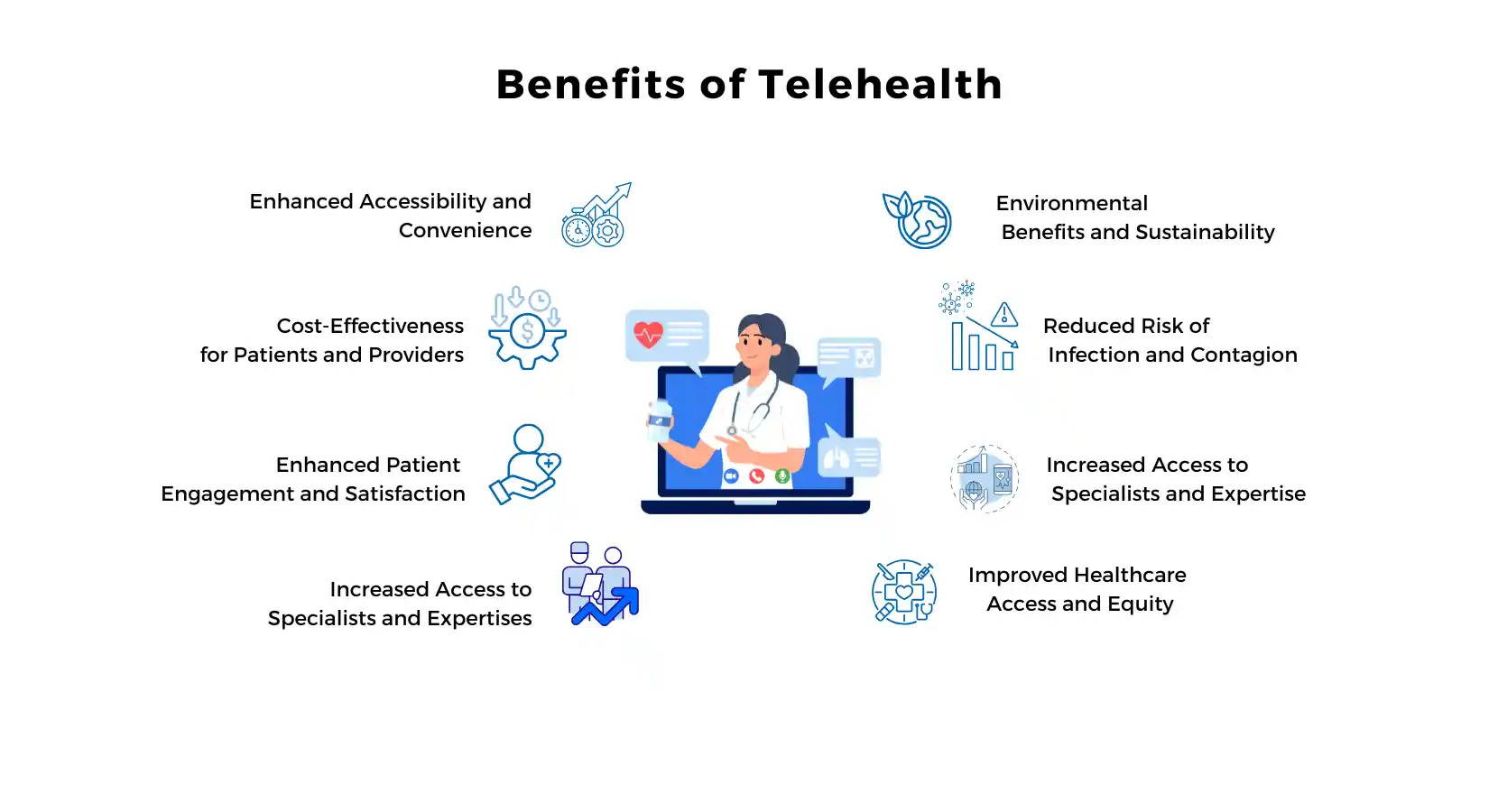
- Enhanced accessibility and convenience
- Cost-effectiveness for patients and providers
- Improved healthcare access and equity
- Enhanced patient engagement and satisfaction
- Efficient chronic disease management
- Increased access to specialists and expertise
- Reduced risk of infection and contagion
- Environmental benefits and sustainability
Understanding Telehealth
Telehealth is the use of digital communication tools, including video conferencing, mobile health apps, remote monitoring, and electronic health records, to deliver healthcare services remotely. It closes the distance between patients and doctors, allowing medical consultations, follow-ups, and chronic disease management without a face-to-face visit. The benefits of telehealth are especially evident in remote or underserved areas, where patients previously had little access to consistent care. In short, the benefits of telehealth include improved accessibility, convenience, and stronger healthcare equity, making it an essential part of modern healthcare delivery.
Benefits of Telehealth
1. Enhanced Accessibility and Convenience
One of the clearest benefits of telehealth is improved accessibility. A shortage of hospitals and doctors in rural and remote areas can make it difficult for patients to get timely treatment. Telehealth breaks down this barrier, connecting patients with healthcare professionals regardless of distance. It’s equally valuable for people with mobility challenges, caregivers with limited time, or anyone who would simply rather not sit in a waiting room.
With virtual appointments, patients get medical guidance without long drives or time lost in reception. This convenience boosts patient participation and treatment compliance, leading to better outcomes overall.
Who benefits most from this accessibility:
- Patients in rural or remote areas with few nearby providers
- People with mobility challenges or limited transportation
- Caregivers and parents balancing tight schedules
- Patients managing multiple, frequent follow-up visits
2. Cost-Effectiveness for Patients and Providers
Among the most practical benefits of telehealth is the money it saves everyone involved. Traditional in-person visits come with costs for transportation, parking, and time off work. Telehealth removes most of these expenses, and virtual consultations are typically priced lower than in-person appointments.
For providers, telehealth also reduces overhead by cutting reliance on physical clinic space, utilities, and administrative staffing. Leaner digital operations mean healthcare practices can pass some of those savings on to patients.
Where the savings show up:
- No transportation, parking, or fuel costs for patients
- Less time away from work per appointment
- Lower overhead for providers (rent, utilities, front-desk staff)
- Reduced no-show rates, since virtual visits are easier to keep
3. Improved Healthcare Access and Equity
Closing the gap between rural and urban healthcare is one of the more meaningful benefits of telehealth. It gives people in underserved areas a level of care comparable to what residents of major cities receive, opening doors for populations that previously had limited access to specialty medical services.
Many telehealth platforms also offer multilingual support and culturally responsive care, ensuring that different communities get services suited to their needs. This inclusivity builds trust and helps close long-standing health disparities.
How telehealth narrows the equity gap:
- Connects underserved communities to specialists otherwise out of reach
- Offers multilingual and culturally responsive care options
- Reduces reliance on scarce local healthcare infrastructure
- Extends specialty care to patients who previously had none
4. Enhanced Patient Engagement and Satisfaction
Patient engagement is central to positive health outcomes, and it’s another area where the benefits of telehealth stand out. Continuous communication and easy follow-up between patients and providers means questions get asked, symptoms get reported, and guidance arrives faster.
That steady back-and-forth improves patient satisfaction, since people feel more connected throughout their care. Telehealth also equips patients with educational resources and self-monitoring tools, supporting more informed health decisions.
What drives stronger engagement:
- Faster response times between visits
- Easy channels to report symptoms or ask questions
- Access to educational resources and self-monitoring tools
- A more collaborative, ongoing relationship with providers
5. Efficient Chronic Disease Management
Chronic conditions like diabetes, hypertension, and heart disease require ongoing assessment. This is where the benefits of telehealth for chronic care really show: remote monitoring and virtual check-ins let patients track vital signs, like blood pressure, blood sugar, and heart rate, and share that data with their doctor in real time.
This kind of continuous oversight supports earlier detection of complications and faster intervention. It also reduces unnecessary hospital visits, lowering infection risk and easing pressure on healthcare facilities.
Conditions that benefit most from remote monitoring:
- Diabetes (blood sugar tracking)
- Hypertension (blood pressure monitoring)
- Heart disease (heart rate and rhythm checks)
- Chronic respiratory conditions requiring regular check-ins
6. Increased Access to Specialists and Expertise
Specialized medical care often depends heavily on geography. Telehealth changes that equation, connecting patients with specialists well beyond their local area. This is one of the more underrated benefits of telehealth for anyone seeking a second opinion or specialized treatment.
Cancer patients can consult leading oncologists through telemedicine without traveling long distances. Telepsychiatry brings mental health support to patients in remote locations. To maintain compliance and scale these virtual care networks across state lines, providers rely on specialized behavioral health credentialing services to verify practitioner qualifications efficiently. Ultimately, broader access to specialized expertise is a genuine leap forward for people managing complex health conditions.
Specialties commonly delivered through telehealth:
- Oncology consultations and second opinions
- Psychiatry and behavioral health
- Endocrinology for chronic hormonal conditions
- Dermatology, using photos and video for visual diagnosis
7. Reduced Risk of Infection and Contagion
The COVID-19 pandemic underscored how important it is to limit physical contact in medical settings. Telehealth proved essential here, making virtual consultations possible and reducing the need for in-person visits during a period when that mattered most.
Even now, this remains one of the practical benefits of telehealth for patients with chronic illness or weakened immune systems, who can avoid crowded waiting rooms while still getting the care they need.
Who gains the most protection:
- Immunocompromised patients
- Elderly patients with higher infection risk
- Patients managing chronic illness with frequent visits
- Anyone seeking care during flu season or local outbreaks
8. Environmental Benefits and Sustainability
Beyond direct healthcare gains, the benefits of telehealth extend to sustainability. Fewer in-person visits mean less transportation-related emissions and a smaller overall carbon footprint for the healthcare system.
In cities dealing with heavy traffic and pollution, this environmental upside is especially meaningful. Virtual care lets healthcare systems support a greener future without compromising on quality.
Environmental gains at a glance:
- Reduced patient and staff commuting
- Lower carbon footprint per healthcare visit
- Less demand on physical facility resources
- Support for broader sustainability goals in healthcare systems
Future Prospects and Innovations in Telehealth
As technology advances, the advantages of telehealth keep changing. New developments like virtual reality (VR), augmented reality (AR), and artificial intelligence (AI) have the potential to significantly transform telehealth. Chatbots and virtual assistants driven by AI can improve patient triage and support, and VR and AR can give medical personnel immersive training experiences.
Additionally, the incorporation of blockchain technology addresses cybersecurity issues by guaranteeing safe data sharing and patient privacy. The advantages of telemedicine will increase as these developments take place, thereby improving the intelligence and effectiveness of healthcare.
Conclusion
The benefits of telehealth are hard to overstate, giving patients and providers smarter, more flexible ways to manage healthcare. From stronger patient engagement and chronic disease management to real cost savings and accessibility, telehealth is reshaping the industry from the ground up. It supports healthcare equity, operational efficiency, and environmental sustainability all at once, making it far more than a temporary fix.
Looking ahead, wider adoption of telehealth will be essential to meeting society’s changing healthcare needs. By embracing digital health tools, we can build a system that’s more patient-centered, efficient, and inclusive. The benefits of telehealth are opening the door to a future where quality healthcare is within reach, regardless of location or circumstance.
FAQs
Is telehealth as effective as in-person visits?
For many routine consultations, follow-ups, and chronic care check-ins, telehealth works just as well, though some conditions still need a hands-on exam.
Does insurance cover telehealth appointments?
Most major insurers now cover telehealth, but coverage and copays vary by plan, so it’s worth confirming with your provider first.
What are the biggest benefits of telehealth for rural patients?
Rural patients gain the most from telehealth, since it removes long travel times and connects them to specialists who simply aren’t available locally.
What happens if my telehealth appointment gets disconnected?
Most platforms let you reconnect immediately or reschedule, and providers typically have a backup contact method like phone.