

Table of Contents
Real estate has always been relationship-driven and paperwork-heavy. That’s changing fast, and it comes down to how AI is revolutionizing real estate at nearly every step of the buying and selling journey.
From the moment a buyer starts scrolling listings to the day they close on a home, AI is quietly working behind the scenes. It’s making the process faster, more personalized, and more data-driven than ever before, replacing guesswork with patterns pulled from real user behavior and property data.
Brokerages, proptech platforms, and property managers are all adopting these tools, but at different stages and for different reasons. Some are focused on lead conversion, others on pricing accuracy, and others on cutting down manual work in listing creation.
The sections below break down exactly how AI is revolutionizing real estate across search, imagery, tours, pricing, and customer service, so you can see where the impact is strongest.
Key Ways: How AI is Revolutionizing Real Estate
Personalized Property Recommendations Powered by AI
Generic filters like price and location only go so far. AI recommendation engines learn what buyers actually respond to by studying behavior, not just stated preferences. Every click, saved listing, and scrolled photo tells a story, and AI systems use that behavior to build a preference profile for each user. Instead of buyers wading through hundreds of irrelevant listings, AI narrows the field intelligently, surfacing homes that match patterns they may not even consciously recognize. This is one of the clearest signs of how AI is revolutionizing real estate search behavior.

- Tracks clicks, saved listings, and viewed photos to build a preference profile
- Surfaces listings matching subtle patterns, like natural light or layout style
- Improves lead quality and keeps buyers engaged longer
Natural Language Processing in Property Listings
Search used to stop at structured data like square footage and bathroom count. NLP goes further, reading the story inside a listing description to surface details filters miss. Phrases like “sun-drenched home office” or “quiet cul-de-sac” carry meaning that traditional search fields can’t capture, and NLP extracts these cues to turn them into searchable, comparable data points. Beyond keywords, it also picks up tone, distinguishing a listing that sounds move-in ready from one that hints at needed renovations. It’s another clear example of how AI is revolutionizing real estate search accuracy.
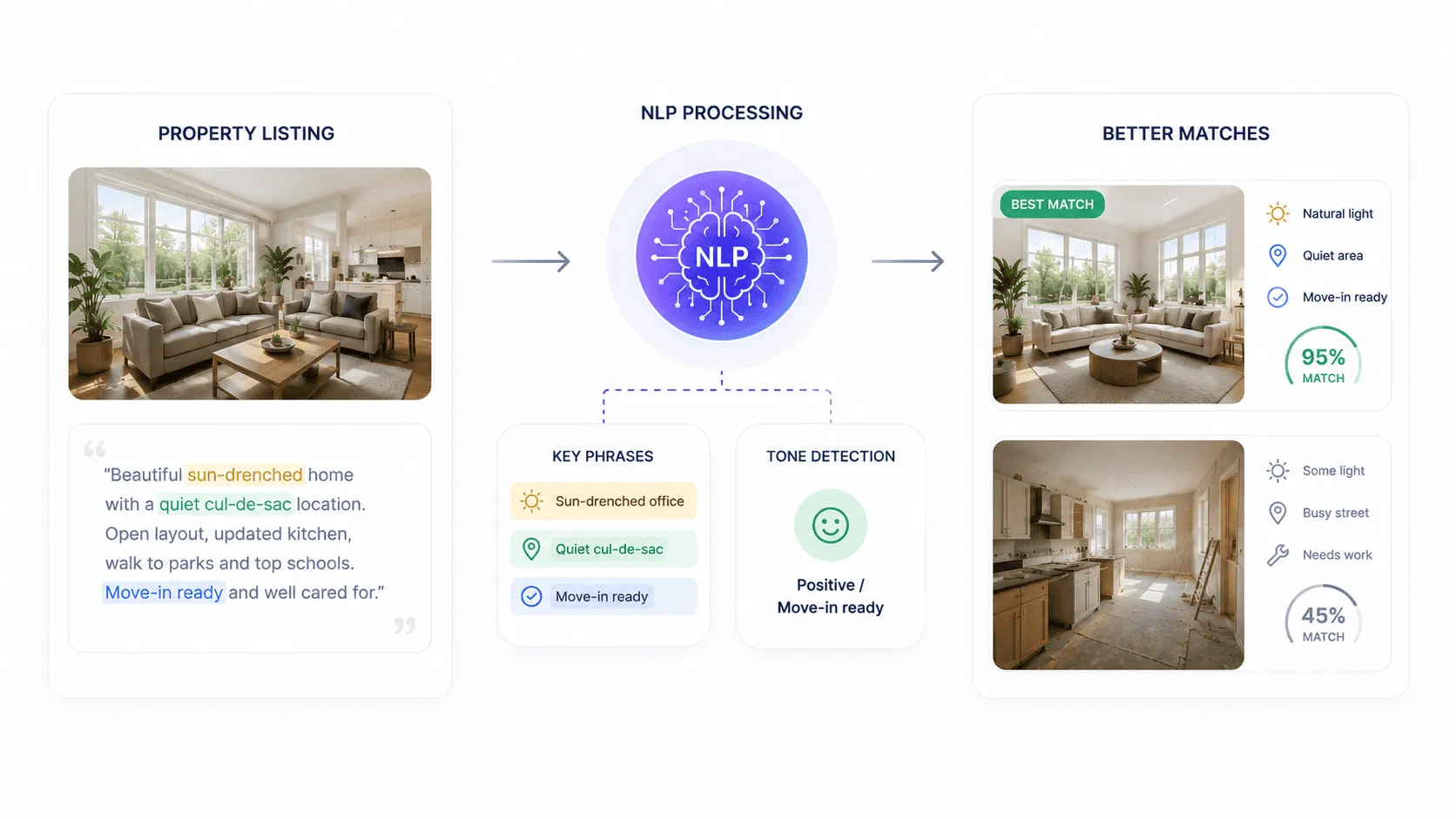
- Extracts descriptive phrases like “sun-drenched office” or “quiet cul-de-sac”
- Detects tone to distinguish move-in ready homes from fixer-uppers
- Matches buyers to homes that fit expectations, not just budget
Computer Vision for Smarter Property Listings
A listing’s photos often make the first impression, and computer vision makes sure that impression holds up. By scrutinizing property images, these systems can automatically identify rooms, features, and layouts without manual tagging, speeding up how listings get built and improving how well they can be searched by feature. The same technology also catches problems before they reach buyers, flagging blurry uploads, duplicates, or photos that don’t match the listing description. This reflects how AI is revolutionizing real estate photo standards industry-wide.
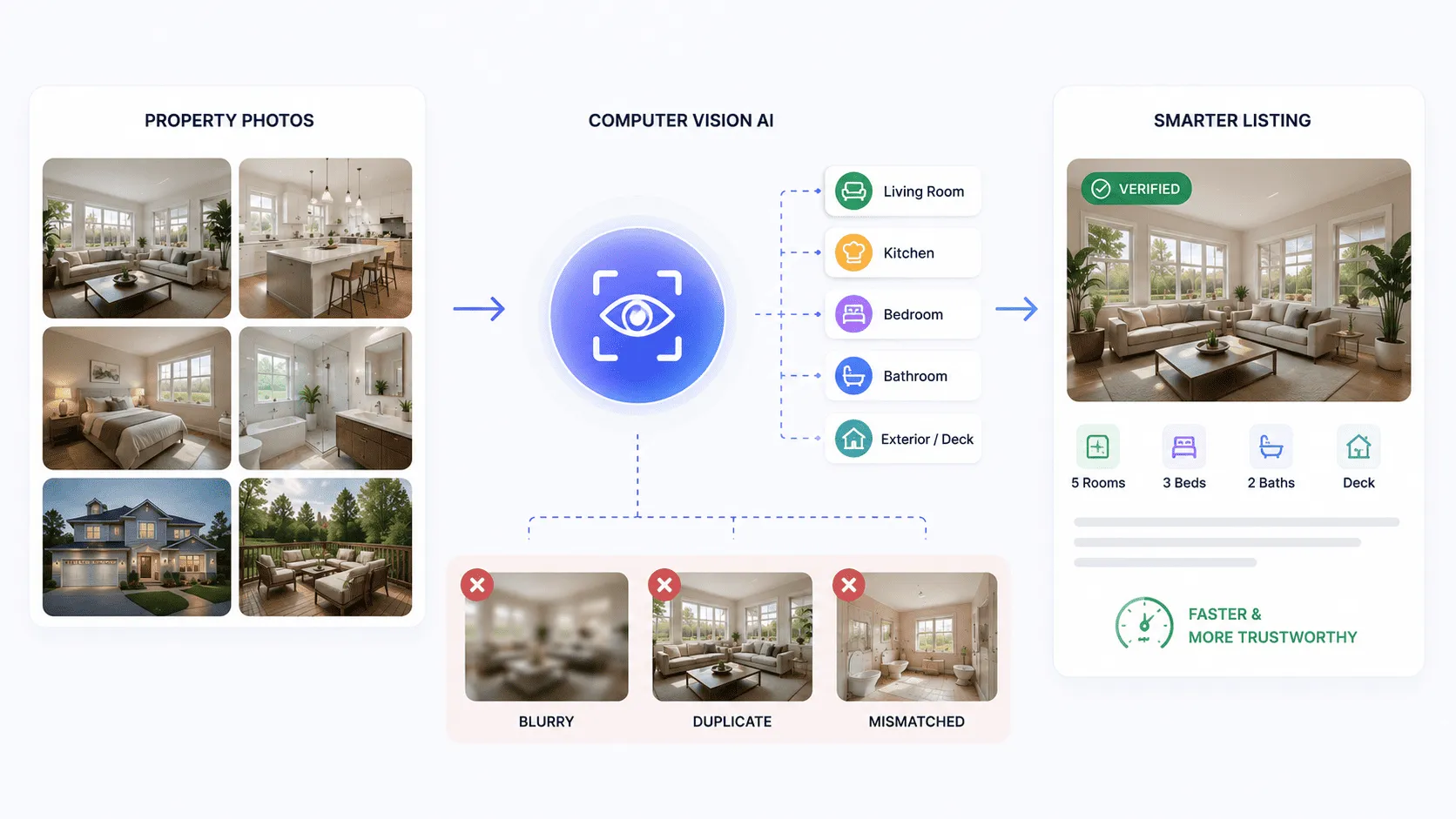
- Automatically tags rooms, layouts, and features
- Flags blurry, duplicate, or mismatched photos
- Speeds up listing creation and keeps platforms trustworthy
AI-Driven Virtual Tours and Staging
Physical walkthroughs are no longer the only way to experience a home before committing. AI-powered virtual tour tools let buyers explore a property remotely, room by room, at their own pace, which is especially valuable for out-of-town buyers trying to shortlist homes before investing time in in-person visits. Empty rooms are also hard to picture as a home, and AI virtual staging solves that by digitally furnishing vacant spaces, giving sellers a polished presentation without the cost of physical staging. This is a strong illustration of how AI is revolutionizing real estate showings.
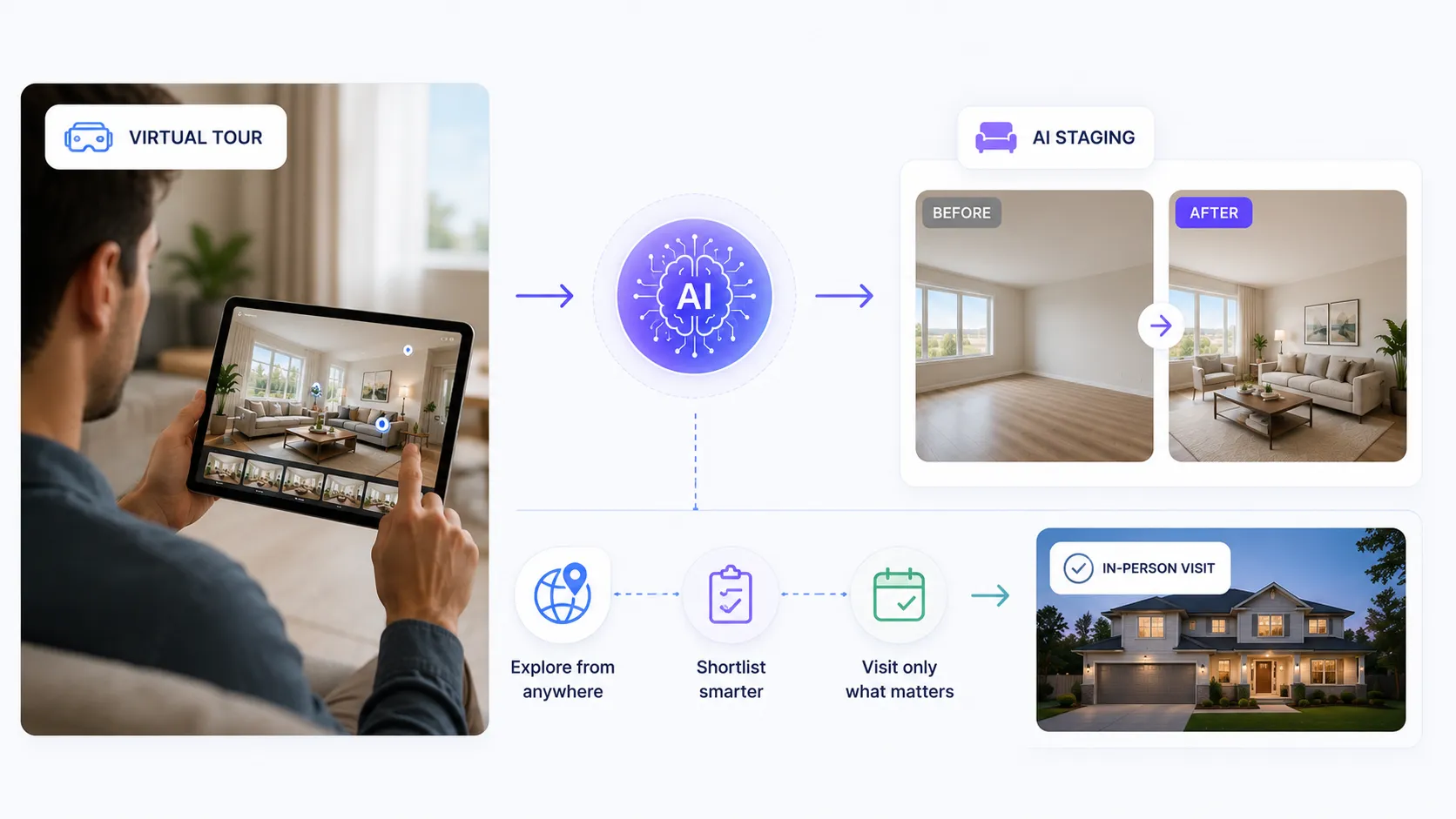
- Enables room-by-room virtual walkthroughs for out-of-town buyers
- Digitally stages vacant properties at a fraction of physical staging cost
- Helps buyers shortlist before scheduling in-person visits
Predictive Analytics for Pricing and Investment
Pricing a property well is part art, part science, and AI is tilting that balance further toward data. Automated Valuation Models, or AVMs, analyze comparable sales, property characteristics, and market conditions to generate pricing estimates far faster than manual appraisals. While they aren’t a replacement for a professional appraisal, they give agents and buyers a strong starting reference point. Beyond individual pricing, AI models can also identify broader market patterns, helping investors anticipate where demand might be heading before it becomes obvious in traditional reports. It’s a strong example of how AI is revolutionizing real estate pricing and investment decisions.
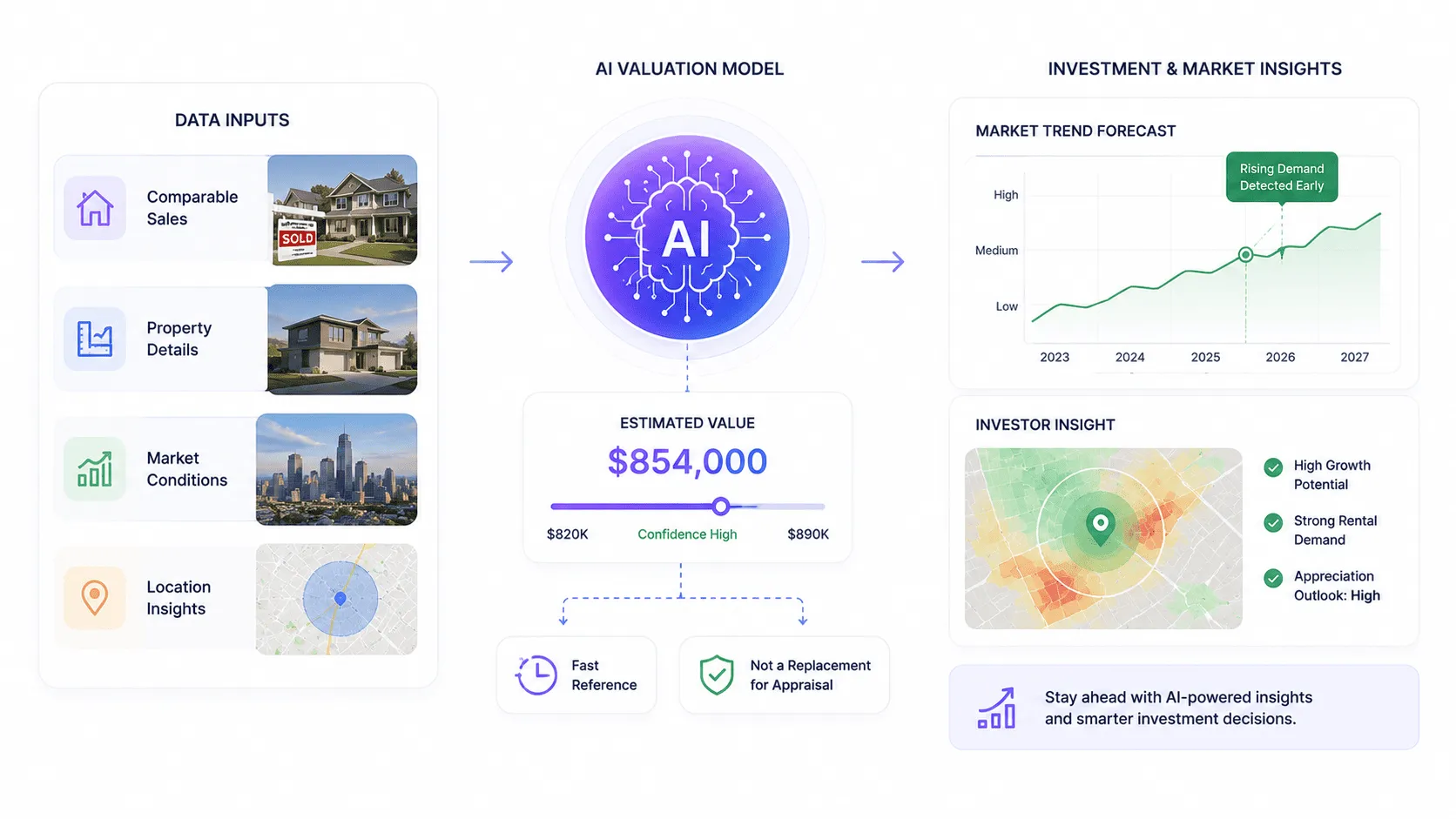
- Automated Valuation Models (AVMs) estimate pricing from comparable sales
- Serve as a fast reference point alongside professional appraisals
- Help investors spot demand shifts before they show up in traditional reports
AI Chatbots and Virtual Assistants in Real Estate
Buyer questions don’t stop after office hours, and AI-powered assistants are stepping in to fill that gap. Chatbots can answer common questions about a listing, schedule viewings, or provide neighborhood information instantly, regardless of time zone, keeping potential leads engaged instead of waiting on a callback. Rather than sending every inquiry straight to an agent, these assistants can also ask qualifying questions upfront, like budget range and financing status, so agents spend their time on leads that are genuinely ready to move. This highlights how AI is revolutionizing real estate customer service.
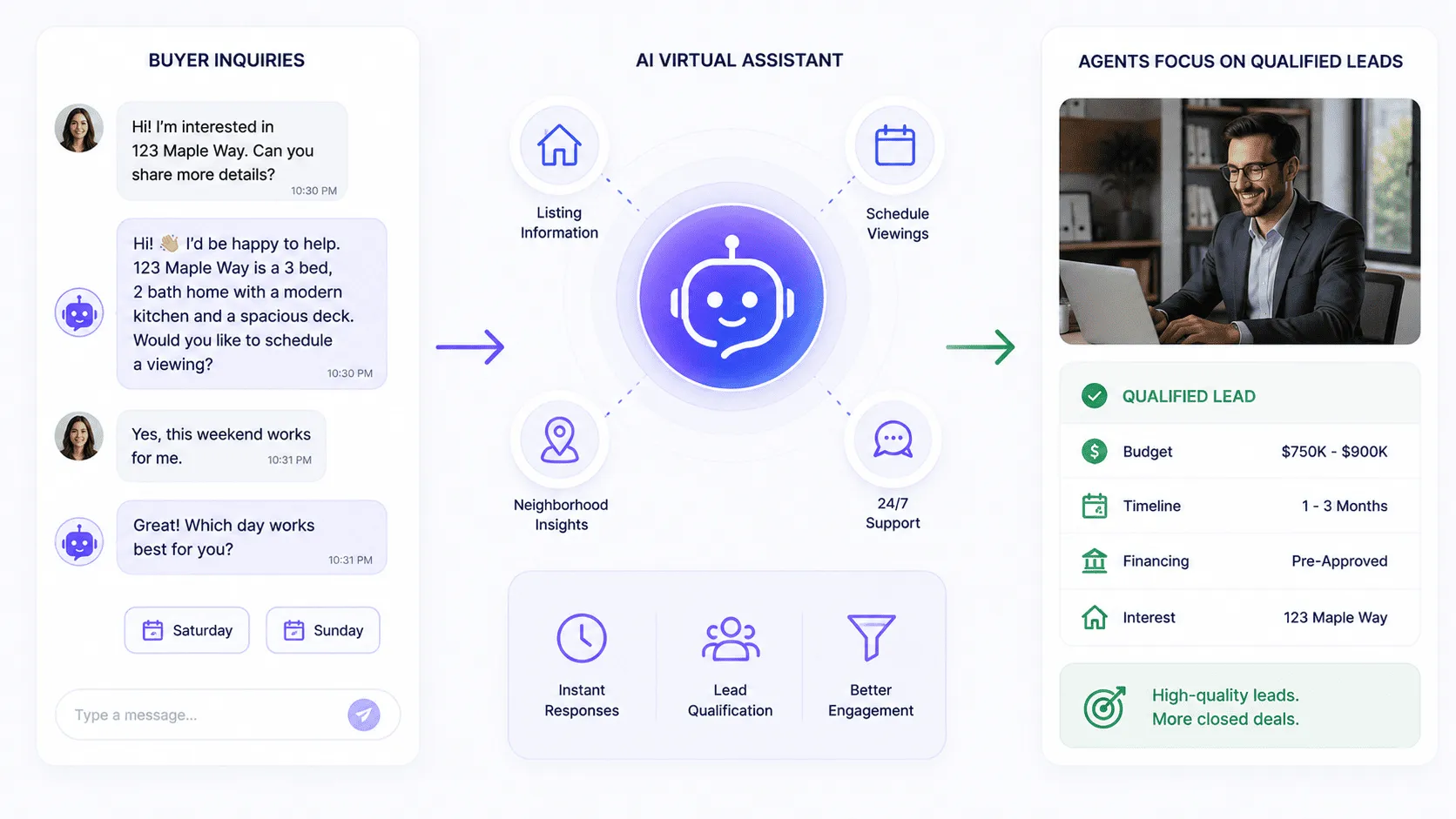
- Answers listing questions and schedules viewings instantly
- Qualifies leads by asking budget, timeline, and financing questions upfront
- Frees up agents to focus on buyers who are ready to move forward
Challenges of How AI is Revolutionizing Real Estate
AI’s momentum in real estate doesn’t come without friction, and it’s worth weighing the hurdles alongside the benefits. These systems depend on large volumes of user and property data, which raises legitimate questions about how that data is stored, used, and protected, and inaccurate or outdated data can just as easily skew recommendations and valuations. Real estate transactions are also high-stakes and emotional, and buyers and sellers still want a knowledgeable human to guide negotiations and provide reassurance that algorithms alone can’t replicate. Understanding these limits is key to seeing the full picture of how AI is revolutionizing real estate responsibly.
| Challenge | Why It Matters |
|---|---|
| Data privacy | AI relies on large volumes of user and property data, raising questions about storage and usage |
| Data accuracy | Outdated or incorrect data can skew recommendations and valuations |
| Human trust | Buyers and sellers still want a knowledgeable human for negotiation and reassurance |
| Over-automation risk | Leaning too heavily on AI can make interactions feel impersonal during a high-stakes decision |
The Road Ahead: How AI is Revolutionizing Real Estate Continues
AI in real estate isn’t about replacing agents or removing the human element from a deeply personal transaction. It’s about removing friction: helping buyers find homes faster, helping sellers present properties more effectively, and freeing agents to focus where they matter most. As adoption grows across brokerages and proptech platforms, AI is revolutionizing real estate at scale. The firms that treat it as a tool for better service, rather than a replacement for it, will be the ones that build lasting trust with their clients. Ultimately, that balance is how AI is revolutionizing real estate for the long term.
FAQs
How AI is revolutionizing real estate?
How AI is revolutionizing real estate comes down to personalized recommendations, automated valuations, virtual tours, and improved search accuracy through NLP and computer vision.
Can AI replace real estate agents?
No. AI handles data-heavy tasks like valuations and lead qualification, but agents remain essential for negotiation, guidance, and the human trust buyers and sellers rely on. That balance is part of how AI is revolutionizing real estate responsibly.
What is an automated valuation model (AVM)?
An AVM is a tool that estimates property value using comparable sales and market data, offering a fast reference point alongside professional appraisals.
How does AI improve property search?
AI improves search by learning user behavior and listing descriptions, surfacing properties that match both stated preferences and subtler patterns in browsing activity. This is central to how AI is revolutionizing real estate search today.
Is AI virtual staging more expensive than physical staging?
AI virtual staging is generally far less costly than physical staging, since it digitally furnishes spaces rather than requiring real furniture and setup.