

Table of Contents
The term “IT Leadership 2.0” encapsulates this new era of IT leadership. It signifies a departure from traditional IT management and emphasizes qualities such as agility, adaptability, collaboration, and a data-driven mindset. IT leaders in this new paradigm are proactive, innovative, and closely aligned with business objectives.
In today’s rapidly evolving digital landscape, the role of IT leadership is experiencing a profound transformation. Several key factors are propelling this transformation:
- Emergence of New Technologies: Technology is advancing at an unprecedented pace. New technologies such as artificial intelligence, cloud computing, the Internet of Things (IoT), blockchain, and machine learning are not just buzzwords but are reshaping industries. IT leaders must stay up to date on these technologies to harness their potential for business advantage.
- Shifting Business Models: Traditional business models are being disrupted by digital-first approaches. Companies are reimagining how they deliver value to customers, with digital experiences often at the core. IT leaders are at the forefront of enabling these new business models, whether it’s through e-commerce platforms, mobile apps, or digital marketing strategies.
1. The Evolution of IT Leadership
The Traditional Role of IT Leaders:
Traditionally, IT leaders were responsible for maintaining the status quo of IT operations. They focused on cost control, system stability, and technical proficiency. Their key responsibilities included managing IT budgets, addressing technical issues, and ensuring that IT services were reliable.
The Catalysts for Change in IT Leadership
Several significant factors have acted as catalysts for the transformation of IT leadership. These catalysts have compelled IT leaders to evolve and expand their roles beyond traditional technical functions:
- Digital Transformation: The advent of digital technologies has disrupted industries across the board. Organizations are increasingly leveraging technology to create new business models, enhance customer experiences, and gain competitive advantages. IT leaders are now expected to drive and facilitate digital transformation initiatives, ensuring that technology aligns with broader business objectives.
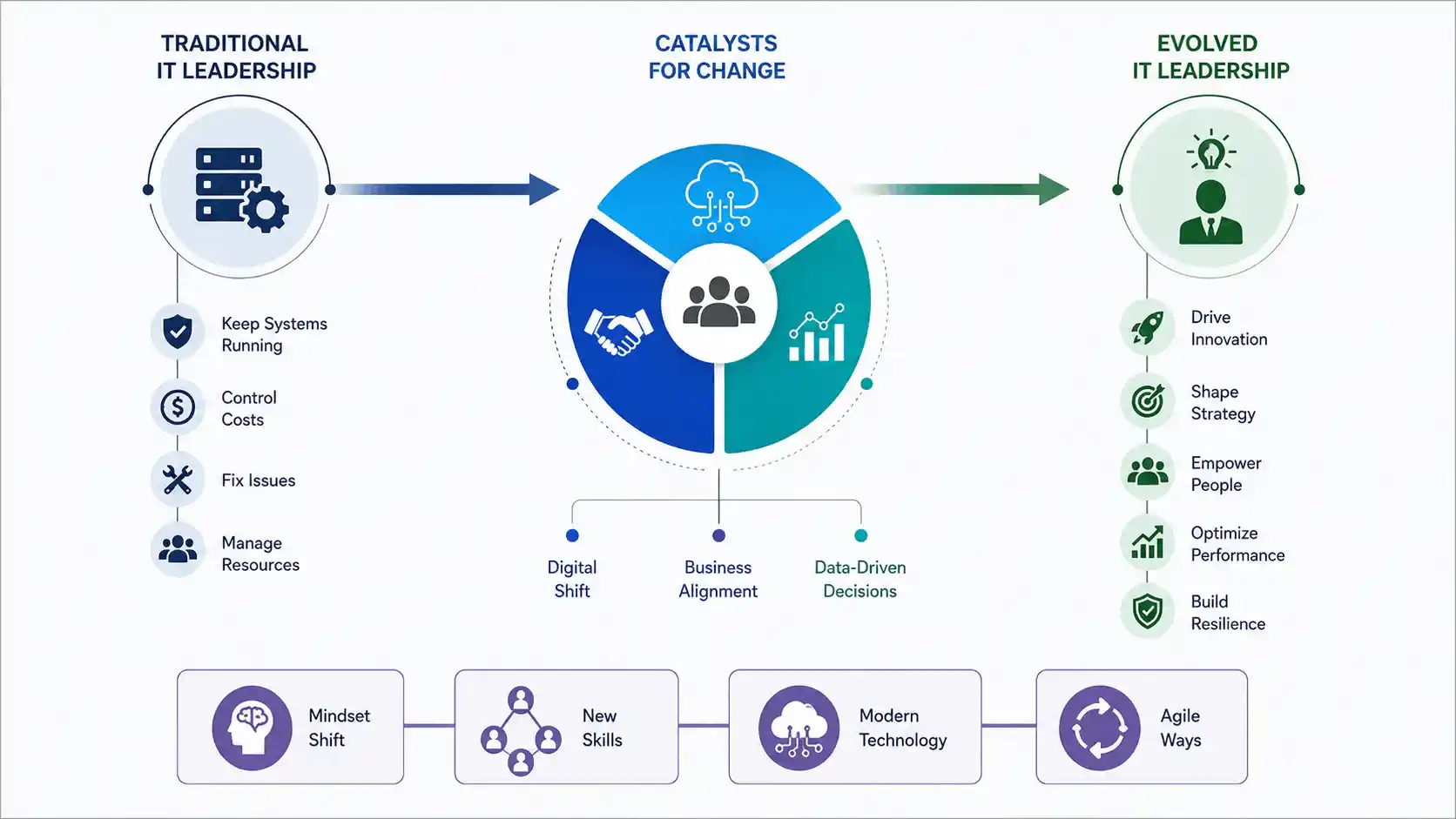
- Business Alignment: The realization that technology plays a pivotal role in achieving business goals has shifted the focus of IT leadership. IT leaders are now required to closely collaborate with business units, understand their needs, and align IT strategies accordingly.
- Data-Driven Decision-Making: The explosion of data has changed the way organizations make decisions. IT leaders are at the forefront of harnessing data analytics and insights to guide strategic choices. They are responsible for establishing data-driven cultures within their organizations and leveraging data to improve efficiency and competitiveness.
2. The Digital Transformation Imperative
Digital transformation is no longer just a buzzword; it’s a business imperative. Organizations across industries are realizing that to stay competitive, they must embrace digital technologies and fundamentally change the way they operate.
The Impact of Digital Transformation on Organizations: Digital transformation involves leveraging technology to optimize processes, enhance customer experiences, and drive innovation. It encompasses various aspects, including adopting cloud computing, implementing data analytics, automating workflows, and embracing emerging technologies like artificial intelligence and the Internet of Things (IoT). The impact of digital transformation on organizations is multifaceted:
- Enhanced Efficiency: Organizations can streamline operations, reduce manual processes, and improve overall efficiency through digitalization.
- Improved Customer Experiences: Digital transformation enables companies to provide personalized, seamless, and convenient experiences to their customers, thereby increasing customer satisfaction and loyalty.
- Competitive Advantage: Embracing digital technologies allows organizations to stay ahead of competitors by responding quickly to market changes and delivering innovative products and services.
The Pivotal Role of IT Leadership: IT leadership is central to the success of any digital transformation initiative. IT leaders, such as Chief Information Officers (CIOs) and Chief Technology Officers (CTOs), are responsible for orchestrating and driving these strategic changes. Their roles in digital transformation include:
- Technology Evaluation and Adoption: They assess emerging technologies and determine which ones are most relevant and beneficial to the organization’s digital journey.
- Change Management: IT leaders lead cultural and organizational changes necessary to support digital transformation, ensuring that employees adapt to new technologies and processes.
- Risk Management: They are responsible for assessing and mitigating risks associated with digital initiatives, including data security and compliance.
McDonald’s: The fast-food giant McDonald’s embarked on a digital transformation journey by investing in technology like self-order kiosks, mobile ordering, and digital menu boards. Under the guidance of its IT leadership, McDonald’s has improved customer experiences, streamlined operations, and adapted to changing consumer preferences.
3. Agile and Adaptive Leadership
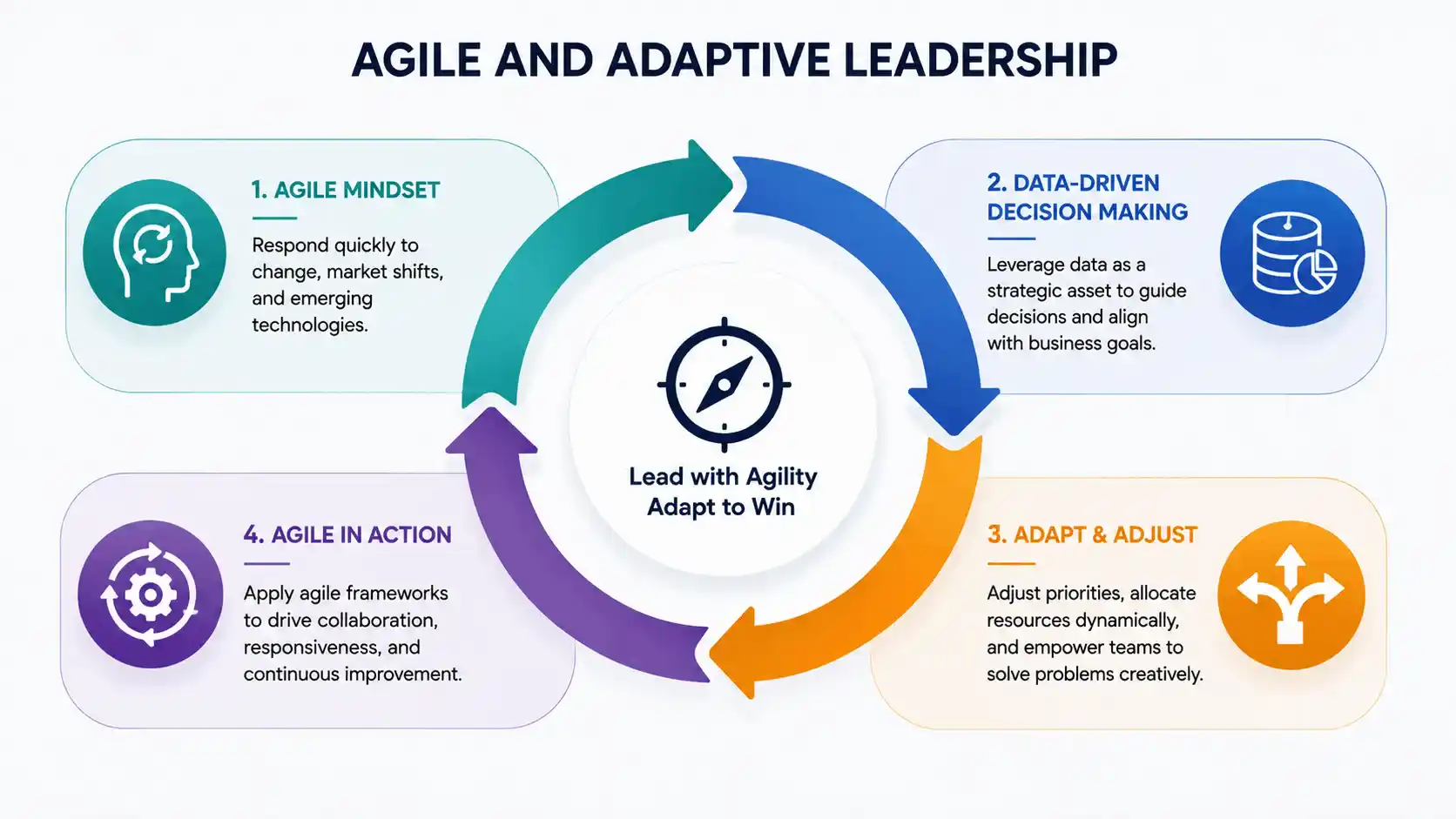
In today’s fast-paced and dynamic technology landscape, IT leaders must be able to respond swiftly to changing circumstances, market conditions, and emerging technologies. Agility in IT leadership implies the ability to adapt and pivot quickly, ensuring that IT strategies and projects remain aligned with organizational goals.
The role of data in IT leadership is multifaceted, serving as a guiding light in the decision-making process and enabling leaders to make informed choices that align with organizational goals and objectives.
- Agile methodologies, originally developed for software development, have had a profound impact on IT leadership.
- IT leaders have embraced agile principles not only to manage projects but also to shape their leadership approach. They use agile frameworks like Scrum or Kanban to foster collaboration, enhance responsiveness, and promote a culture of continuous improvement within their teams.
- An adaptive IT leader may adjust project priorities based on emerging market trends, allocate resources dynamically, and encourage innovative problem-solving within their teams.
- Adaptive leadership in IT involves the capacity to navigate ambiguity, embrace change, and guide teams through uncertain situations. It requires IT leaders to be flexible, open to new ideas, and capable of making informed decisions in rapidly evolving environments.
4. Data-Driven Decision Making
The role of data in IT leadership is multifaceted, serving as a guiding light in the decision-making process and enabling leaders to make informed choices that align with organizational goals and objectives.
- The role of data in IT leadership involves the collection, analysis, and interpretation of data from various sources. IT leaders are responsible for creating a data-driven culture within their organizations, ensuring that data is collected systematically.
- Leveraging data analytics tools and techniques is crucial for IT leaders to gain insights and identify trends. By harnessing the power of data analytics, IT leaders can make sense of vast datasets, uncover patterns, and predict future outcomes.
- Data-driven decision-making is about using data as a compass to navigate the complex IT landscape. It enables IT leaders to make strategic choices, mitigate risks, and drive innovation by harnessing the power of information to achieve organizational success.
5. Security and Risk Management
The landscape of cybersecurity is continually evolving. With an increasing number of sophisticated cyber threats and vulnerabilities, IT leadership plays a critical role in safeguarding an organization’s data, systems, and reputation.
IT leaders must take a proactive approach to address these security challenges. This involves several key responsibilities:
- Security Strategy: Developing a comprehensive security strategy is essential. This includes defining security policies and procedures, implementing security technologies, and establishing incident response plans.
- Employee Training: IT leadership recognizes that employees are often the weakest link in security. They provide ongoing cybersecurity training and awareness programs to educate staff about the latest threats and best practices.
- Compliance: IT leaders ensure their organization complies with relevant regulations and standards, such as GDPR, HIPAA, or industry-specific requirements. Compliance helps mitigate legal and financial risks.
- Monitoring and Detection: Implementing robust monitoring and detection systems is crucial. IT leaders use tools like intrusion detection systems and security information and event management (SIEM) solutions to identify and respond to potential threats in real time.
The Future of IT Leadership
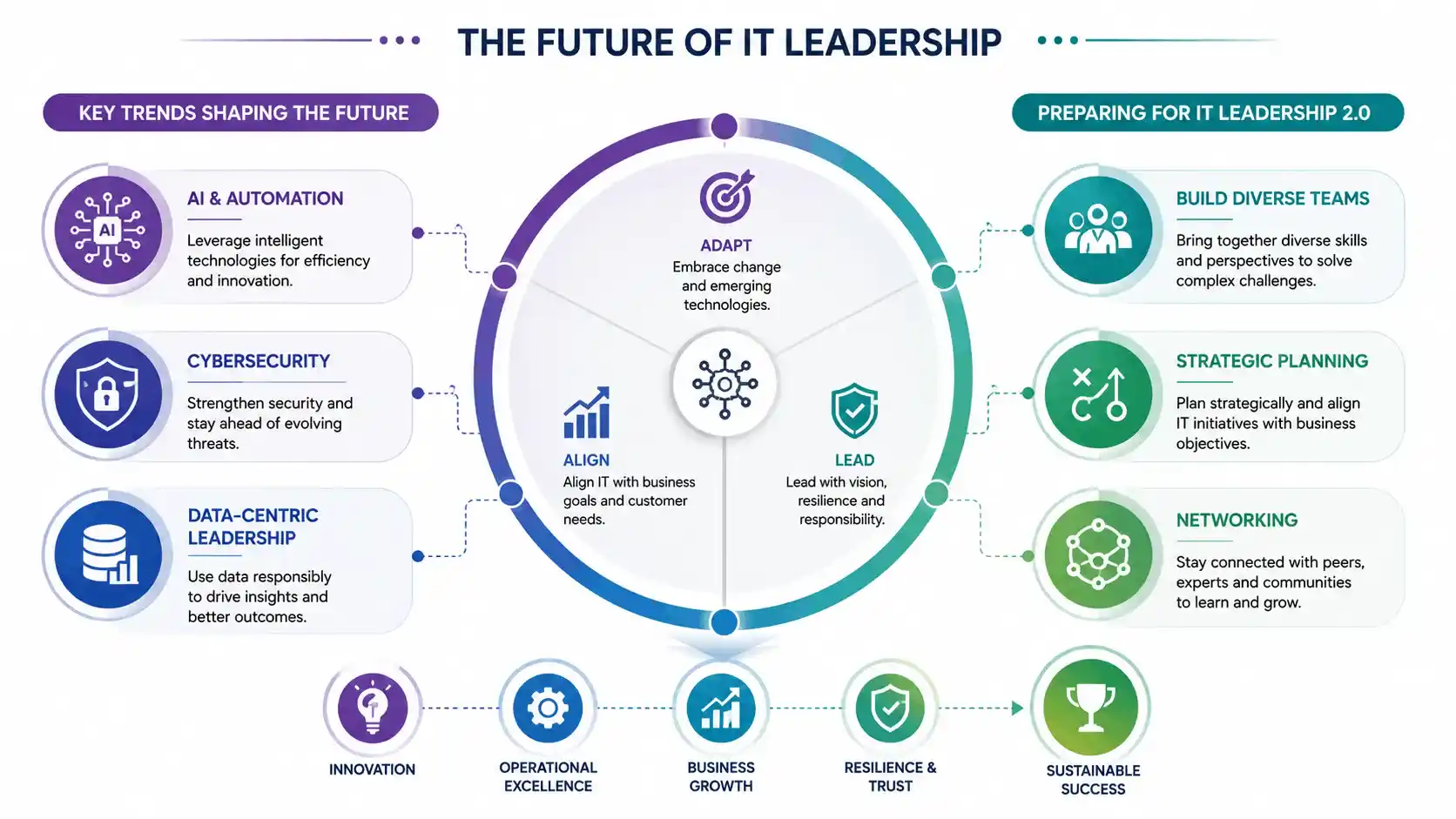
The future of IT leadership promises to be a dynamic and challenging landscape. Predicting precisely what it will look like is a complex task, but several trends and developments are already shaping the future:
- AI and Automation: IT leaders will need to navigate the increasing integration of artificial intelligence and automation into their operations. This involves not just managing these technologies but also harnessing their potential for greater efficiency and innovation.
- Cybersecurity: As the threat landscape continues to evolve, IT leaders will play an even more critical role in safeguarding their organizations against cyber threats.
- Data-Centric Leadership: Data will remain at the heart of decision-making. IT leaders of the future will need to be well-versed in data analytics, data privacy, and ensuring that data is used responsibly and ethically to drive business outcomes.
Preparing for the Next Phase of IT Leadership 2.0
- Building Diverse Teams: As technology becomes more intertwined with various aspects of business, IT leaders should build diverse teams with a range of skills and backgrounds to tackle complex challenges.
- Strategic Planning: Future IT leaders should be strategic in their approach, aligning IT initiatives with the broader organizational goals. This involves a deep understanding of the business and industry.
- Networking: Building a strong professional network can provide valuable insights and support. IT leaders should engage in networking events, conferences, and communities to stay connected with peers and experts.
The world of IT leadership is undergoing a remarkable transformation as we enter the era of IT Leadership 2.0. The digital age has ushered in unprecedented opportunities and challenges, necessitating a reimagining of the role of IT leaders within organizations.
With the right blend of skills, qualities, and strategic thinking, IT leaders will not only meet the challenges of tomorrow but also drive their organizations to new heights of success in the ever-changing digital landscape. As we embrace the emergence of IT Leadership 2.0, one thing is certain: the role of IT leadership will continue to be a driving force in shaping the future of businesses and industries worldwide.
Conclusion
IT Leadership is no longer a back-office function measured by system uptime. It’s a business discipline measured by execution, governance, and the ability to turn emerging technology into outcomes that hold up under scrutiny. The organizations pulling ahead right now aren’t the ones with the flashiest AI pilots; they’re the ones whose leaders closed the gap between adoption and production, built governance in from day one, and treated data quality as a core responsibility rather than an IT afterthought.
That’s the real shift behind “IT Leadership 2.0.” The title hasn’t changed much, but the job underneath it has: less about keeping systems running, more about proving that technology decisions actually move the business forward. Leaders who internalize that and build the cross-functional muscle to act on it are the ones best positioned for whatever comes next.
FAQs
What is IT Leadership 2.0?
It refers to a shift away from IT leadership as a purely technical, cost-control function toward a strategic role focused on business alignment, AI adoption, data governance, and measurable outcomes.
Why is AI governance suddenly such a big deal for IT leaders?
Because AI risk often falls into the gap between IT, legal, compliance, and business units when no one clearly owns it. Without governance, adoption outpaces control, which is exactly when incidents happen.
How is the CIO role different from traditional IT management?
Traditional IT management focused on keeping systems stable and costs predictable. The modern CIO role adds business strategy, AI oversight, and board-level communication on top of that; it’s a shift from running infrastructure to shaping outcomes.
Is cybersecurity or AI the bigger priority for IT leaders right now?
They’re increasingly treated as the same priority. AI is being used both to strengthen security and to power new attack methods, so the two agendas are converging rather than competing.
What’s a realistic timeline for seeing ROI from an AI initiative?
It varies by use case, but leaders who set expectations in months rather than weeks tend to avoid the credibility hit that comes from over-promising. Narrow, well-scoped pilots with a clear success metric tend to show value faster than broad, ambitious rollouts.