

Table of Contents
Cognitive disorders, such as Alzheimer’s disease, are a major challenge for the health and well-being of aging populations. However, current methods of cognitive screening are often costly, time-consuming, and inaccurate. This is where Cogniclear VR, a VR-based cognitive screening tool, comes in.
Cogniclear VR is a product developed by Virtuleap, a startup that combines virtual reality (VR) and artificial intelligence (AI) to create innovative VR cognitive solutions for brain health. Cogniclear VR is being co-designed with partners like Lusíadas Saúde and Roche Portugal, and is expected to launch in 2024.
How Cogniclear VR works
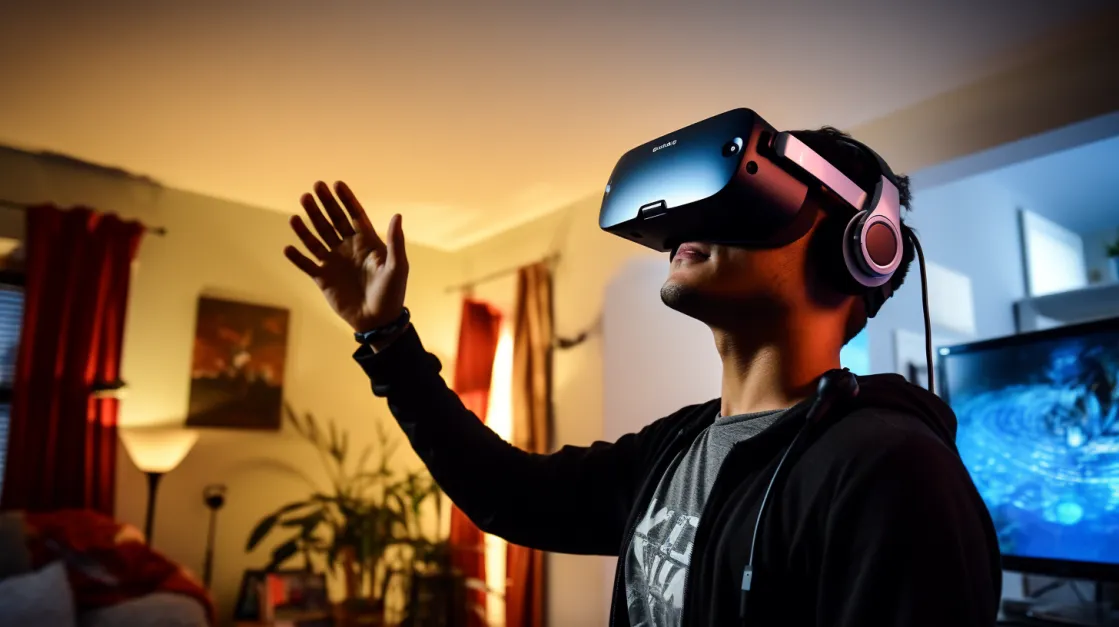
Cogniclear VR uses VR games to evaluate various cognitive abilities, such as memory, attention, mental flexibility, and problem-solving. The games are designed by neuroscientists and based on neuropsychological assessment tools, which are then analyzed using AI learning tools.
Cogniclear VR is intended to provide a fast and accurate way to screen for cognitive disorders at an early stage, such as subjective cognitive decline, which is a precursor of Alzheimer’s disease. By detecting cognitive disorders early, Cogniclear VR could enable earlier intervention and better health outcomes for people with cognitive illnesses.
Cogniclear VR could also leverage the volumetric datasets of psychometric, physical, and physiological data collected by Virtuleap to correlate cognitive performance to mental health. This could provide essential clinical findings for brain health screening and profiling.
Cogniclear VR: part of Virtuleap’s VR cognitive solutions
Cogniclear VR is one of the VR cognitive solutions developed by Virtuleap, a startup that aims to address the looming “cognition crisis” caused by aging populations and cognitive disorders. Virtuleap has recently secured $2.5 million in funding from GED Ventures Portugal, an international financial group that invests in technology for social impact.
Another product that Virtuleap offers is Enhance VR, a collection of VR games that can improve various cognitive abilities and monitor cognitive performance. Enhance VR is intended to provide a fun and accessible way for anyone to train their brain and potentially serve as a therapeutic tool for learning challenges like attention deficit hyperactivity disorder (ADHD) and other cognitive disorders.
Enhance VR has already attracted over 60,000 early registered users without any marketing efforts, and is available in major VR app stores and in five languages: English, Spanish, Portuguese, Japanese, and Chinese. The company plans to add German, French, and Dutch by Q1 2024.
A new era in mental health
Virtuleap’s CEO, Amir Bozorgzadeh, said that the investment from GED Ventures Portugal “enables us to ramp up development and commercialization of our frontier VR cognitive solutions at a time in which an impending ‘cognition crisis’ is well underway.”
Bibi Sattar Marques, partner at GED Ventures Portugal, said that “the investment in Virtuleap reflects the company’s strategic approach of investing in technology that positively impacts people’s lives, particularly their health. By bringing together technology and well-being, we are committed to pave the way for a new era in mental health that is accessible to everyone.”
Virtuleap’s VR cognitive solutions have also attracted the interest of other companies in the healthtech and edtech sectors, such as Penumbra, HP, and BehaVR, with whom Virtuleap has secured $1.8 million in in-bound commercial agreements.
Cogniclear VR is a groundbreaking product that is set to revolutionize early cognitive illness detection, potentially outpacing any current solution in speed and accuracy. Cogniclear VR is part of Virtuleap’s vision of using VR and AI to improve brain health and detect cognitive disorders.
What is subjective cognitive decline?
Subjective cognitive decline (SCD) is defined as self-reported worsening or more frequent confusion or memory loss in the previous 12 months. It is a type of cognitive impairment and one of the first symptoms of Alzheimer’s disease and other dementias. SCD can impair a person’s ability to carry out daily tasks, manage chronic diseases, and live independently.
SCD does not imply a professional diagnosis of cognitive decline, but it may indicate a higher risk of developing dementia in the future. As a result, it is critical to monitor SCD and seek early intervention if necessary.