
Table of Contents
Imagine a world where healthcare is no longer limited by geographical boundaries, where patients are proactive participants in maintaining their health, and where technology enables earlier interventions and better outcomes. By 2030, Digital Therapeutics (DTx) promises to redefine the global healthcare landscape, building a model founded on prevention, accessibility, and equity.
Digital Therapeutics refers to evidence-based software solutions designed to treat, manage, or prevent medical conditions. By harnessing cutting-edge technologies such as Artificial Intelligence (AI), connected devices, and machine learning, DTx empowers individuals and health systems alike. Unlike traditional treatments, DTx offers real-time interventions, data-driven personalization, and remote accessibility, making it a game-changer.
This article explores the evolution of Digital Therapeutics, its technological and global impact, and the challenges and opportunities that lie ahead.
What is Digital Therapeutics?
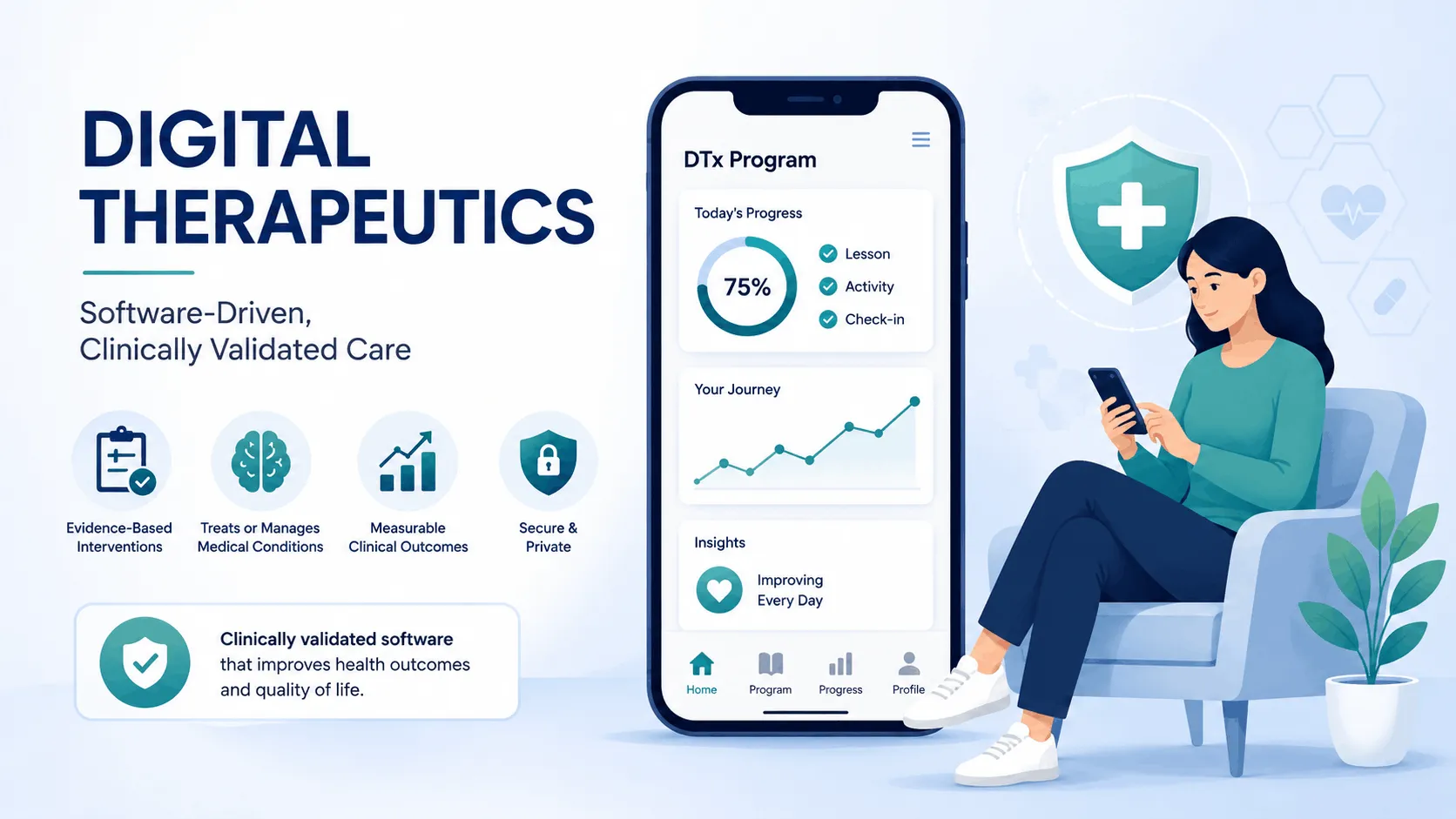
Digital Therapeutics has emerged as a clinically validated form of care, accelerated by software rather than a pill or device alone.
According to the Digital Therapeutics Alliance, this category of software is defined as evidence-based interventions that prevent, manage, or treat a medical disorder or disease. The International Organization for Standardization formalized the term under ISO/TR 11147, describing it as health software intended to treat or alleviate a disease, disorder, condition, or injury by generating a demonstrable clinical benefit. This distinguishes true clinical-grade software from general wellness apps, which fall outside this clinical bar.
Key Characteristics of DTx
- Scientific Validation: DTx solutions are backed by clinical trials and robust evidence, the same rigorous standards applied to drugs and medical devices.
- Prescription Therapy: DTx solutions can be prescribed by physicians just like medication or physical therapy.
- Intervention-Centric: Unlike wellness apps that focus on general well-being, DTx targets specific medical conditions, often in collaboration with traditional treatments.
Core Applications Today
- Chronic Disease Management:
- Tools like Livongo empower patients to manage diabetes and hypertension through AI-guided monitoring and coaching.
- Real-time data allows tailored care, improving outcomes and reducing unnecessary hospital visits.
- Mental Health:
- Platforms like Woebot Health provide digital cognitive behavioral therapy (CBT) to help users address depression, anxiety, and stress. These solutions offer convenient, stigma-free access to therapy.
- Addiction and Recovery:
- FDA-approved solutions like reSET and reSET-O assist users in overcoming addiction through educational modules, interactive tools, and behavioral guidance.
- Sleep and Insomnia:
- Somryst, an FDA-authorized digital cognitive behavioral therapy application, treats chronic insomnia through structured behavioral modules rather than medication.
- Somryst, an FDA-authorized digital cognitive behavioral therapy application, treats chronic insomnia through structured behavioral modules rather than medication.
By 2030, DTx is poised to address even broader health challenges, from rare diseases to global epidemics, unlocking new possibilities for treatment and prevention.
How Digital Therapeutics Works
Most solutions in this category follow a similar clinical loop, regardless of the condition they target:
- Assessment: The software gathers baseline data through questionnaires, connected sensors, or patient-reported symptoms.
- Intervention Delivery: A structured, evidence-based program is delivered, such as CBT modules, coaching prompts, or behavioral exercises.
- Continuous Monitoring: Wearables and in-app tracking capture how the patient is responding between clinical visits.
- Adaptive Adjustment: Algorithms modify pacing, content, or intensity based on engagement and outcomes, then report progress back to the care team.
This loop is what separates a truly clinical product from a static self-help app: the software is expected to demonstrate a measurable therapeutic effect, not just deliver content.
The Global Impact of Digital Therapeutics by 2030
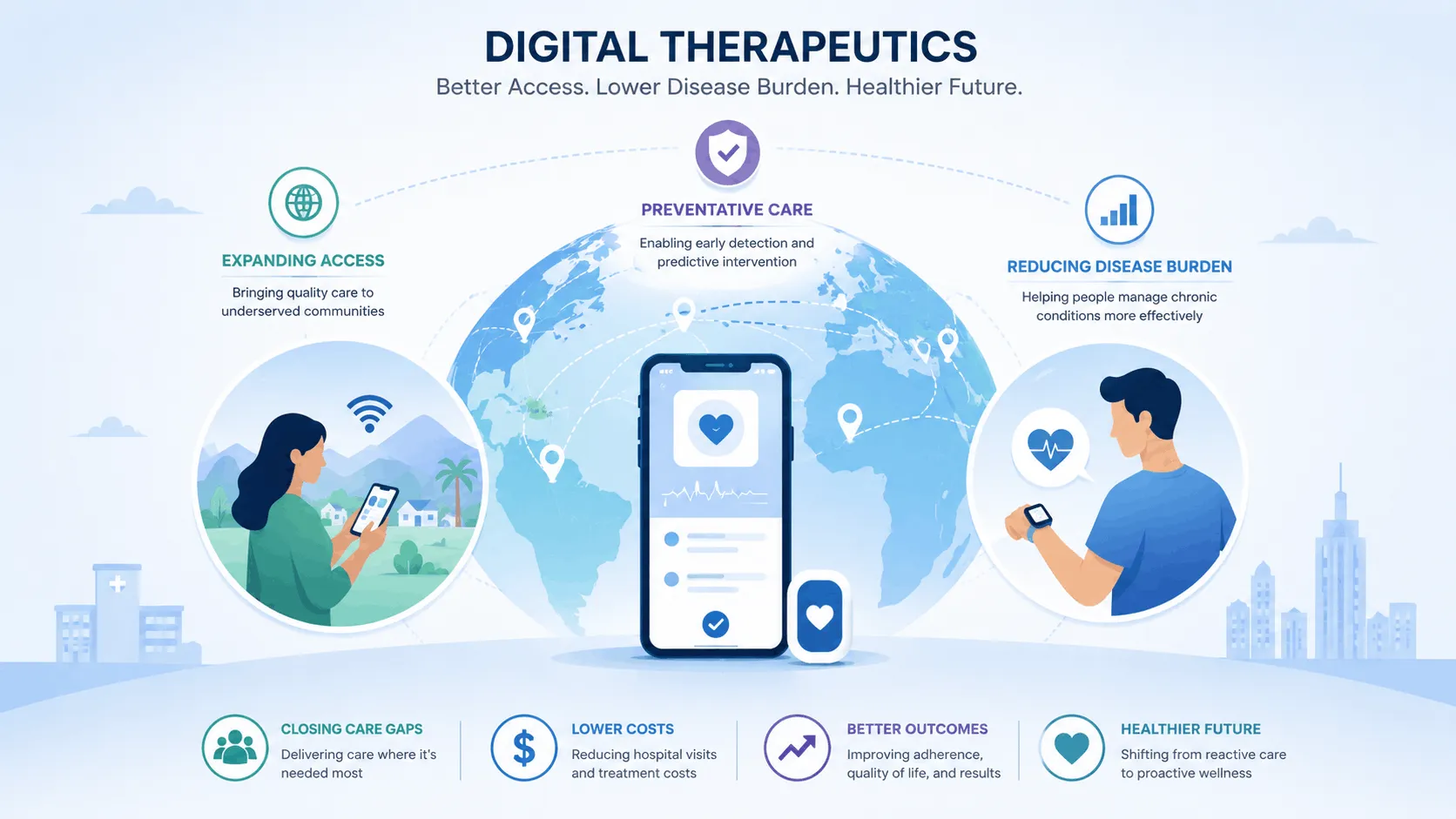
Digital Therapeutics is already reshaping care delivery in three concrete ways: expanding access, reducing disease burden, and shifting the model toward prevention.
Quick Stats
| Snapshot | Detail |
|---|---|
| Primary Goal | Close healthcare access gaps in underserved regions |
| Key Lever | Mobile-first, connectivity-based delivery |
| Health Focus | Chronic disease, cardiovascular, and mental health conditions |
| Outcome Shift | From reactive treatment to earlier, predictive intervention |
Expanding Access to Healthcare in Underserved Regions
One of the biggest strengths of Digital Therapeutics lies in its scalability and ability to bridge healthcare disparities. With mobile-first solutions, individuals living in remote or underserved areas can access high-quality treatments without needing physical healthcare infrastructure.
- A patient in Sub-Saharan Africa could use their smartphone to receive asthma treatment via a connected inhaler and AI-powered coaching without frequent trips to a clinic.
Reducing the Global Disease Burden
Chronic diseases like diabetes, cardiovascular ailments, and mental health disorders are among the leading causes of mortality worldwide. DTx enables patients to monitor, manage, and prevent these conditions much more efficiently.
- Real-time intervention minimizes complications, improves compliance, and reduces reliance on emergency care, thereby lowering healthcare costs globally.
Preventative Healthcare
Prevention lies at the heart of health systems’ transformation. Digital Therapeutics enables early detection of at-risk individuals by leveraging predictive analytics to identify triggers and prevent worsening conditions.
- A wearable device monitoring heart rate variability could detect early warning signs of a cardiac event, prompting the patient to seek timely intervention.
Technological Innovations Powering Digital Therapeutics
Quick Stats
| Snapshot | Detail |
|---|---|
| AI Devices Authorized (recent year) | 235, a 32% jump in under twelve months |
| Total AI-Enabled Devices to Date | 1,250+ (Bipartisan Policy Center) |
| Core Technologies | AI/ML, connected devices, PCCPs, gamification, data security |
| Update Model | Predetermined Change Control Plans (pre-authorized software updates) |
Artificial Intelligence (AI) and Machine Learning
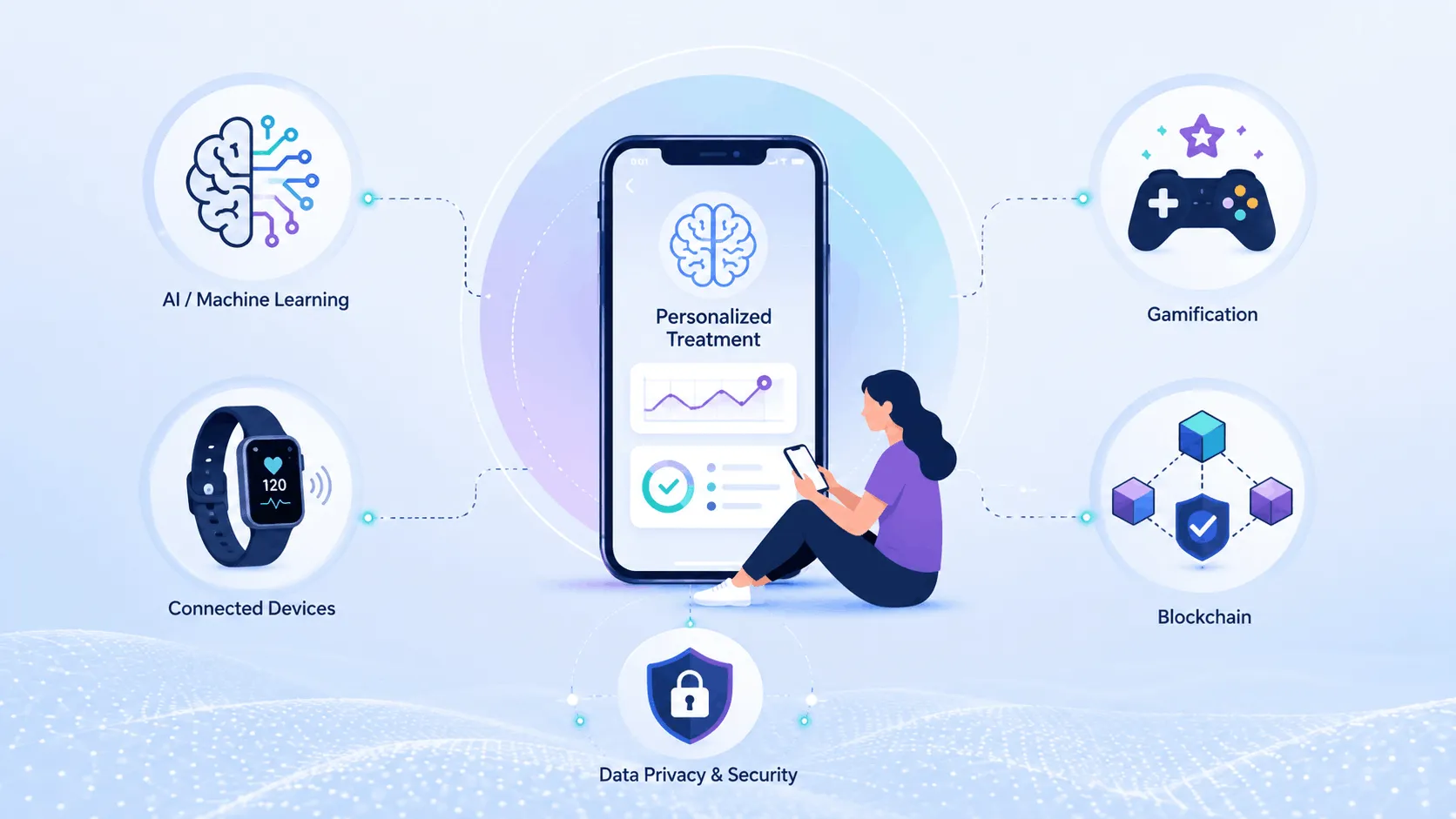
AI is poised to revolutionize DTx by making treatments smarter and more precise. Machine learning algorithms can analyze patient data (e.g., from wearables or EHRs), delivering tailored interventions that evolve.
- Example: An AI-powered mental health app could adapt its therapy approach based on the user’s daily mood patterns and engagement levels.
Connected Devices and IoT Ecosystems
Connected healthcare devices, such as wearables and IoT-enabled sensors, are critical to DTx’s real-time monitoring capabilities.
- Devices can not only gather data but provide actionable insights, enabling patients to self-manage their conditions.
- Example: Continuous glucose monitors (CGMs) paired with AI apps empower diabetic patients by providing instant feedback on their glycemic levels.
Gamification for Patient Engagement
Gamification leverages interactive design elements such as rewards, reminders, and milestones to improve patient adherence.
- Example: Smoking cessation apps use streaks and rewards to encourage users to meet their daily goals, motivating long-term behavior change.
Data Privacy and Blockchain
Patient privacy is paramount, and blockchain technology ensures that health data remains secure, decentralized, and tamper-proof. By 2030, blockchain will instill greater trust in digital care systems, alleviating concerns over misuse of sensitive information.
Challenges on the Road to 2030
Quick Stats
| Snapshot | Detail |
|---|---|
| Top Access Barrier | Connectivity and device affordability (digital divide) |
| Adoption Blocker | Inconsistent insurance reimbursement |
| Oversight Concern | Algorithmic transparency and bias |
| Real-World Gap | Trial adherence vs. unsupervised home use |
Bridging the Digital Divide
- Digital Therapeutics must reach everyone, not just those in affluent societies. Lack of internet access and affordable devices continues to be a barrier for rural populations. Public-private partnerships to subsidize devices and platforms in underserved regions.
Ethical Concerns
- As Artificial Intelligence plays a growing role in automating care, questions of transparency, responsibility, and bias will need to be addressed.
Managing Digital Fatigue
- With so many apps and platforms, patients may experience confusion and fatigue. Designing simple, intuitive, and all-encompassing digital ecosystems will be a critical focus.
Real-World Examples of Digital Therapeutics
| Product | Condition Treated | Regulatory Status | Delivery Type |
|---|---|---|---|
| Somryst | Chronic insomnia | FDA-authorized | Software-only (CBT-I) |
| reSET | Substance use disorder | FDA-authorized | Software-only |
| reSET-O | Opioid use disorder | FDA-authorized | Software, adjunct to medication |
| CGM-paired coaching apps | Diabetes management | FDA-cleared device + software | Connected device + software |
This table reflects products that combine regulatory clearance with a defined clinical use case, distinguishing them from the broader universe of unregulated health apps.
Who Benefits from Digital Therapeutics
| Stakeholder | How They Benefit |
|---|---|
| Patients | Continuous, on-demand access to treatment without frequent clinic visits |
| Physicians | Real-time adherence and outcome data between appointments |
| Health Systems | Reduced emergency visits and readmissions for chronic conditions |
| Employers and Payers | Lower long-term claims costs tied to unmanaged chronic disease |
Building a Healthy, Digital Future
Digital Therapeutics holds the extraordinary promise of making healthcare proactive, accessible, and personalized by 2030. Through innovative technologies, global impact, and patient-centric approaches, DTx has the power to bring equity and wellness to billions.
This field has moved well past the pilot stage. With clearer regulatory pathways like PCCPs, rising AI-enabled device authorizations, and growing real-world evidence requirements, Digital Therapeutics is maturing into a genuine pillar of care delivery rather than a novelty add-on. The organizations that treat it as core infrastructure, not just an app, are the ones positioned to close both the access gap and the trust gap standing between today’s healthcare system and a more preventive, personalized one.
FAQs
What is Digital Therapeutics?
It’s software that’s been through clinical trials and cleared by a regulator like the FDA to treat, manage, or prevent a specific medical condition, not just a phone app that talks about wellness in general terms. This category covers things like CBT for insomnia delivered through an app instead of a therapist’s office.
Does a doctor actually have to prescribe it, or can I just download it myself?
Depends on the product. Some require a prescription just like a medication would; others are available directly to consumers. Either way, the prescription-only versions go through the same regulatory clearance process as a drug.
Has anyone actually got their insurance to cover one of these?
It happens, but coverage is inconsistent across insurers and plans. This remains one of the biggest real-world adoption blockers, even for products that already have FDA clearance in hand.
Can this replace my medication entirely?
Sometimes, but not always. Some products are designed to work standalone, while others, like those for opioid use disorder, are built specifically to be used alongside medication rather than in place of it.
What actually happens to my health data once I start using one of these?
Reputable products build encrypted, decentralized storage into the system from day one rather than bolting it on later, specifically to address concerns about misuse of sensitive health data.
What is an example of a digital therapeutic?
Somryst is a solid one, an FDA-authorized app that delivers CBT for chronic insomnia instead of medication. reSET and reSET-O are earlier examples, built for substance use and opioid use disorder, respectively.
How big is the digital therapeutics market?
Big and growing fast. Industry estimates put the market in the tens of billions of dollars within the next several years, with an annual growth rate above 30%, according to Meticulous Research.
What is DTx used for?
Mostly chronic and behavioral conditions: insomnia, substance use disorder, diabetes and other chronic disease management, ADHD, and mental health conditions like anxiety and depression are the most common targets right now.