

Table of Contents
Cloud Computing in Financial Services is reshaping how banks, insurers, and securities firms store data, process transactions, and serve customers. Scalability, faster deployment cycles, and instant access to information are pulling institutions away from legacy mainframes and toward flexible, cloud-native infrastructure. But because financial data is sensitive and heavily regulated, adopting Cloud Computing in Financial Services also demands airtight security and regulatory compliance, not just cost savings. HyScaler builds bespoke IT services, security architectures, and cloud solutions purpose-built for banking and financial institutions, helping them modernize with confidence while staying compliant.
Digital-first customer expectations have made physical branch visits optional rather than default. That shift, visible in everything from grocery delivery to mobile-first banking, has pushed institutions that were traditionally slow to adopt new technology to rethink their entire IT strategy. Cloud Computing in Financial Services is no longer a future consideration; it is an active, accelerating shift that is already reshaping how banks compete.
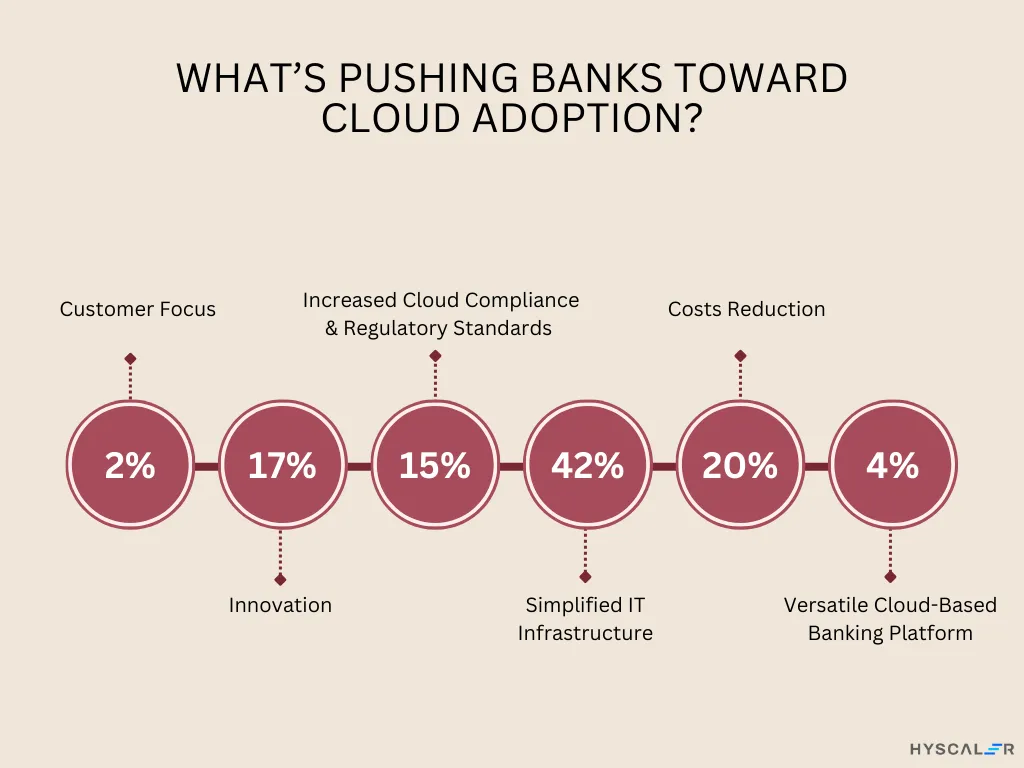
Cloud Computing in Financial Services Drives Success: Key Benefits Uncovered
1. Adaptable and Scalable Solutions
Cloud computing in financial services empowers institutions to adjust operations seamlessly to meet changing demands. This is critical in a sector where transaction volumes vary widely. For instance:
- Cloud platforms facilitate the swift rollout of new services, enabling businesses to capitalize on market trends and comply with regulatory updates efficiently.
- By 2023, over 60% of surveyed financial organizations had transitioned at least 25% of their workloads to the cloud, a trend that continues to accelerate.
2. Cost Optimization
Cloud computing’s pay-as-you-go model removes the need for costly on-premises infrastructure, reducing upfront investments and converting fixed expenses into flexible, variable costs.
- Migrating to the cloud is projected to save Fortune 500 financial institutions $60–80 billion annually by 2030.
- The global finance cloud market, valued at $29.72 billion in 2023, is anticipated to grow at a compound annual growth rate (CAGR) of 20.32%, reaching $188.98 billion by 2033.
3. Smarter Data Management and Analytics
Cloud computing streamlines data storage and facilitates advanced analytics, delivering valuable insights for informed decision-making:
- Financial institutions leverage cloud-based tools to analyze customer behavior, manage risks, and predict market trends.
- Big data analytics on cloud platforms drives more effective strategic planning and enhances overall operational performance.
4. Robust Security and Regulatory Compliance
Protecting sensitive customer data is paramount in financial services:
- Cloud providers deploy advanced security measures such as encryption, access controls, and real-time threat detection to safeguard data.
- Integrated compliance features ensure adherence to global standards like GDPR and PCI DSS, simplifying regulatory requirements and reducing risks.
5. Driving Innovation Forward
Cloud computing in financial services accelerates the creation of new financial products and services:
- Fintech companies, such as Ratio, utilize cloud platforms to power mobile banking, robo-advisors, blockchain-based solutions, and tailored customer experiences.
- By embracing cloud solutions, organizations modernize outdated systems, streamline operations, and advance digital transformation efforts, unlocking new opportunities for growth and efficiency.
Adoption Trends in Financial Services: Embracing the Future of Finance
Adoption of Cloud Computing in Financial Services is accelerating across every major region, and the pace shows no sign of slowing:
- According to Nutanix’s Financial Services Enterprise Cloud Index, hybrid multicloud usage in financial services is expected to jump from 18% to 50% within the next three years as institutions diversify away from single-vendor dependence.
- Broadridge’s Digital Transformation and Next-Gen Tech Study found that 75% of financial firms expressed confidence in their digital transformation roadmap, signaling a strategic pivot toward modernizing legacy stacks.
- According to IMARC Group’s Finance Cloud Market report, North America currently leads global finance cloud spending, supported by dense hyperscaler infrastructure and mature data-security frameworks, while Asia-Pacific is growing quickly on the back of fintech partnerships and rapid digitalization.
Cloud Service Models
SaaS: This cloud type delivers web-based business applications for tasks like CRM, accounting, invoicing, and content management. It offers flexibility and ease of use and eliminates the need for extensive infrastructure.
PaaS: This infrastructure provides a comprehensive environment for developing, testing, and deploying applications and databases. It helps banks streamline development processes, reduce IT expenses, and minimize reliance on hardware and software infrastructure.
IaaS: Infrastructure as a Service (IaaS) allows banks to outsource resources like servers, data centers, and software, eliminating the need for in-house hardware investments.
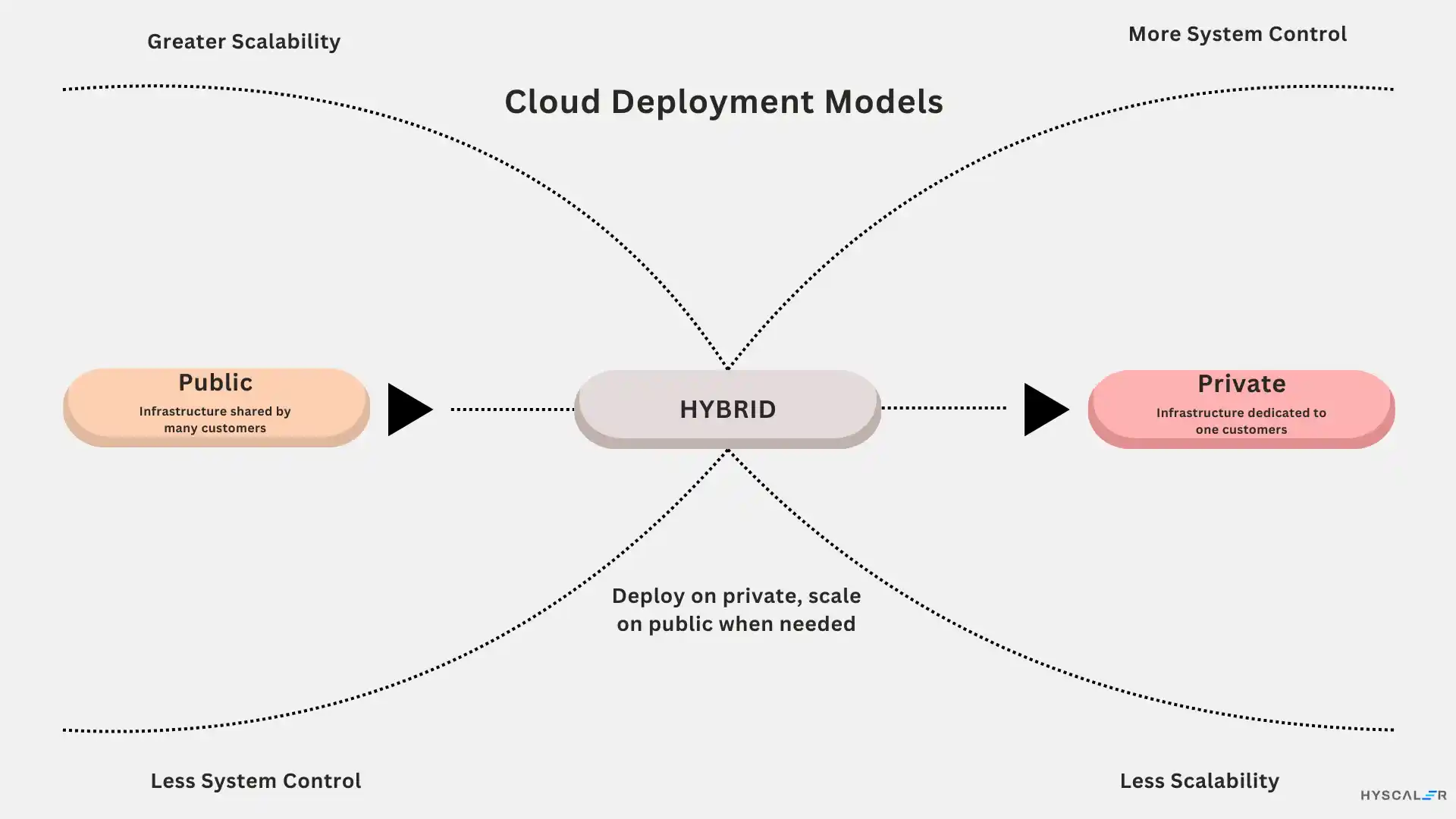
Cloud Deployment Models
Private Cloud: A dedicated cloud computing environment designed exclusively for a single banking or financial institution. Ideal for banks that prioritize data security, regulatory compliance, and customized solutions over the shared cost savings of public cloud alternatives.
Public Cloud: This infrastructure is open for the entire banking industry to share and is owned by organizations that sell cloud services. Banks can opt for this type if they are looking for economies of scale.
Hybrid Cloud: This infrastructure is composed of both private and public clouds that operate for their individual business use case.
Future of Finance: How Cloud Computing Transforms Banking and Financial Services
Financial institutions can achieve their business goals by leveraging cloud computing to acquire the following:
Digital Banking Platforms
Cloud computing in financial services is empowering customers by providing a complete suite of digital banking services, such as mobile apps and Internet banking platforms. Cloud computing gives banks the potential to provide consumers with easy account access, individualized financial advice, real-time transaction updates, and features such as online payments and virtual wallets.
Loan Origination and Processing
Cloud-based solutions streamline loan application processes by automating workflows and enabling cross-departmental collaboration, leading to faster decision-making. Similar efficiency gains are being realized in healthcare administration, particularly through cloud-supported services like Dental Insurance Credentialing, which streamline provider onboarding and compliance processes. These platforms easily integrate with outside services (e.g., credit score and income verification services) to expedite borrower valuations. This integration enables lenders to process an increased volume with higher accuracy and speed, thereby greatly enhancing operational efficiency as well as customer satisfaction.
Fraud Detection
Cloud adoption in banking is vital in handling vast amounts of data from various resources to analyze transactions and identify suspicious activities. It helps banks detect fraud before any harm is done.
Data Analysis
Cloud computing in financial services allows using complex data analysis to extract insights for financial trends analysis, user behavior analysis, product interaction analysis, and others. Banks, financial, and insurance companies can use these insights to design products and services to meet customer needs and expectations, expanding the scope of their customer base.
Customer Relationship Management (CRM)
Financial and insurance organizations are able to use cloud-based CRM systems to archive and maintain customer information and interactions in one place. Cloud computing in the financial services sector allows companies to derive lucrative insights from such data and deliver customized services and products to their customers.
Operational Synchronization
With data exchange and collaboration tools made available by cloud computing in financial services, integrating different business departments faster and more efficiently can be done, and operational synchronization can be achieved.
Conclusion: Embrace Cloud Computing in Financial Services
The global finance cloud market is projected to grow by a strong 20.32% compound annual growth rate through the forecasted period, covering from $29.72 billion in 2023 to $188.98 billion in 2033. This is indeed the time to go and act. Join the select few who leverage cloud computing in financial services to unlock $60-80 billion annual headroom for such Fortune 500 companies by 2030. To give up on the chase is just foolish. Embrace the clouds now in innovating, enhancing operational performance, and securing a strong competitive edge from within this new digital landscape in finance!
FAQs
Is cloud computing actually secure enough for banks?
Modern cloud providers offer encryption, access controls, and threat detection that often exceed what individual institutions can build in-house, but security still depends on how the institution configures and manages its environment.
What’s the difference between private, public, and hybrid cloud for a bank?
A private cloud is dedicated to one institution, a public cloud is shared infrastructure from a third-party provider, and a hybrid cloud combines both so sensitive workloads stay isolated while other systems run on shared infrastructure.
Why do banks still hesitate to move core banking systems to the cloud?
Regulatory liability, data residency requirements, and the complexity of untangling legacy mainframe systems are the most commonly cited barriers, even when the cost and scalability case is strong.
Does moving to the cloud mean a bank is “outsourcing” its data responsibility?
Regulators generally still hold the institution responsible for data protection even when infrastructure is hosted by a third party, so cloud adoption doesn’t remove compliance obligations.
How does cloud computing help with fraud detection specifically?
Cloud infrastructure provides the compute power to analyze transaction patterns across large datasets in real time, which is harder to do cost-effectively on fixed on-premises hardware.
What regulations should financial institutions consider before migrating to the cloud?
Depending on jurisdiction, this can include data protection frameworks like GDPR, payment security standards like PCI DSS, and sector-specific banking and financial regulations that govern outsourcing and data handling.
Is a multi-cloud strategy better than sticking with a single cloud provider?
It depends on the institution’s priorities: single-cloud tends to be simpler and more cost-effective to manage, while multi-cloud reduces vendor lock-in and improves resilience at the cost of added complexity.