
Table of Contents
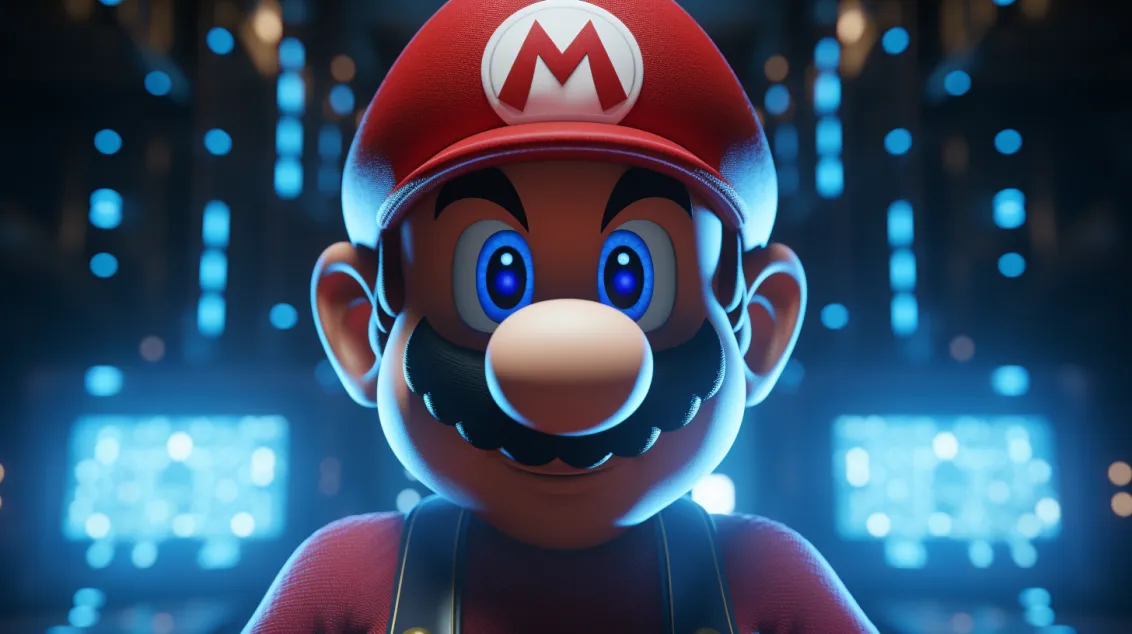
The Consumer Electronics Show (CES) 2024 in Las Vegas had a surprise guest: Mario, the iconic video game character from Nintendo. But this was not the cheerful and friendly Mario that fans know and love. This was a creepy AI Mario, a hologram that spoke in a strange voice and gave bizarre answers to questions.
How AI Mario Came to Be
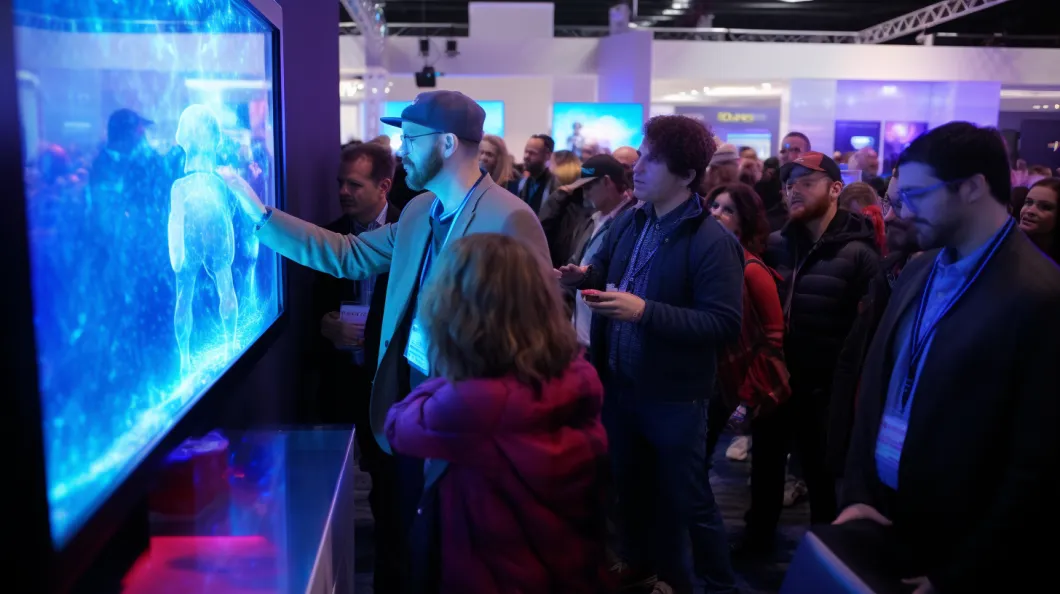
The AI Mario hologram was created by Proto, a company that develops hologram communications software. According to our reporter Taylor Lyles, who witnessed the spectacle on the show floor, Proto used a combination of voice recognition and AI technology to make the hologram listen and respond to attendees.
However, the result was far from convincing. The AI Mario had a noticeable off-brand Italian accent, awkward mouth movements, and stiff posture. It was clear that this was not an official Nintendo product, as the Japanese company is known to be very strict about how its characters are used and portrayed.
The Mystery of the Target Logo
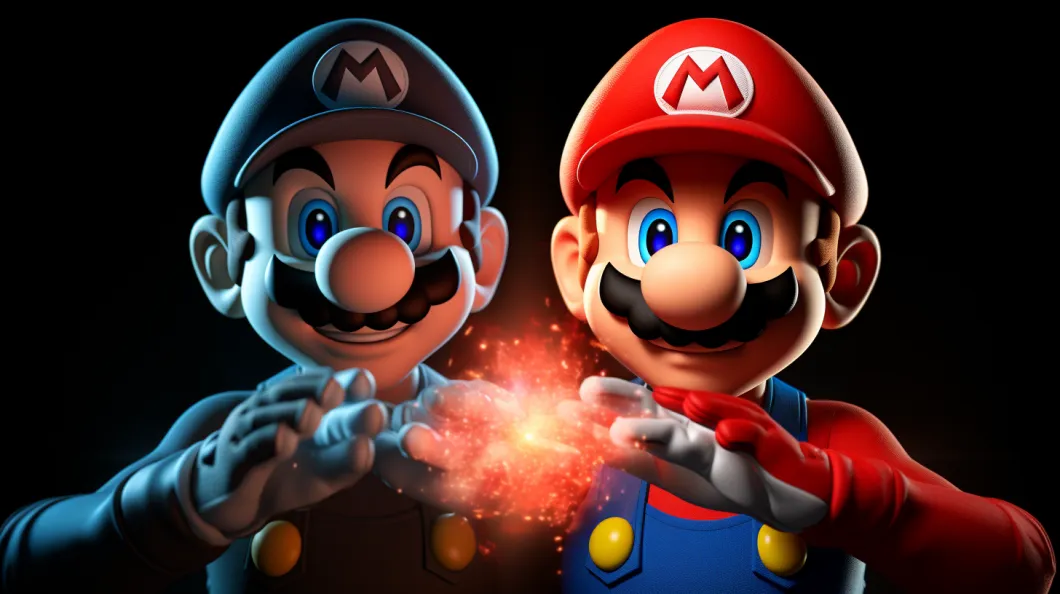
The AI Mario was not the only hologram that Proto displayed at CES 2024. Other images and real people, including the CEO of AARP, were also shown on the hologram box. But what was the connection between Proto, AARP, and Mario?
Some attendees, such as @ProbChild_ and @raystrazdas, reported that they were asked by an AARP representative (not Proto) at the booth to ask Mario how to buy a game. The AI Mario replied (in his unsettling deep voice) by suggesting they look online at Target. com. Moreover, the hologram had a small Target logo in the bottom corner, which was not present in the other demonstrations.
It seems that Proto was demonstrating its hologram AI technology for potential partnerships with retailers like Target and that it could be used as an AI assistant in stores. The AI Mario was apparently a gimmick to attract attention to the booth, but it also raised questions about the legality and ethics of using Nintendo’s intellectual property without permission.
Nintendo and AARP Disavow AI Mario
We contacted Nintendo, Proto, and Target for comments on the AI Mario situation, but only Proto responded. The company issued a statement to IGN, confirming that neither Nintendo nor AARP were involved in the “inadvertent” showing of AI Mario. The statement read:
“The AI hologram animation briefly seen today is an unfinished proof of concept tested for a client to demonstrate technological capabilities and innovation. It is not intended for commercial release. AARP and Nintendo were not involved in the inadvertent showing today. The fact that so many gamers of the world have taken notice shows that they are the best fans in the world, and we salute them.”
A Poor Imitation of Nintendo’s Past Work
The AI Mario incident was not only creepy but also disappointing for Nintendo fans. It reminded them of the times when Nintendo had actually done something similar, but much better. In the past, Nintendo had used the voice of Charles Martinet, the official voice actor of Mario and Luigi, to make the characters talk in real time to people at events like New York Comic Con and Nintendo New York. The difference was that Martinet was hidden somewhere off-camera, listening and responding to questions in a natural and authentic way.
The AI Mario hologram was a poor imitation of Nintendo’s past work and a disrespectful use of its beloved character. We hope that Nintendo will take action to protect its intellectual property and that Proto will learn from its mistakes and respect the rights of other creators.
What is the history of hologram technology?
Hologram technology is the science of creating and displaying three-dimensional images using light interference patterns. The history of hologram technology can be traced back to the late 1940s, when Dennis Gabor, a Hungarian-British physicist, invented the principle of holography while trying to improve the resolution of electron microscopes. He coined the term hologram from the Greek words “holos” (whole) and “gramma” (message).
However, optical holography, which uses visible light to create holograms, did not become feasible until the invention of the laser in 1960. The laser provided a coherent and monochromatic light source that was essential for producing clear and stable holograms. The first optical hologram was made by Yuri Denisyuk, a Soviet scientist, in 1962. He used a reflection hologram technique, which allows the hologram to be viewed under white light from the same side as the light source.