

Table of Contents
Teamwork truly is the foundation of success, a sentiment echoed widely across the leadership landscape. The journey of leadership team development blends both art and science, crafting effective teams that stand as pillars of organizational strength.
The value of high-performing teams to an organization cannot be overstated, though the path to cultivating such teams often presents complex challenges. Whether the goal is to assemble powerhouse teams from scratch or to elevate existing teams to their peak potential, the quest for excellence in team development is ongoing.
What does leadership team development entail?
- Leadership team development involves meticulously bringing together diverse individuals to form a cohesive, effective team. Success hinges on more than just grouping talented members; it requires their harmonious collaboration to significantly contribute to the team’s objectives.
- The essence of team development transcends mere assembly. It demands a commitment to fostering a nurturing environment, purposeful direction, and an embrace of inclusive leadership principles.
- Critical to this process is a leader’s and each team member’s self-awareness, recognizing personal strengths and how these can be leveraged to uplift others’ areas for growth.
- As a leader, the challenge and opportunity lie in empowering your team to unlock their collective potential. When done right, leadership team development cultivates teams that are more agile, engaged, and innovative. Such teams have shown to be remarkably productive, resilient, and more inclined to embrace risks, paving the way for groundbreaking success.
7 Tactics for Effective Leadership Team Development
Exploring the essential skills for assembling a successful team is our starting point. We’ll delve into the core elements that distinguish high-performing teams and unveil strategies to attract and retain top-tier talent, ensuring your leadership team development efforts lead to sustained success and growth.
1. Uncover Your Leadership and Working Style
- Initiating the journey of leadership team development requires introspection to understand your own leadership and working style.
- Reflect on past feedback and your most productive work patterns to pinpoint your unique leadership approach.
2. Define Clear Roles, Responsibilities, and Expectations
- Clarity is crucial for team dynamics. As a leader, it’s essential to ensure every team member understands their specific role, responsibilities, and the expectations you have of them.
- This clarity fosters accountability and sets the stage for your team’s success.
3. Empower Decision-Making Within the Team
- Allowing your team the autonomy to make decisions fosters a sense of ownership and can lead to remarkable outcomes.
- Identifying areas for delegation of decision-making enhances team development and encourages initiative.
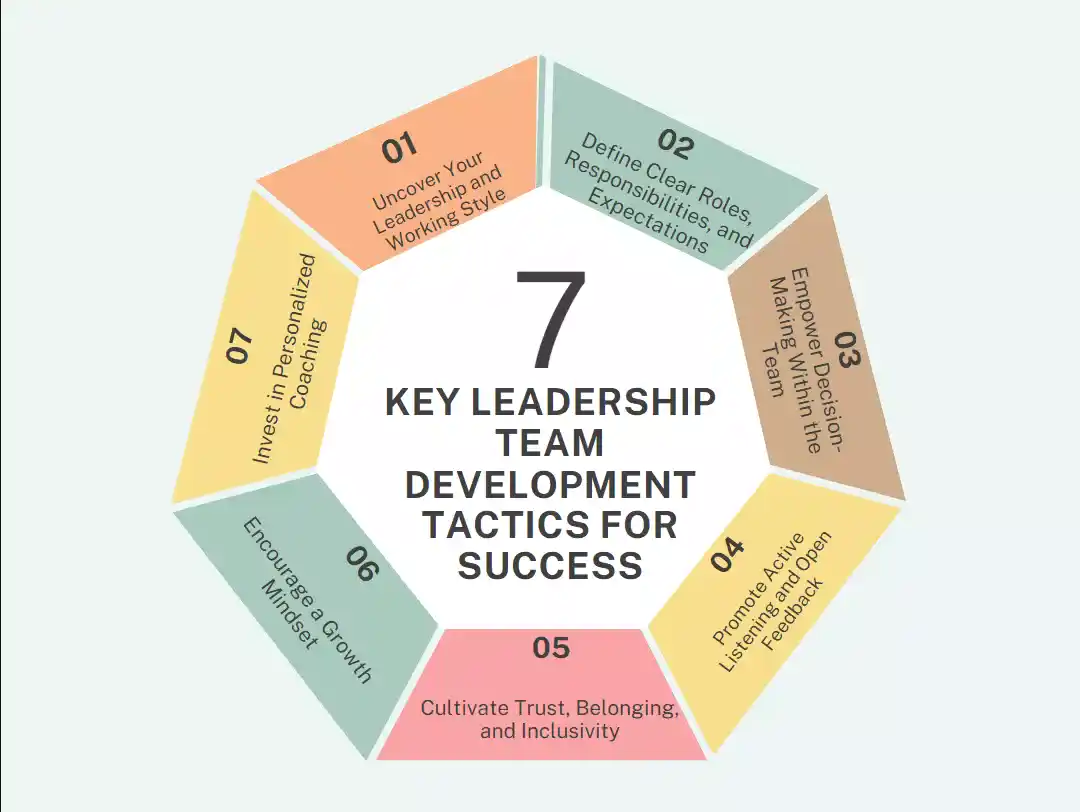
4. Promote Active Listening and Open Feedback
- Effective leaders prioritize listening and feedback. In today’s digital world, these qualities are even more critical.
- They demonstrate empathy, foster understanding, and encourage a culture where feedback is valued, enhancing team cohesion and self-awareness.
5. Cultivate Trust, Belonging, and Inclusivity
- The performance of teams significantly improves when members feel a sense of belonging. Inclusive leadership boosts productivity by 50%, innovation by 90%, and engagement by 150%, while also reducing turnover by 54%.
- Building trust and inclusivity from the outset is key to successful leadership team development.
6. Encourage a Growth Mindset
- For team members to flourish, adopting a growth mindset is essential. This approach encourages continuous improvement through effort and perseverance, fostering an environment where learning and development are prioritized.
7. Invest in Personalized Coaching
- Access to personalized coaching can transform your team’s performance. Coaching builds mental resilience, enhances self-awareness, and improves collaborative efforts.
- With personalized coaching, individuals show significant improvements in engagement and productivity and a decrease in the likelihood of burnout.
Boosting Team Retention: Leadership Team Development Strategies
In today’s ever-changing workforce landscape, the spotlight is firmly on employee retention. With a notable increase in job transitions, crafting effective retention strategies has become a critical mission for leadership teams.
For leaders aiming to enhance team cohesion and ensure their members are not just present but engaged and fulfilled, here are six pivotal strategies:

- Cultivate a Culture of Belonging: The sense of belonging is a key determinant in an employee’s decision to stay with an organization. Ensure every team member feels irreplaceably part of the bigger picture.
- Embrace Inclusive Leadership: The impact of inclusive leadership is profound—teams led by inclusive leaders demonstrate 140% greater engagement, 90% more innovation, and significantly lower turnover rates. Inclusivity not only fosters a richer team environment but directly contributes to superior performance metrics.
- Foster Growth and Learning: A mindset geared towards growth is indispensable in leadership team development. Provide varied opportunities for your team to expand their expertise and tackle new challenges, including team-building activities centered around collective learning experiences.
- Recognize and Appreciate: Regular acknowledgment of team members’ contributions significantly bolsters business outcomes through enhanced retention, a stronger sense of purpose, and heightened satisfaction levels.
- Connect on a Personal Level: Understanding your team personally might seem trivial but is essential for deepening bonds within the team. This connection fosters a sense of care and empathy, making team members feel valued and understood, crucial for cohesion in both physical and virtual workspaces.
- Prioritize Well-being and Mental Fitness: The importance of mental wellness has never been more pronounced. By prioritizing your team’s mental health and overall well-being, and providing resources such as coaching, you lay the groundwork for a resilient and thriving team environment.
Conclusion
The cornerstone of successful leadership team development lies not only in assembling skilled individuals but in nurturing an environment where each team member feels valued, included, and poised for growth. By implementing these strategies—fostering a sense of belonging, practicing inclusive leadership, encouraging continuous learning, recognizing contributions, building personal connections, and prioritizing well-being—leaders can significantly enhance team retention and performance.
Embracing these principles will not only mitigate turnover but also cultivate a culture of excellence and innovation within your organization. The journey of leadership team development is ongoing. Through consistent effort and genuine commitment to your team’s success, you can achieve unprecedented levels of engagement and satisfaction, propelling your organization toward its goals.
FAQs
What is leadership team development?
It’s the ongoing process of helping a group of leaders work together effectively, with clear roles, trust, and shared direction.
How is this different from general team building?
Team building often focuses on one-off exercises or events. This is an ongoing practice built into how the team actually operates; role clarity, decision-making, feedback, and coaching are all folded into daily work rather than a single activity.
Who should be involved: just senior leaders, or the whole management layer?
It typically starts with senior leadership but works best when it extends to every layer of management. Cohesion at the top rarely translates downward if middle managers are excluded from the same practices.
How do you know if leadership team development efforts are actually working?
Look for practical signs: decisions moving faster without constant escalation, team members taking initiative without waiting for direction, and fewer misunderstandings about roles or expectations.
What role does psychological safety play in leadership team development?
It’s foundational. Teams where members feel safe raising concerns or admitting mistakes make better collective decisions and recover from setbacks faster than teams operating on fear of blame.