

Table of Contents
The rise of Industrial IoT (IIoT) is revolutionizing industries worldwide, offering unprecedented levels of connectivity, efficiency, and innovation. As industries strive to enhance productivity and reduce operational costs, the integration of IIoT has become essential. This transformative technology leverages advanced sensors, real-time data analytics, and intelligent systems to streamline operations and drive significant improvements.
From predictive maintenance to smart manufacturing, IIoT applications are reshaping the industrial landscape, providing actionable insights and fostering smarter decision-making processes.
By harnessing the power of IIoT, businesses can optimize asset management, enhance safety measures, and achieve superior energy management. The top 10 IIoT applications are driving tangible benefits, showcasing the potential for substantial gains in efficiency and productivity.
These applications are not only enhancing operational processes but also ensuring compliance with stringent regulations and improving overall workplace safety. Explore the top 10 powerful IIoT applications that are transforming industries and unlocking new opportunities for growth and innovation. Embrace the future of industry with these cutting-edge solutions, setting the stage for a smarter and more connected industrial environment.
What is Industrial IoT?
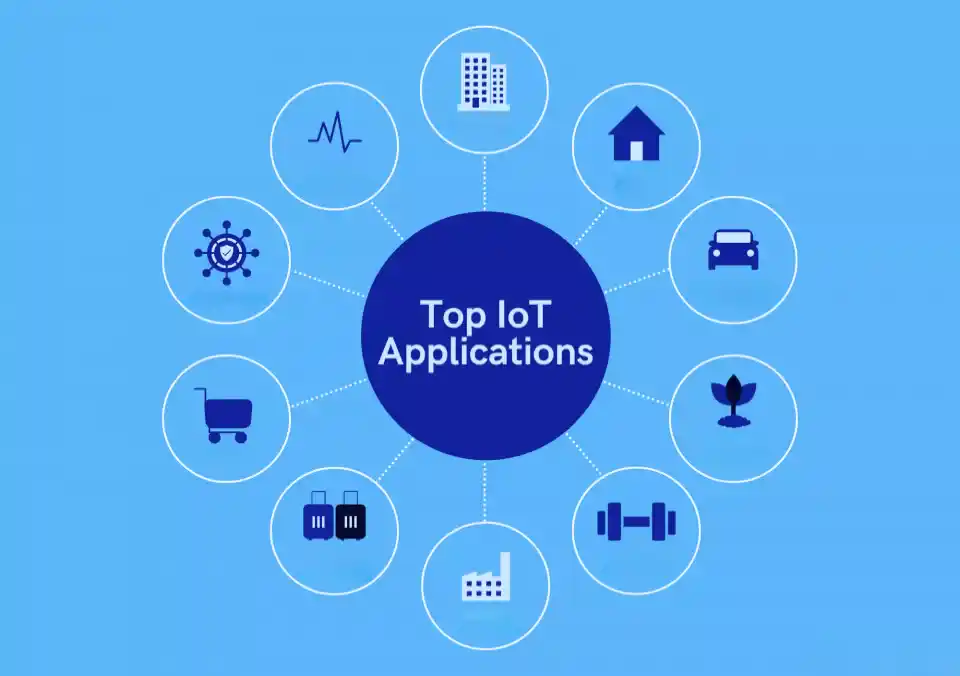
Industrial IoT (IIoT) refers to the integration of advanced sensors, software, and data analytics into industrial processes and machinery. By connecting devices and systems through the Internet, IIoT enables real-time monitoring, automation, and data-driven decision-making.
This technology enhances operational efficiency, improves safety, and reduces costs by providing insights into equipment performance, predicting maintenance needs, and optimizing processes. IIoT is a key driver in modernizing industries and boosting productivity across various sectors.
How Does Industrial IoT Work?
Industrial IoT (IIoT) works by embedding sensors and devices into machinery and systems to collect real-time data. This data is transmitted over a network to centralized platforms where it’s analyzed for actionable insights. IIoT integrates with existing industrial processes to optimize operations, predict maintenance needs, and improve efficiency.
By leveraging advanced analytics and machine learning, IIoT enables proactive decision-making and automation, ultimately enhancing productivity, reducing costs, and driving innovation in industrial environments.
10 Industrial IoT Applications
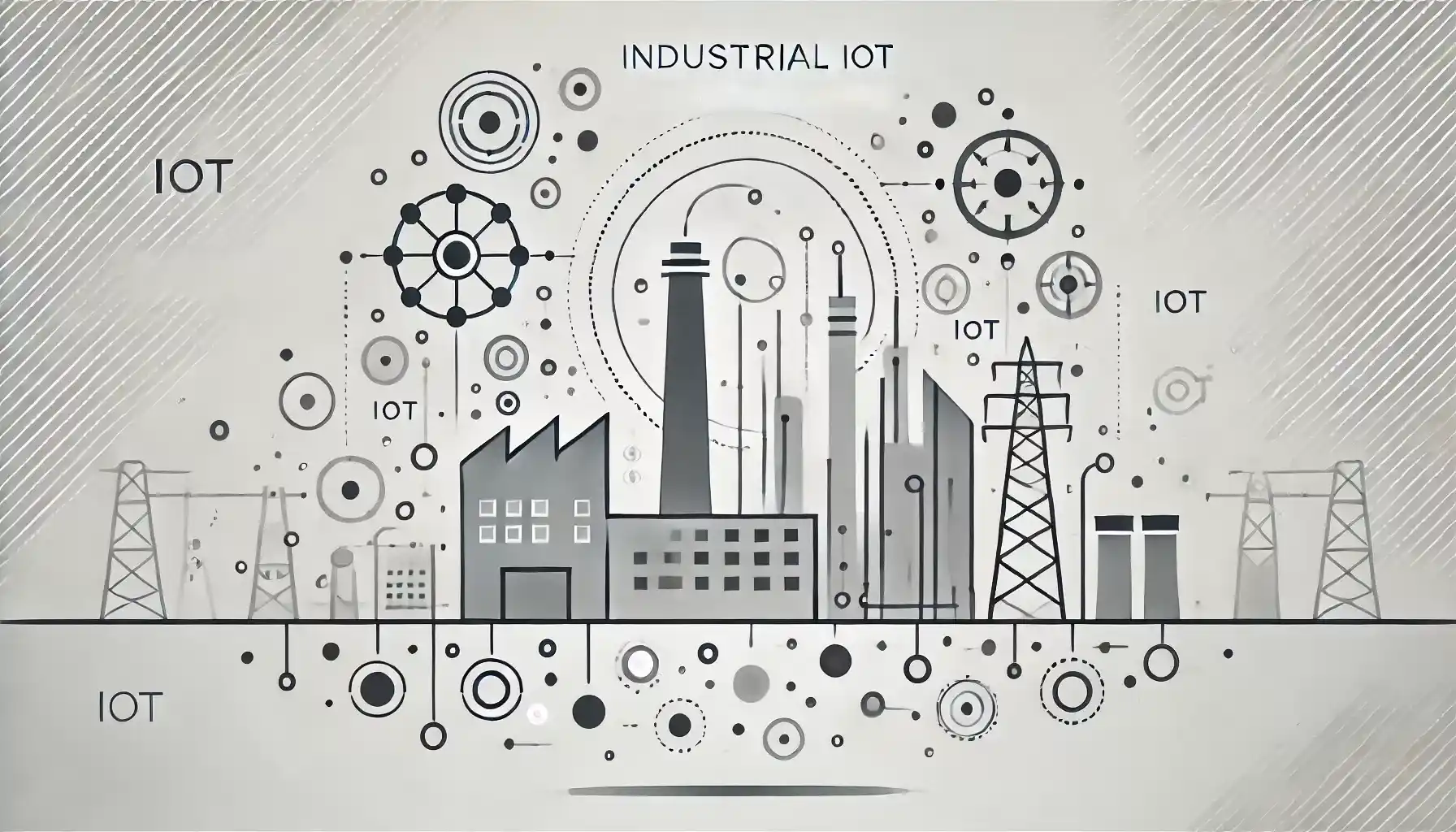
IIoT has a wide range of applications across various industries. Here are the top 10 applications of IIoT:
1. Predictive Maintenance
What it does: Sensors continuously track vibration, temperature, and acoustic signatures on machinery to flag wear patterns before a breakdown occurs.
Key tech: Vibration/thermal sensors feeding machine learning models that spot anomalies against a machine’s normal baseline.
Real-world example: A factory floor motor showing a slight vibration drift gets flagged weeks before failure, letting a technician schedule a fix during planned downtime instead of an emergency stop.
Why it matters: Cuts unplanned downtime, avoids costly emergency repairs, and stretches equipment lifespan without over-servicing healthy assets.
2. Asset Tracking and Management
What it does: RFID tags, GPS trackers, and BLE beacons give real-time location and status visibility for tools, equipment, and vehicles across a site or supply chain.
Key tech: Low-power tracking hardware paired with a central dashboard showing asset location, usage hours, and condition.
Real-world example: A construction firm tracking heavy equipment across multiple job sites can instantly locate an idle excavator instead of renting a duplicate.
Why it matters: Fewer lost or misplaced assets, faster inventory audits, and tighter utilization across teams and sites.
3. Smart Manufacturing
What it does: Connects every stage of the production line machines, conveyors, robotics into a single data stream that feeds analytics and automation software.
Key tech: Industrial sensors, PLCs, and MES (Manufacturing Execution Systems) working together to adjust line speed, detect bottlenecks, and trigger automated responses.
Real-world example: An automotive plant automatically slows a conveyor when a downstream station falls behind, preventing a pileup without human intervention.
Why it matters: Higher throughput, more consistent product quality, and less material waste from uncoordinated processes.
4. Energy Management
What it does: Smart meters and sub-meters monitor power draw by machine, line, or building zone, giving granular visibility into where energy actually goes.
Key tech: IoT-enabled meters reporting into an energy management platform that flags inefficiencies and automates load balancing.
Real-world example: A plant discovers a single idle compressor running overnight is quietly inflating its energy bill and schedules an automatic shutdown after hours.
Why it matters: Lower energy costs, reduced carbon footprint, and easier compliance with environmental regulations.
5. Supply Chain Optimization
What it does: Tracks shipments in transit and monitors environmental conditions temperature, humidity, shock that could compromise goods.
Key tech: GPS and environmental sensors on containers or pallets, streaming data back to a logistics dashboard.
Real-world example: A cold-chain shipment of pharmaceuticals triggers an alert the moment temperature drifts outside the safe range, letting a team intervene before the batch spoils.
Why it matters: Better visibility into delays and disruptions, reduced spoilage, and fewer surprises at the receiving dock.
6. Safety and Compliance
What it does: Environmental sensors detect hazardous conditions, gas leaks, extreme heat, unsafe noise levels, and restricted-zone breaches and trigger automated alerts.
Key tech: Gas and environmental sensors, wearable safety devices, and automated compliance reporting tools.
Real-world example: A chemical processing plant uses gas sensors to detect a leak in a storage area and automatically triggers ventilation systems and floor alerts, evacuating workers before concentration reaches a dangerous threshold.
Why it matters: Fewer workplace incidents, faster emergency response, and less manual work compiling safety audit reports.
7. Remote Monitoring and Control
What it does: Lets engineers view equipment status and make adjustments from off-site dashboards instead of walking the floor.
Key tech: Cloud-connected control systems (SCADA/IoT gateways) giving remote access to live equipment data and controls.
Real-world example: An oil and gas company monitors remote pipeline valves from a central control room, cutting the need for site visits across dispersed locations.
Why it matters: Faster intervention, reduced travel and staffing costs for remote or hazardous sites.
8. Quality Control
What it does: Inline sensors and machine vision systems inspect products during production, catching defects in real time rather than at the end of the line.
Key tech: Computer vision cameras, force sensors, and inline inspection systems that can trigger automatic rejects or line adjustments.
Real-world example: A bottling plant uses vision sensors to detect underfilled bottles mid-line and divert them automatically, before they reach packaging.
Why it matters: Fewer manual inspections, less scrap, and defects caught before they consume more labor and material downstream.
9. Fleet Management
What it does: Tracks vehicle location, driver behavior, fuel usage, and maintenance needs across an entire fleet.
Key tech: GPS trackers, telematics units, and driver-behavior sensors feeding a fleet management dashboard.
Real-world example: A logistics company reroutes delivery trucks in real time around traffic, saving fuel and keeping delivery windows on schedule.
Why it matters: Optimized routing, lower fuel and repair costs, and better on-time delivery reliability.
10. Smart Grid
What it does: Monitors and balances electricity distribution across the grid in real time, adjusting for demand spikes and integrating renewable sources.
Key tech: Smart meters, grid sensors, and automated load-balancing systems communicating across the distribution network.
Real-world example: A utility automatically reroutes power during a localized outage, restoring service to unaffected areas within minutes instead of hours.
Why it matters: Higher grid reliability, faster outage response, and smoother integration of solar and wind power into the existing grid.
Final Note on Industrial IoT
IIoT has many exciting applications. It can decrease time and costs associated with equipment failure, take over tedious tasks that pose health risks for human employees, and ensure the stock is always replenished, preventing delays due to raw material shortages. These are only a few of the benefits.
However, deploying this technology comes with challenges. One of the main issues with IIoT applications is maintaining data security. As more information is aggregated, processed, and stored, the risk of cyberattacks increases. Another challenge is the cost associated with implementing IoT solutions. Businesses must consider these aspects when selecting an IIoT vendor.
Expert assistance can help in equipping devices with sensors, building platforms for managing IoT devices, and developing custom big data analytics solutions tailored to specific business needs.
Embracing IIoT can transform industries, driving efficiency and innovation while ensuring potential obstacles are addressed. With the right approach and support, the potential benefits of Industrial IoT far outweigh the challenges, paving the way for a more efficient and resilient future.
FAQs
Is Industrial IoT worth it for a small or mid-size factory or only for large plants?
Small deployments (one line, one asset class) are the recommended starting point; ROI usually shows up once you scale from a pilot to a few critical machines.
What’s actually the difference between IoT and Industrial IoT?
Consumer IoT covers gadgets built for convenience; Industrial IoT is built for industrial-grade reliability, scale, and uptime where failure is expensive, not just annoying.
How long before an Industrial IoT deployment pays for itself?
Most predictive-maintenance projects report ROI within 12–18 months, though it depends heavily on asset criticality and failure frequency.
Do I need to rip out my existing machinery to add Industrial IoT?
No, most Industrial IoT deployments retrofit sensors and gateways onto existing equipment rather than replacing it outright.
What’s the biggest real-world barrier to Industrial IoT adoption?
Data security and the sheer cost of implementation are the two most cited blockers, more than the technology itself.
What sensors matter most for predictive maintenance in Industrial IoT?
Vibration, temperature, and acoustic sensors are the most common starting point, following an 80/20 rule on your most critical assets.
What connectivity should I use for an Industrial IoT setup: Wi-Fi, cellular, or LoRaWAN?
It depends on facility size and data volume: LoRaWAN suits low-power wide-area sensors, cellular suits remote sites, and Ethernet/Wi-Fi suits dense in-plant setups.
Is edge computing necessary for Industrial IoT, or can everything go straight to the cloud?
For time-sensitive processes, edge computing is increasingly preferred since it cuts latency and keeps operations running if connectivity drops.