
Table of Contents
In today’s digital marketplace, E-commerce APIs have become the backbone of modern online businesses. Whether you’re running a small online store or managing a large-scale digital commerce operation, understanding and implementing the right integration solutions is crucial for success. These powerful tools enable seamless connections between your platform, payment processors, shipping carriers, and inventory management systems, allowing you to automate operations and improve customer experience.
This comprehensive guide explores the 9 best E-commerce APIs for 2026, helping you choose the right solutions to streamline your operations, enhance security, and scale your business efficiently.
What Are E-commerce APIs and Why Do You Need Them?
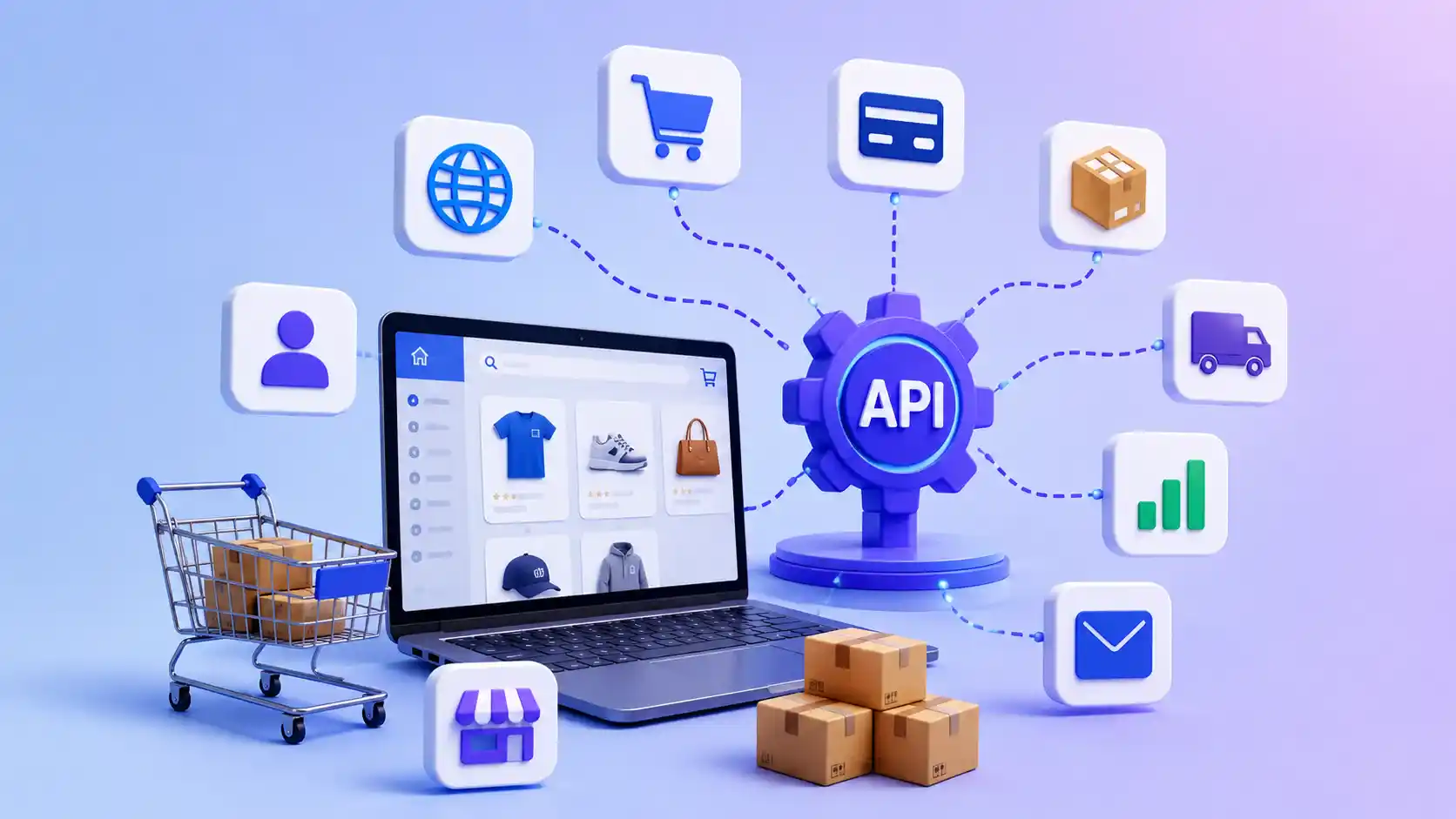
E-commerce APIs are application programming interfaces that allow different software systems to communicate and share data in real-time. In the context of online commerce, these powerful tools connect your storefront with essential business services from payment gateways to shipping providers to inventory management systems.
Key Benefits of Integration Solutions:
- Automation: Reduce manual data entry and automate order processing
- Real-time Synchronization: Keep inventory, orders, and customer data updated across all channels
- Multi-channel Selling: Manage products and orders across multiple platforms simultaneously
- Enhanced Security: Implement secure payment processing and data encryption
- Scalability: Grow your business without technical limitations
- Better Customer Experience: Offer real-time shipping tracking, order updates, and personalized service
E-commerce APIs work by establishing connections between your e-commerce platform and third-party services through standardized protocols, typically REST or GraphQL architecture.
The 9 Best E-commerce APIs Compared
1. Stripe API: Leading Payment Processing Solution
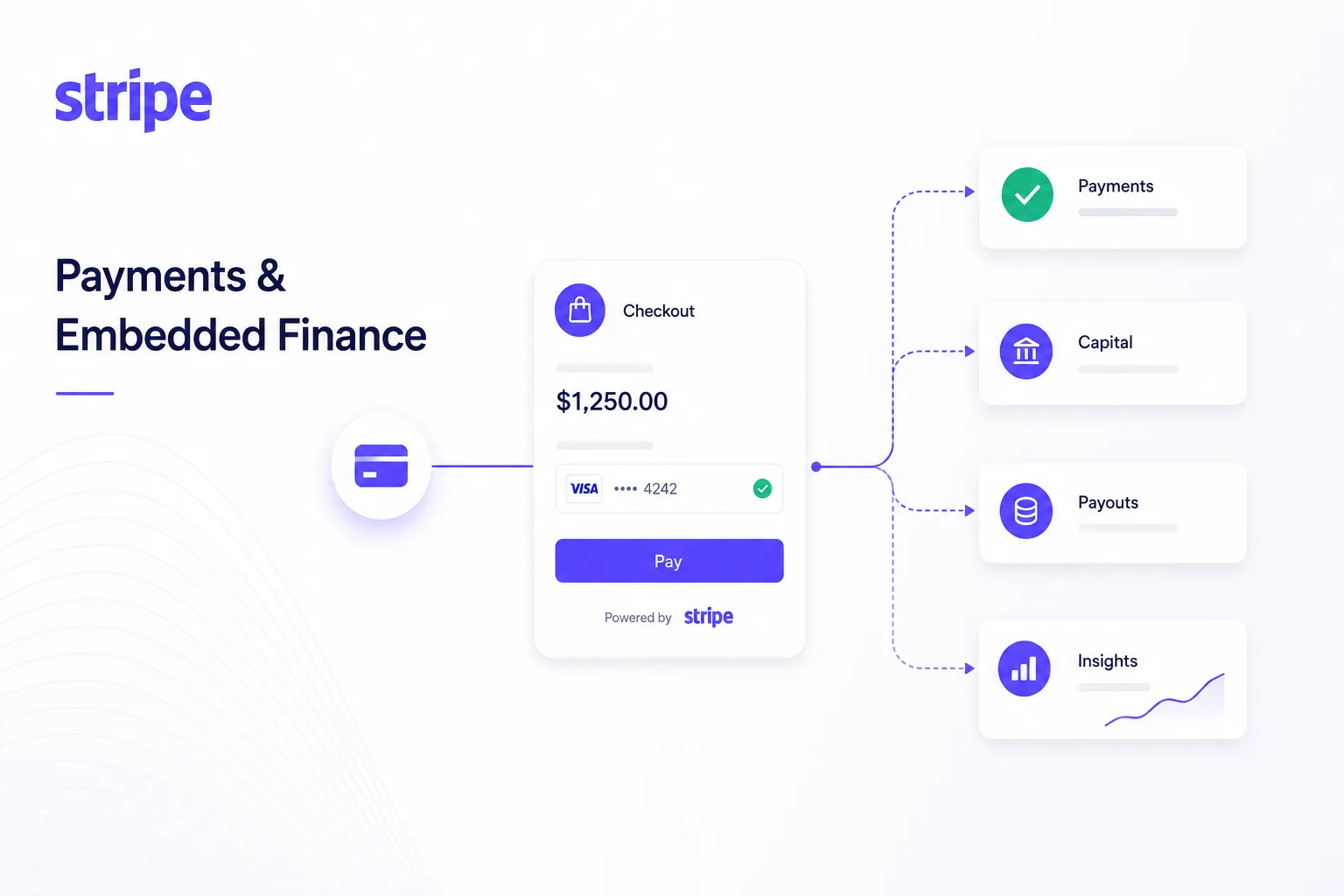
Stripe’s payment gateway remains one of the most popular E-commerce APIs for processing online transactions. Among the top E-commerce APIs, Stripe provides robust payment processing capabilities, supporting multiple payment methods including credit cards, digital wallets, and local payment options.
Key Features:
- PCI compliance and fraud detection
- Multi-currency support
- Webhook implementation for real-time notifications
- Excellent API documentation
- Competitive transaction fees (2.9% + $0.30 per transaction)
Best For: Businesses requiring secure payment processing with minimal friction.
2. PayPal API: Trusted Payment Gateway
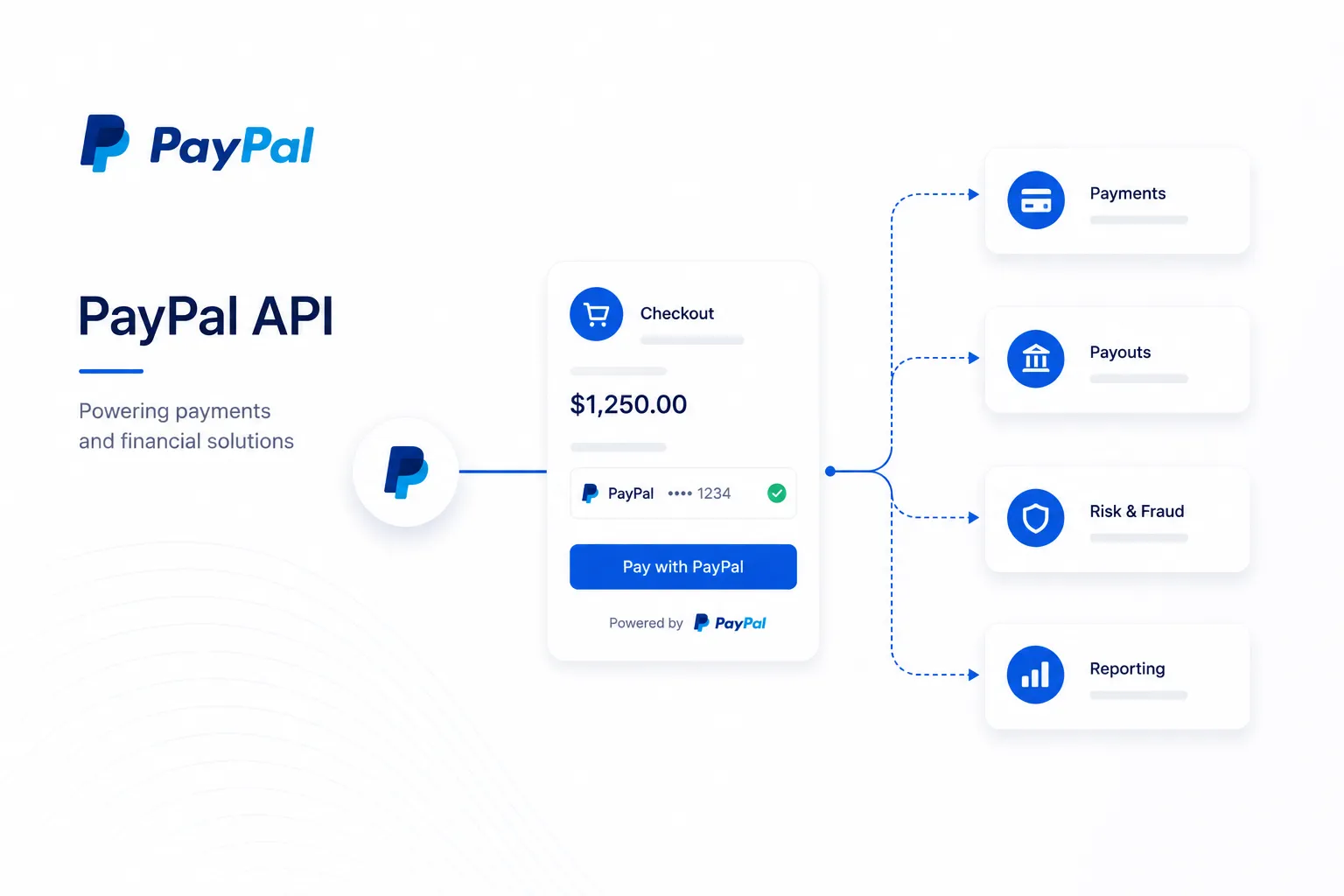
PayPal’s commerce solutions offer established trust and global reach. When comparing E-commerce APIs for payment processing, PayPal stands out as one of the most reliable E-commerce APIs for international transactions. This payment integration supports multiple payment methods and provides comprehensive merchant protection.
Key Features:
- Express checkout capabilities
- Subscription and recurring billing
- Fraud prevention tools
- Multi-currency transactions
- Integration with existing PayPal accounts
Best For: Established businesses with existing PayPal customer bases.
3. Shopify API: Complete Platform Integration
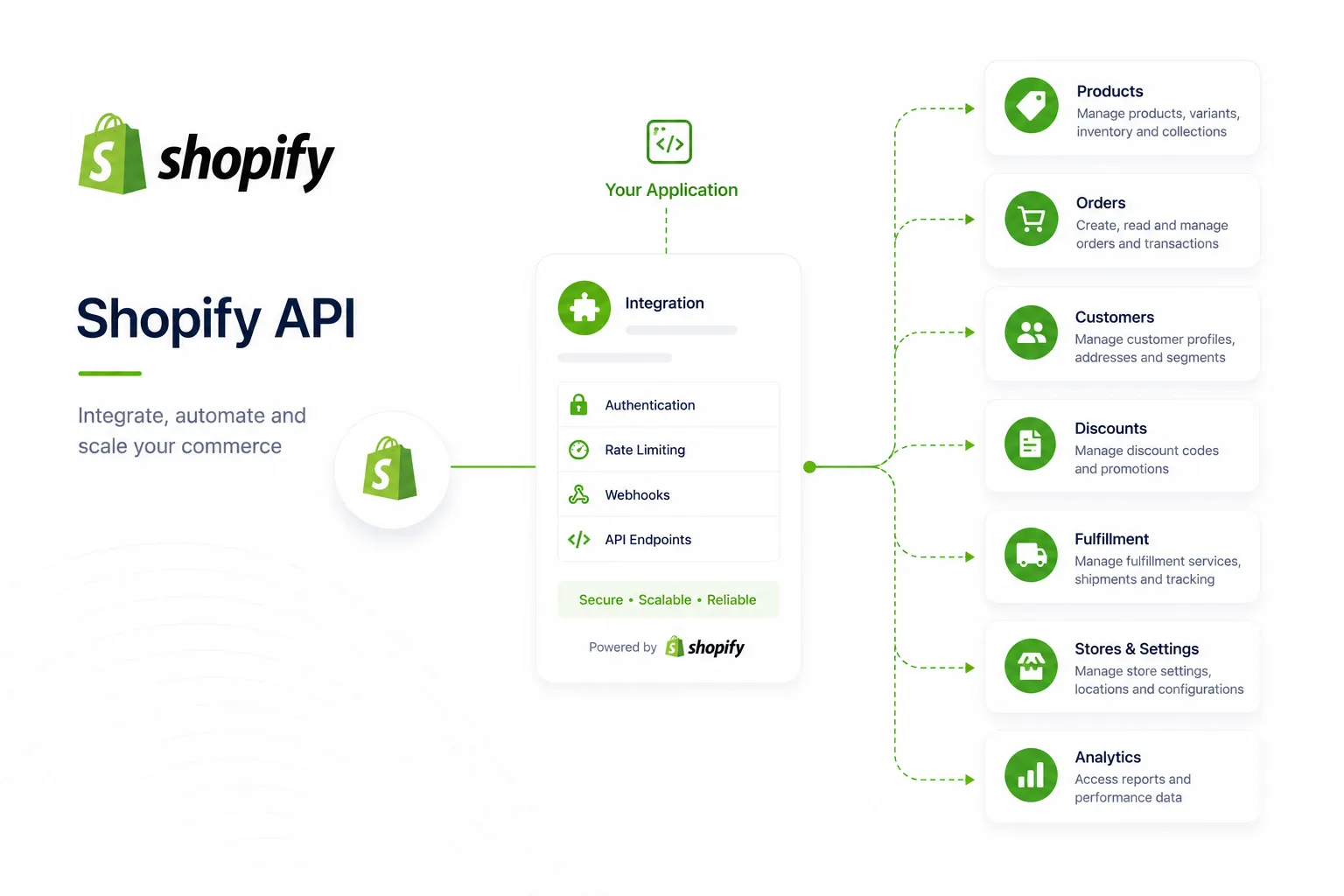
For businesses using Shopify, the Shopify REST API is essential for custom development and third-party integrations. This solution enables app creation and seamless connections directly within the Shopify ecosystem.
Key Features:
- GraphQL and REST API options
- Product catalog management
- Order and transaction handling
- Customer data access
- Webhook support for real-time events
Best For: Shopify store owners requiring custom functionality.
4. WooCommerce REST API: WordPress Integration
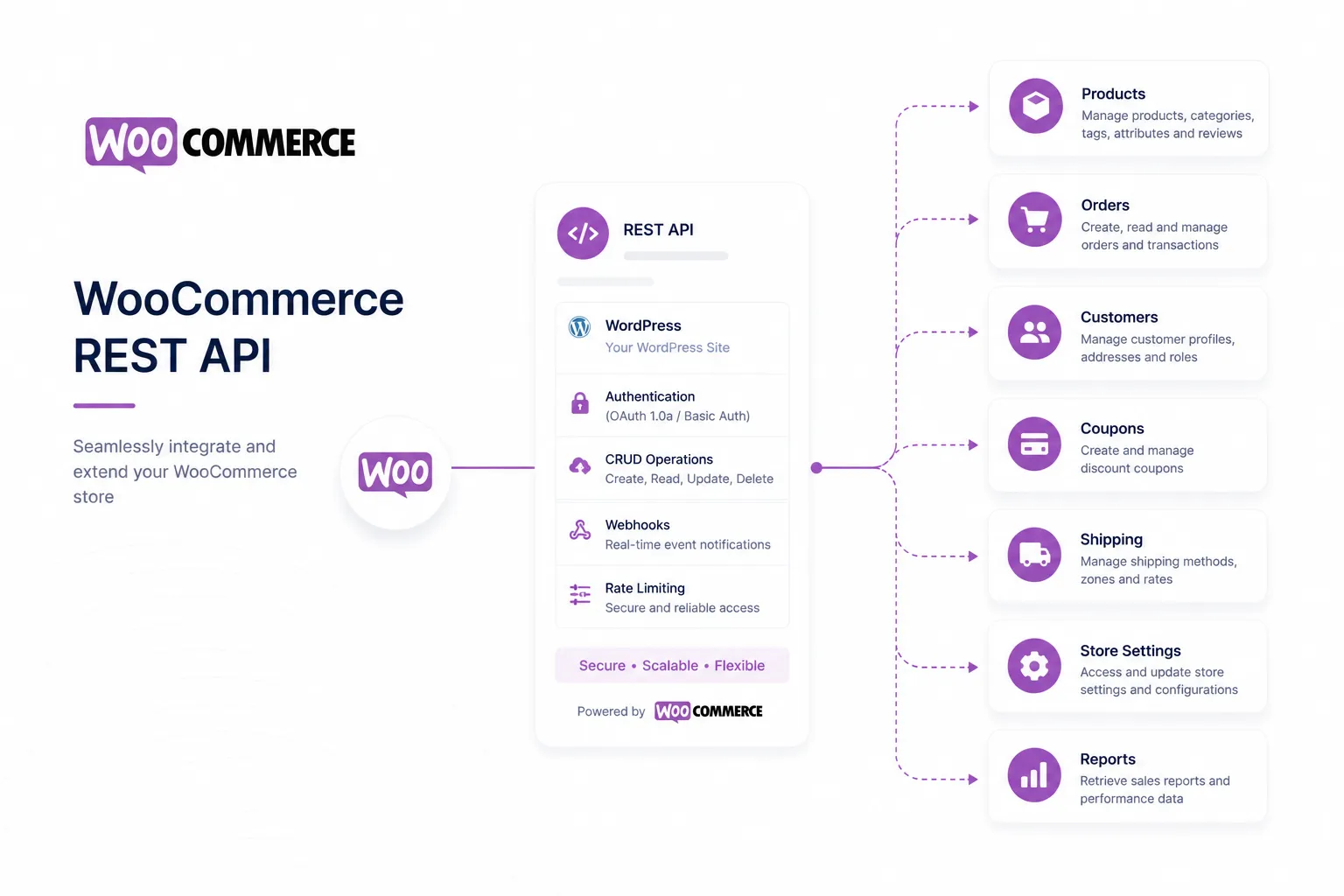
The WooCommerce REST solution stands as the go-to integration tool for WordPress-based online stores. For those seeking E-commerce APIs specifically designed for WordPress compatibility, WooCommerce offers an excellent choice. This API allows developers to manage products, orders, customers, and inventory programmatically.
Key Features:
- Complete product management capabilities
- Order processing and tracking
- Customer database access
- Inventory synchronization
- Extensive plugin ecosystem
Best For: WordPress users wanting flexibility and customization.
5. EasyPost Shipping API: Real-time Logistics Solution
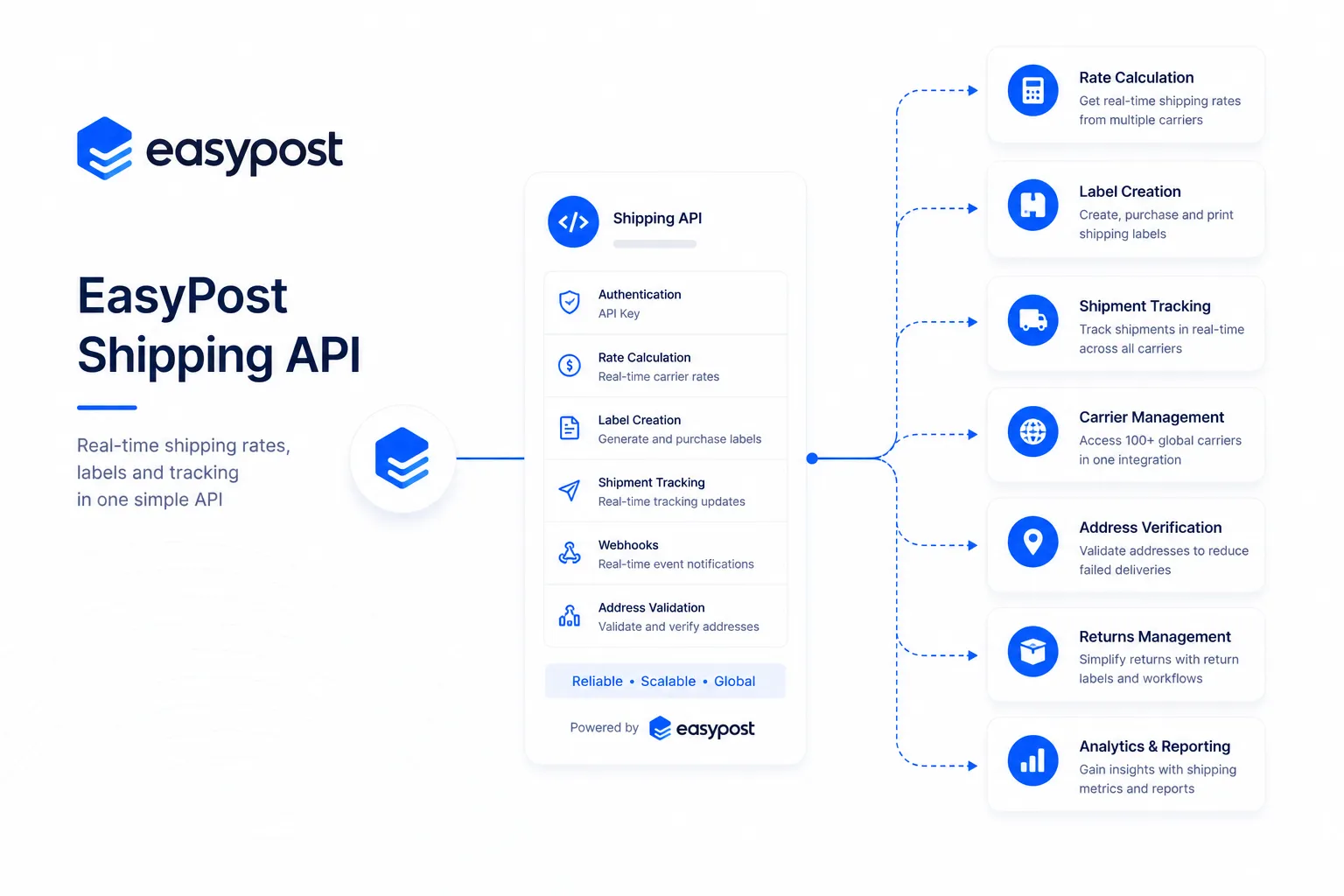
EasyPost provides one of the most comprehensive shipping solutions available today. This logistics integration integrates with major carriers and provides real-time shipping rates, label generation, and tracking.
Key Features:
- Support for FedEx, UPS, USPS, DHL
- Real-time rate calculation
- Automated label generation
- Tracking integration
- Returns management
Best For: Businesses managing complex shipping operations.
6. API2Cart Unified API: Multi-Platform Integration Solution
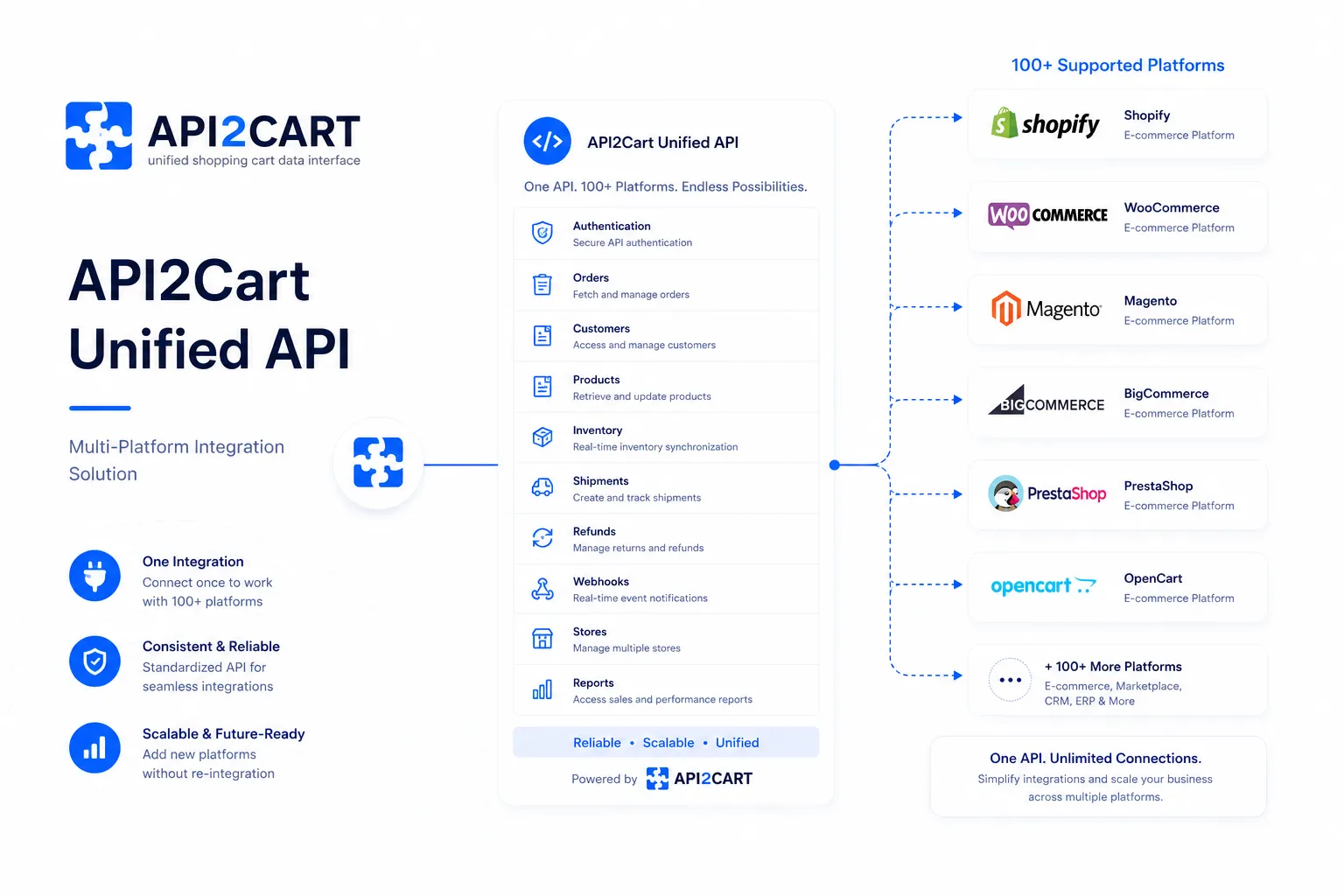
API2Cart is a comprehensive, unified API solution that simplifies integration management across multiple e-commerce platforms. This integration platform enables merchants to manage inventory, orders, and customer data seamlessly from a single connection point.
Key Features:
- Multi-platform compatibility (100+ e-commerce platforms)
- Real-time inventory synchronization
- Unified order management across channels
- Customer data consolidation
- Automated product catalog updates
- Webhook support for real-time events
- Simplified authentication across platforms
Best For: Multi-channel merchants and marketplace integrators seeking unified platform control.
7. Twilio Communications API: Customer Engagement
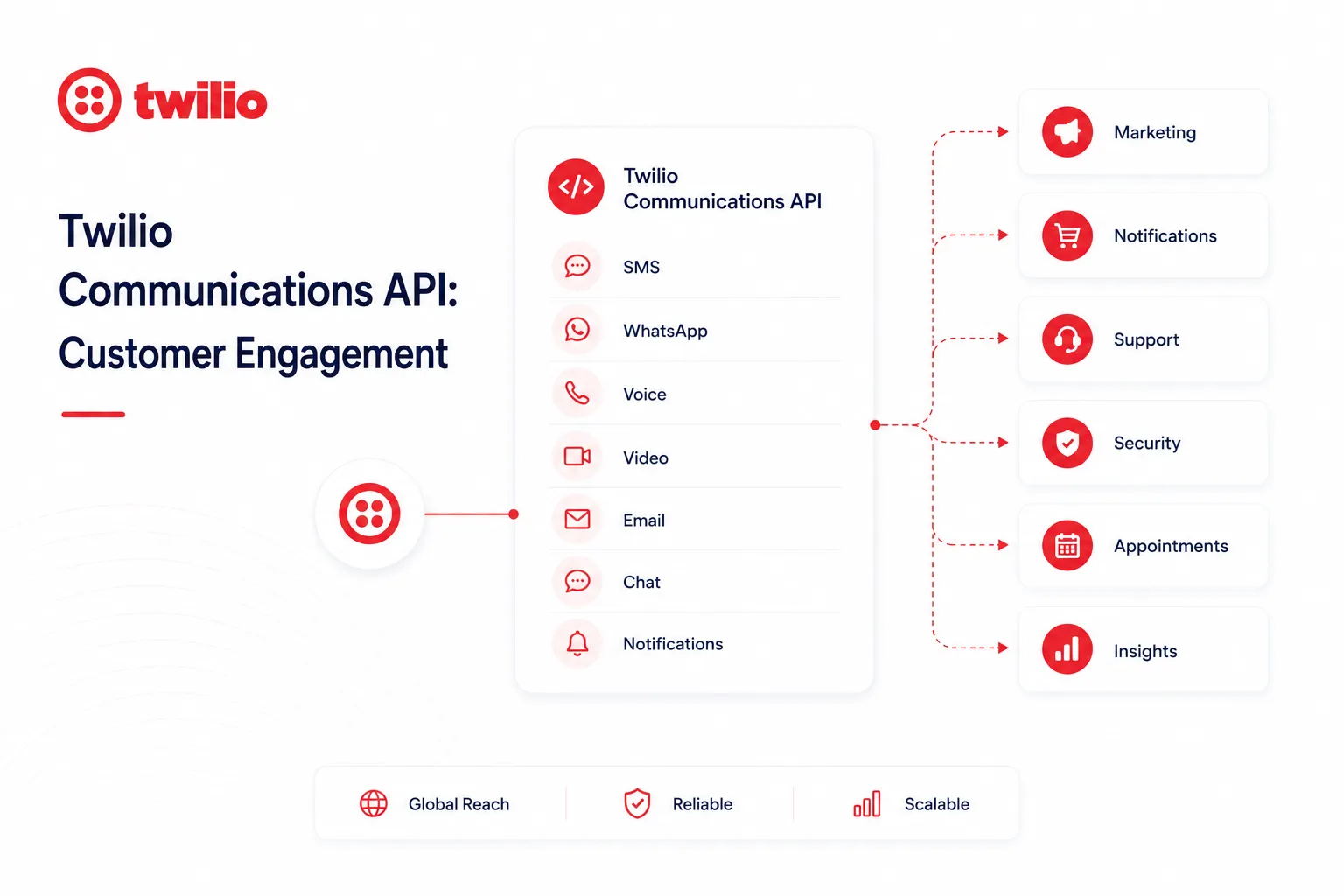
Twilio’s communication solutions focus on customer engagement through SMS, voice, and email. This integration enhances customer experience with real-time order notifications and updates.
Key Features:
- SMS notifications for orders
- Voice call capabilities
- Email delivery
- Two-factor authentication
- Webhook-based messaging
Best For: Businesses prioritizing customer communication.
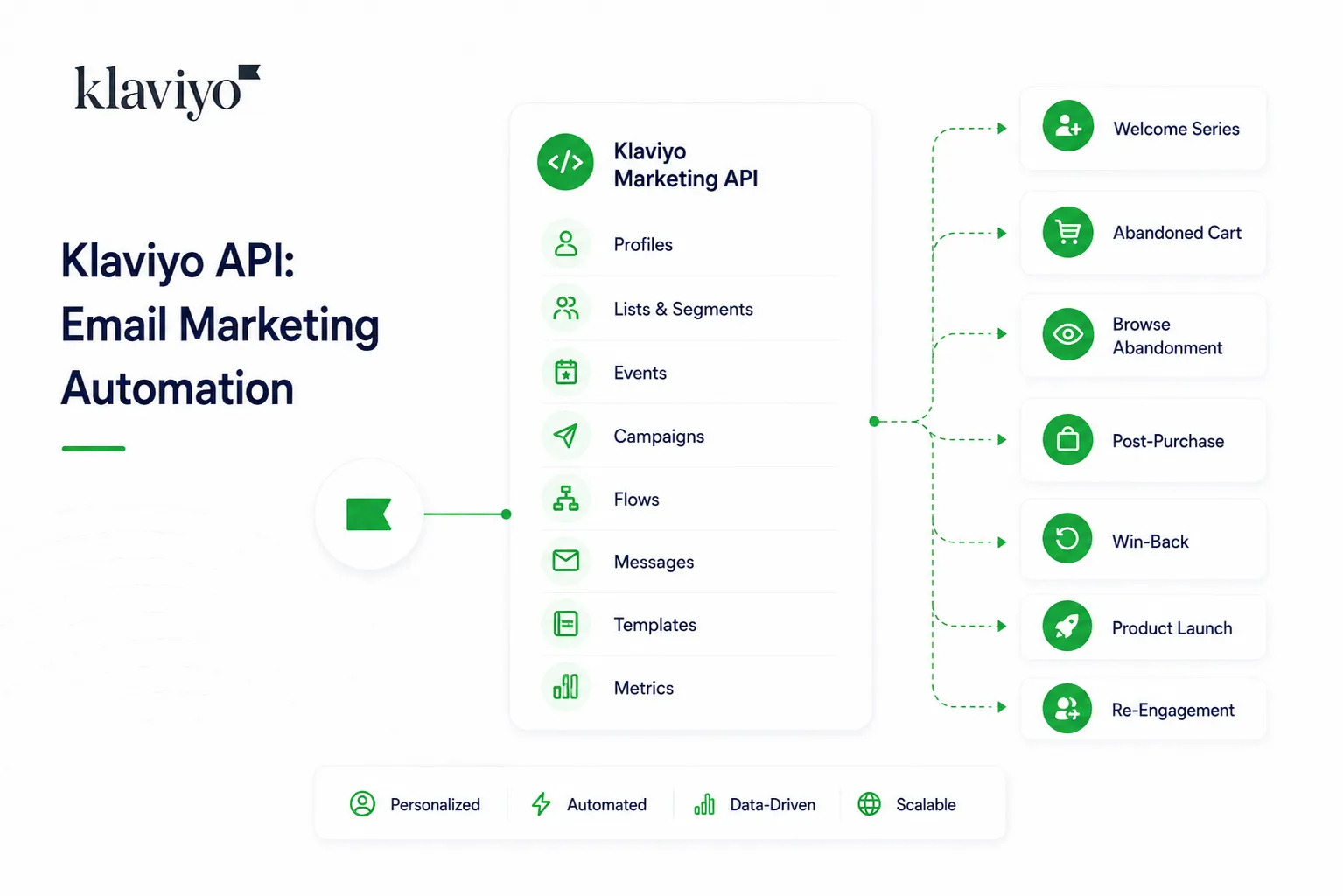
8. Klaviyo API: Email Marketing Automation
Klaviyo’s marketing automation platform helps online retailers create personalized customer experiences through data-driven email campaigns.
Key Features:
- Customer data platform integration
- Segmentation and personalization
- Behavioral email triggers
- Analytics and reporting
- E-commerce platform integrations
Best For: Businesses focusing on customer retention and marketing.
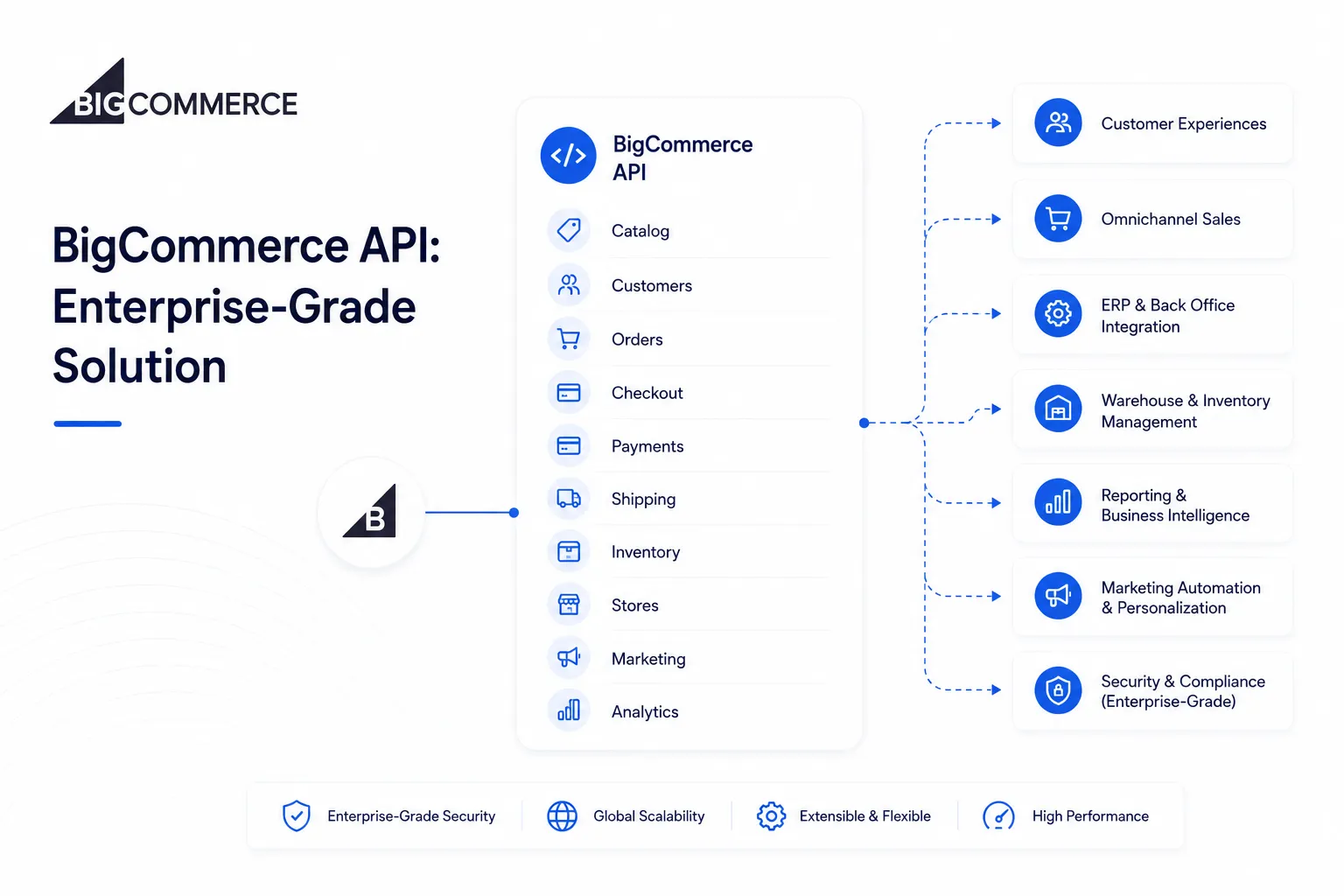
9. BigCommerce API: Enterprise-Grade Solution
BigCommerce provides a robust platform solution for businesses requiring enterprise functionality. This comprehensive API supports product management, multi-store operations, and complex business logic.
Key Features:
- Product catalog management
- Multi-store support
- Advanced inventory controls
- Customer management
- Scalable infrastructure
Best For: Growing businesses requiring enterprise features.
Comparison Table: Integration Features
| Integration | Primary Function | Ease of Setup | Pricing Model | Best For |
|---|---|---|---|---|
| Stripe | Payment Processing | High | Per Transaction | Quick Setup |
| PayPal | Payment Processing | Medium | Per Transaction | Global Reach |
| Shopify | Platform Integration | High | Subscription | Shopify Stores |
| WooCommerce | Platform Integration | Medium | Free/Plugin | WordPress Sites |
| EasyPost | Shipping | Medium | Per Label | Logistics |
| API2Cart | Multi-Platform | Medium | Subscription | Multi-Channel |
| Twilio | Communications | Medium | Usage-Based | Customer Engagement |
| Klaviyo | Marketing | High | Per Contact | Email Marketing |
| BigCommerce | Enterprise | Low | Subscription | Large Operations |
How to Choose the Right Integration Solutions for Your Business
Selecting appropriate solutions depends on several critical factors:
1. Business Requirements
Identify which business processes require automation. Do you need payment processing, shipping integration, inventory management, or customer communication? Different tools serve different purposes, and E-commerce APIs address specific operational challenges.
2. Platform Compatibility
Ensure your chosen solutions work seamlessly with your existing platform. Whether using Shopify, WooCommerce, or custom development, integration compatibility is essential for smooth operations.
3. Scalability
Consider your growth projections. The best solutions should handle increased transaction volume and data without performance degradation.
4. Documentation Quality
Quality documentation significantly impacts implementation time. Choose tools with comprehensive guides, code examples, and developer support.
5. Security Standards
Verify that your solutions comply with PCI DSS, GDPR, and other relevant security standards. Data protection is non-negotiable in e-commerce.
6. Cost Structure
Evaluate pricing models carefully. Some solutions charge per transaction, others use subscription models, and some offer free tiers.
E-commerce API Integration Best Practices
Successfully implementing E-commerce APIs requires following established best practices to ensure reliability and performance:
1. Implement Proper Error Handling: Always handle integration errors gracefully. Failures should never directly impact customer experience.
2. Use Webhook Implementation: Webhooks enable real-time event notifications. Configure these for order processing, payment confirmations, and shipping updates.
3. Rate Limiting Management: Respect API rate limits to avoid service interruptions. Implement exponential backoff for retry logic.
4. Authentication Security: Store API keys securely using environment variables. Never hardcode credentials in your codebase. Implement OAuth authentication when available.
5. Data Synchronization: Maintain real-time inventory synchronization across channels. Regular audit logs help identify integration issues early.
6. Testing and Monitoring: Thoroughly test E-commerce APIs in staging environments before production deployment. Monitor API performance continuously.
Common Integration Challenges and Solutions
Challenge 1: Rate Limiting
Solution: Implement queue-based processing and batch operations where possible. Use webhook events instead of polling.
Challenge 2: Data Inconsistency
Solution: Establish master data sources and sync regularly. Implement conflict resolution strategies.
Challenge 3: Integration Complexity
Solution: Start with essential integration tools and expand gradually. Consider using middleware platforms for complex integrations.
Challenge 4: Cost Management
Solution: Monitor API usage regularly. Optimize requests and consider tiered solutions.
Conclusion
Selecting and implementing the right integration solutions is fundamental to modern online business success. Whether you’re optimizing payment processing, streamlining shipping, automating inventory, or enhancing customer communication, E-commerce APIs provide the technical foundation for growth.
The 9 best solutions outlined in this guide, Stripe, PayPal, Shopify, WooCommerce, EasyPost, Square, Twilio, Klaviyo, and BigCommerce, represent industry-leading options that serve businesses of all sizes.
Start your integration journey today. Evaluate your business needs, prioritize requirements, and implement solutions progressively. As your business grows, your integration ecosystem can expand to meet emerging challenges.
Ready to Transform Your E-commerce Operations?
Don’t let manual processes limit your growth. Explore E-commerce APIs that align with your business goals, implement best practices, and unlock the full potential of your online store. The right integration solutions can transform how you operate, reduce costs, and dramatically improve customer experience.
Start integrating solutions into your business strategy now; your competitive advantage awaits.
FAQs
What exactly are E-commerce APIs, and how do they differ from regular web APIs?
These commerce-specific tools serve online business functions, such as payment processing, inventory management, and shipping, while general web APIs have broader applications. E-commerce APIs are optimized for transaction security, real-time updates, and multi-channel operations.
Do I need to use multiple integration solutions, or can one tool handle everything?
Most successful online retailers use multiple specialized solutions. For example, combining Stripe for payments, EasyPost for shipping, and Shopify integration for platform management provides comprehensive functionality.
How secure are these integration solutions for handling sensitive payment information?
Leading E-commerce APIs from providers like Stripe and PayPal comply with PCI DSS Level 1 standards. They use tokenization, encryption, and secure authentication. Never store raw payment card data; these solutions handle this securely.
What’s the typical implementation timeline for integration solutions?
Simple implementations take 2-4 weeks. Complex multi-solution integrations can take 2-3 months, depending on existing infrastructure and team expertise.
How do these solutions handle cart abandonment and customer data?
Advanced tools like Klaviyo provide customer data platforms integrated with commerce systems. They track abandoned carts and enable recovery campaigns.
How do I monitor and troubleshoot integration issues?
Use monitoring tools, check webhook delivery logs, implement comprehensive error logging, and regularly audit performance. Most providers offer developer dashboards for troubleshooting.
Can these solutions integrate with existing inventory management systems?
Yes, established tools like Shopify and BigCommerce provide robust inventory integration. Real-time synchronization prevents overselling and keeps data accurate across channels.
What happens if an integration solution experiences downtime?
Implement fallback mechanisms and redundancy. Use multiple payment processors when possible. Quality integration tools guarantee 99.9% uptime through SLA agreements.
What free E-commerce API integration solutions are available?
Many commerce tools offer free tiers. WooCommerce integration is free, Shopify provides free developer plans, and several services offer generous free tiers. However, transaction fees typically apply.