
Table of Contents
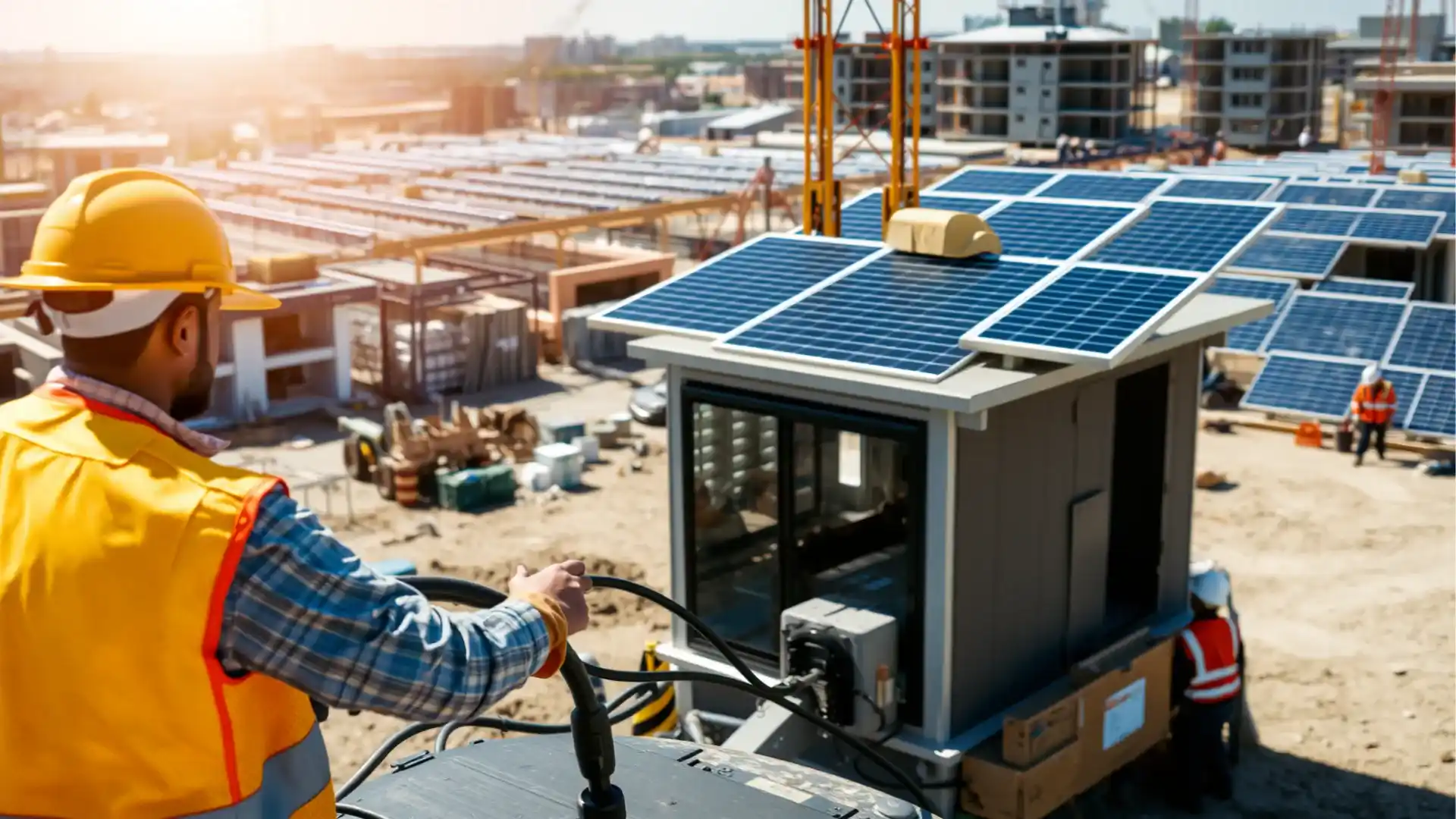
Solar-powered construction sites are heralding a transformative wave in the construction industry. With the tectonic shifts in the world’s direction toward sustainability, construction is, itself, the next key contributor to global carbon emissions, thus turning towards solar energy is one of the most viable alternatives for powering operations.
According to a report by the World Economic Forum, solar power in construction will be a major turning point in the advancement of environmentally sustainable development, with the sector amounting to approximately 39% of total global carbon emissions.
An environmental necessity, but also a business opportunity for solar energy, as it becomes more viable, cheaper, and incentivized by governments worldwide.
The Rise of Solar-Powered Construction
The idea for solar-powered construction sites is simple yet revolutionary. With portable solar panels and energy storage, construction companies can produce renewable power on-site, thereby eliminating or greatly reducing their reliance on diesel generators and grid electricity.
Global CO₂ emissions from energy combustion and industrial processes have continued climbing in recent years, underscoring why sectors like construction are under growing pressure to decarbonize their operations, according to the International Energy Agency (IEA).
In the US, solar-powered construction is supported by federal tax credits covering a meaningful share of installation costs. The European Union, on the other hand, has committed to steep reductions in building sector emissions in the coming years, thus pushing for solar integration across industries.
The long-run benefits of such cleaners become even clearer now as more builders move toward adopting solar-powered construction solutions not just to help drive their footprint towards carbon neutrality but also with better savings that they can achieve on costs. They can substantially reduce costs by avoiding the purchase of fuel for generators and lowering conventional equipment maintenance.
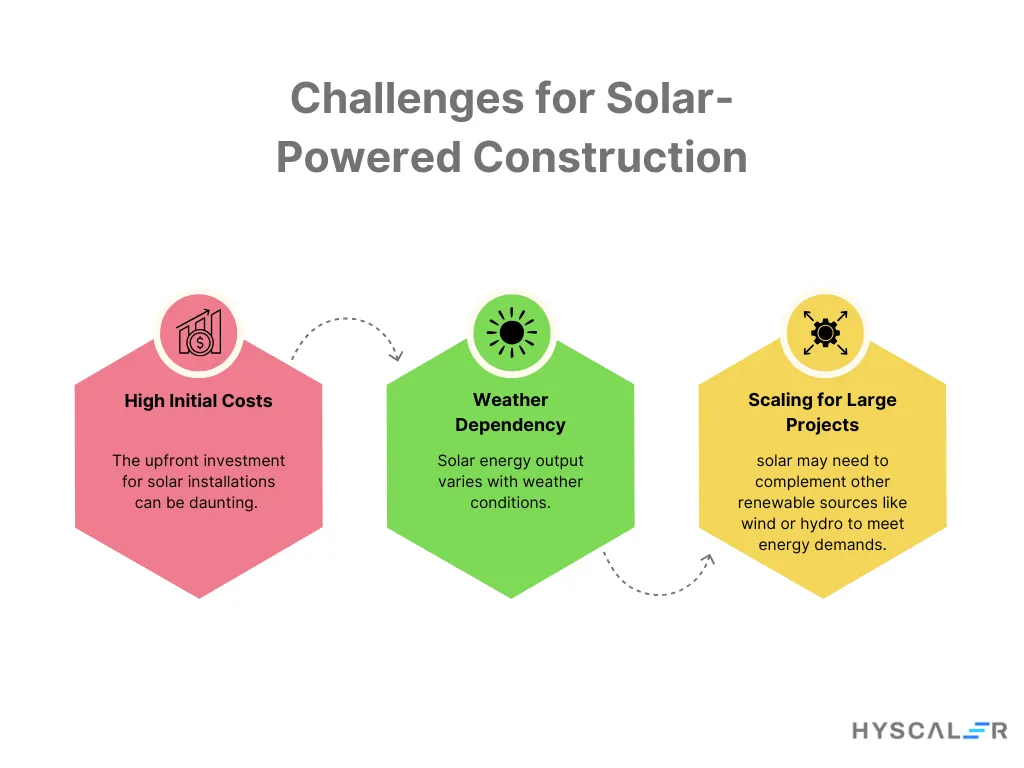
With the advancement and decline in prices for solar developments, the return on investment will keep increasing for solar-powered construction job sites, making them a better option in financial terms for the industry, especially for homeowners researching an ADU solar guide before starting small-scale residential projects. This shift, therefore, combines the basics of sustainability with a chance to score corporate brownie points for innovations and environmental cooperation.
A Day in the Life of the Solar-Powered Sites
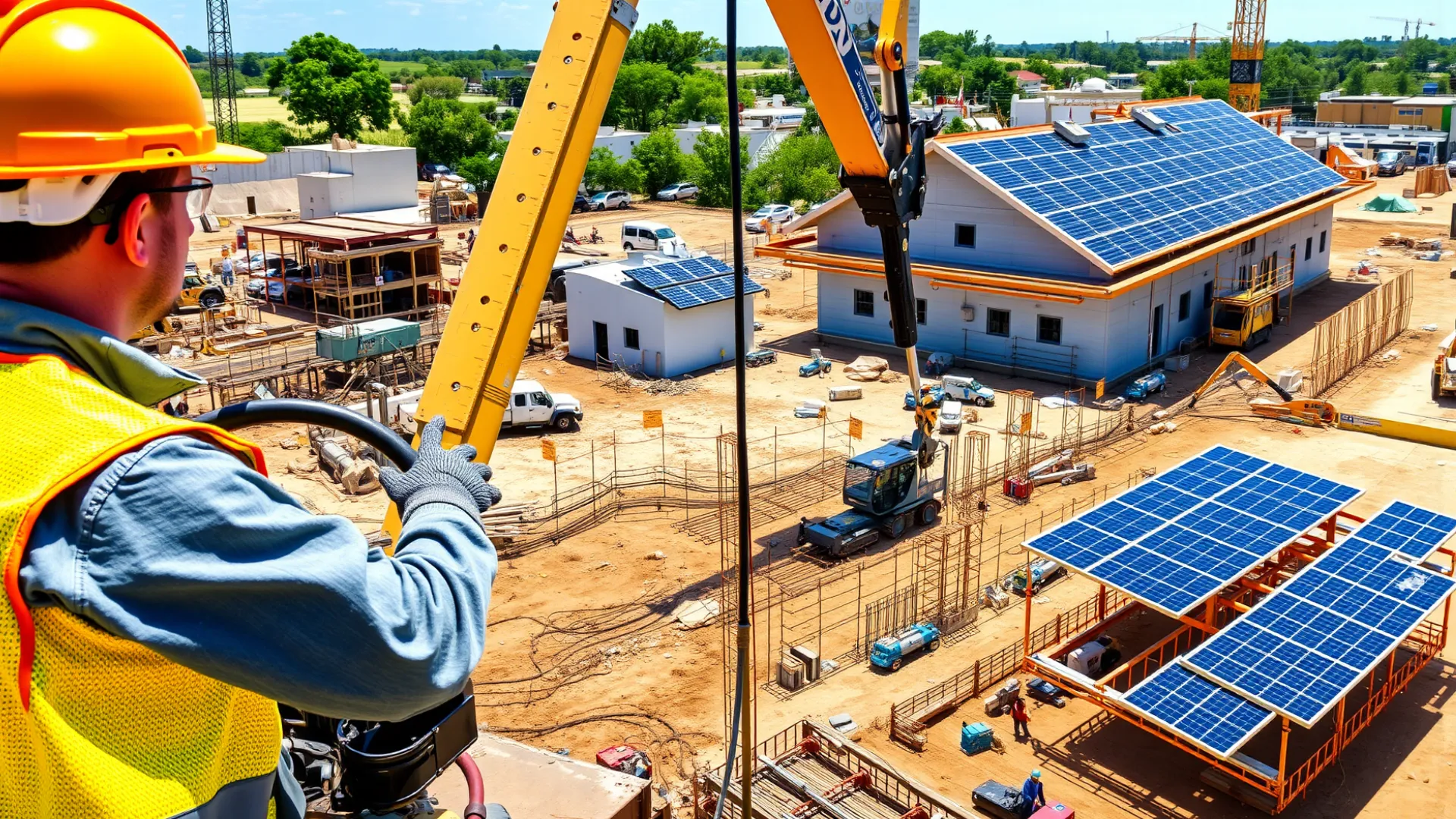
On an active construction site, imagine entering the towering cranes and the heavy-duty machinery humming in quiet efficiency, no diesel fumes here, just solar silent power. In the meantime, the workers gather in the solar-powered site office. Computers, air conditioning, and lighting work without a hitch.
At night, all the lights are kept on by tower lights powered by solar energy, which use a fraction of the energy compared to conventional lighting. Even electric construction vehicles receive their supply on-site from mobile solar charging stations.
Not in some far-off time, but today. Skanska and Balfour Beatty are already testing solar technologies on projects, setting benchmarks for the rest of the industry.
How Solar-Powered Construction Works
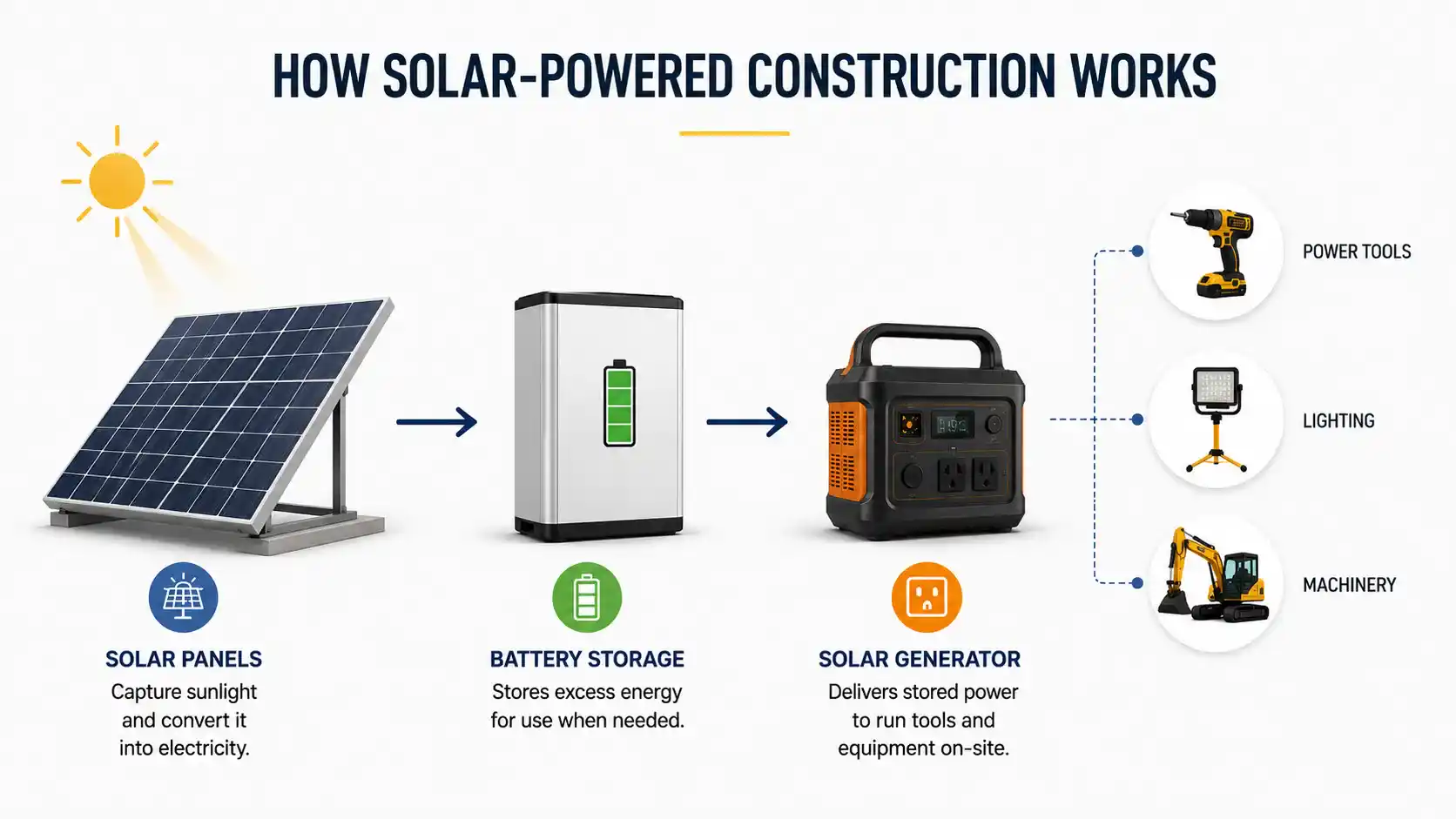
Solar-powered construction sites work on a combination of three components: solar panels, battery storage, and solar generators, each performing its part in providing clean, renewable energy to construction operations.
Solar Panels
Solar panels are the core of any solar electricity-generating system, as they convert sunlight into electricity. Portable ones are best for construction since they can be rearranged throughout the day to capture optimum sunlight. Solar tracking systems can adjust panels to follow the sun’s path, capturing as much sunlight as possible. Their overall efficiency in reducing reliance on grid power or fuel-based generators translates directly into cost savings.
Battery Storage
This energy storage system takes excess energy generated during the day and stores it in batteries for use later, especially at night or during cloudy weather. Systems such as Tesla Powerwall provide the configuration to store and discharge energy as needed on-site.
Battery prices have fallen dramatically over the past decade and a half, according to CNBC, making energy storage a genuinely feasible option for construction sites. This now affords job sites independence from outside power sources, translating into both cost and carbon savings.
Solar Generators
Solar generators are small systems with the necessary equipment to supply battery-stored power from solar energy generated during the day to power tools and equipment lighting. They completely replace traditional diesel generators. Closer and cleaner than the power stations, some are geriatric, and additional maintenance is no longer required.
It also supports powering the tools and types of machinery necessary on-site, thereby allowing continuous operations without harming natural habitats and with full operational ease compared to diesel alternatives.
Economic and Operational Benefits
Government Incentives
Several countries offer financial credits to encourage solar installation. In the United States, the Solar Investment Tax Credit (ITC) allows companies to deduct a substantial portion of installation costs, lowering the initial capital outlay required to get started.
Operational Savings
Diesel generators on mid-sized sites carry meaningful ongoing running costs in fuel alone. Solar systems, by contrast, have no fuel costs to speak of and typically pay back their upfront investment well within their operational lifespan while continuing to generate savings for years afterward.
Falling Equipment Costs
Both solar panel and battery storage prices have declined sharply over the past decade and a half, according to SEIA and CNBC, making complete solar setups (panels plus storage) more affordable and accessible for construction projects of every size than ever before.
Real-World Success Stories
Skanska’s solar lighting towers: Skanska, one of the world’s largest construction firms, installed solar-powered lighting towers on a UK highway project. The move cut CO2 emissions substantially and delivered notable cost savings over a two-year period, according to Skanska.
Brisbane Airport expansion: Solar panels powered construction machinery and site administration during the Brisbane Airport expansion, reducing both energy expenses and emissions across the project’s scope, per International Airport Review.
Kenyan health center build: A solar-powered construction site in a remote Kenyan village built a health center entirely off-grid, showcasing the potential of renewable energy in underserved areas.
The Path Forward
Solar-powered construction sites are more than just an environmental solution; they’re a glimpse into the industry’s future. As governments, companies, and consumers push for greener solutions, a consensus is building around solar as the normative way of doing things, rather than an exception here and there.
Companies that adopt sustainable practices, such as solar energy, tend to see stronger investor interest and improved customer satisfaction, according to McKinsey & Company. To maximize these gains, operators are increasingly turning to solar performance AI to monitor output in real time, predict inefficiencies, and ensure solar assets deliver their full return across the project lifecycle.
By rethinking the operations of solar-powered construction sites, the industry can offer a way forward in the fight against climate change while also commercializing and enhancing reputation development. Solar-powered construction sites are proof of how innovation and sustainability can exist at the same time.
Closing Thoughts
Solar-powered construction is a path to tread upon. Be it an edifice or a home, embedding solar technology is a step into a cleaner and sustainable lifestyle. Switching to renewable sources means savings and a smaller environmental footprint while mitigating the forces of climate change.
While we are moving away from the outdated, polluting practices, a new era is upon us, a scenario where energy efficiency, sustainability, and innovation exist at the forefront of construction. Solar power stands for the new order, erecting a bright, practical solution to the contemporary issues that plague the industry.
Let solar-powered construction pave the way as we build a better tomorrow, one construction site at a time. The future for the industry is bright and solar-powered.
FAQs
Is solar power enough to run heavy construction equipment?
It depends on the load. Solar setups handle lighting, tools, and site offices well, but very high-draw machinery may still need a hybrid or backup source.
Do solar-powered sites still work on cloudy days?
Yes, panels keep generating at reduced output in cloudy weather, and battery storage covers the gap until sunnier conditions return.
Do solar sites still need a backup diesel generator?
Many sites keep a small backup generator for peace of mind during extended low-sunlight stretches, though it runs far less often than a diesel-only setup.
How long do job-site solar batteries typically last?
Most lithium battery systems used on construction sites last several years of daily cycling before capacity noticeably drops.
Is switching to solar worth it for a mid-sized construction site?
For most mid-sized sites, yes, the fuel and maintenance savings from cutting generator hours tend to offset the upfront setup cost over time.
Is a solar setup harder to install than a diesel generator?
Initial setup takes more planning (panel placement, battery wiring), but once installed, it needs far less day-to-day maintenance than a diesel unit.