
Table of Contents
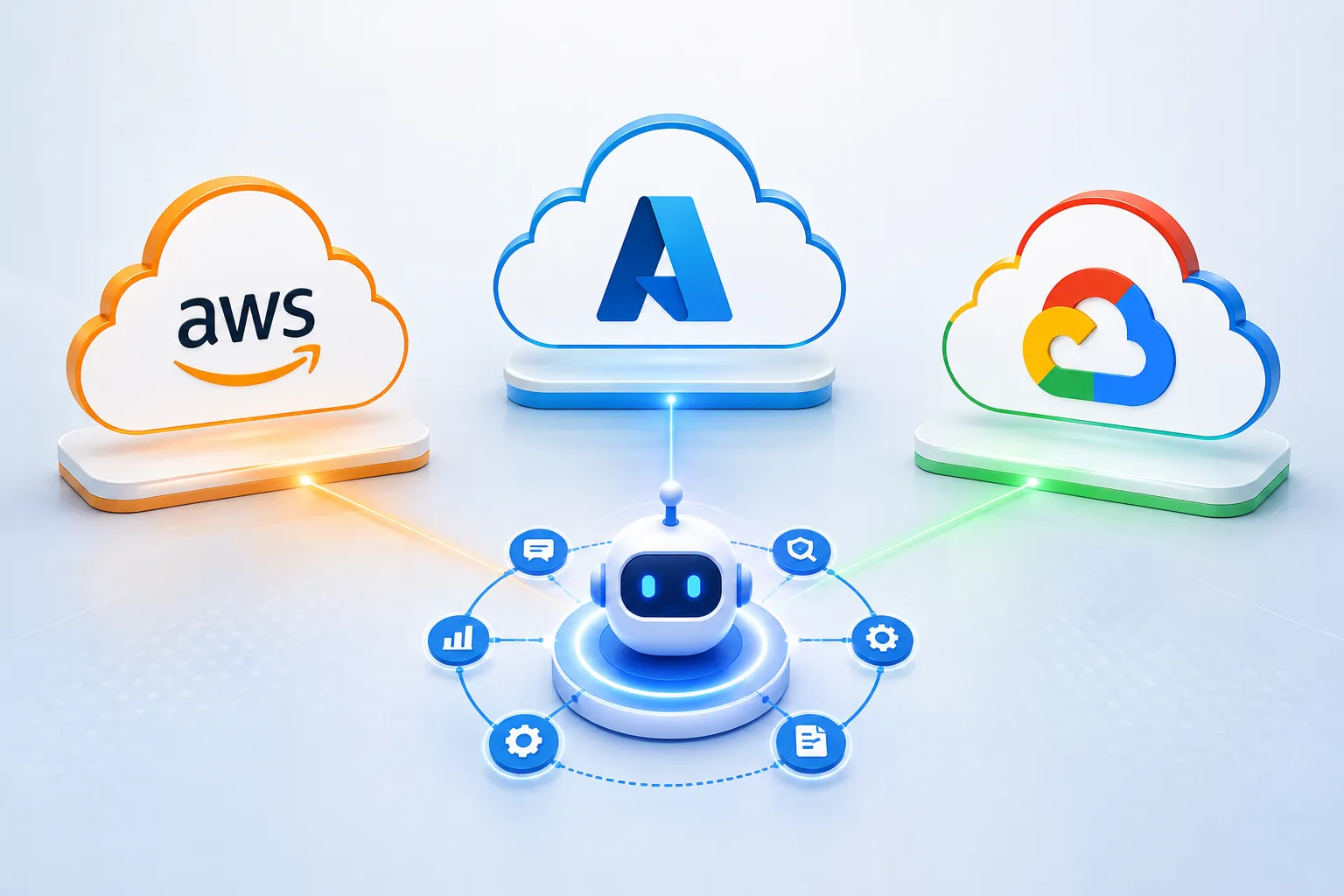
Selecting the right enterprise AI platform is one of the most consequential cloud AI for business infrastructure decisions an organization makes in 2026. AWS Bedrock, Azure OpenAI, and Google Vertex AI are the three dominant managed AI services competing for this space, each built on a different architecture philosophy, serving a different type of enterprise generative AI deployment requirement.
This enterprise AI platform comparison covers all three platforms across model availability, security, compliance, pricing, integration depth, and agent tooling. The goal is to give technical decision-makers a clear, objective framework for matching the right enterprise AI platform to their organization’s existing cloud infrastructure, compliance requirements, and engineering capabilities.
AWS Bedrock leads on multi-model flexibility.
Azure OpenAI leads on Microsoft-stack compliance and M365 integration.
Google Vertex AI leads on long-context processing and native ML tooling.
-> The right choice maps to where your data already lives.
Enterprise AI Platform Overview
| Platform | Managed By | Core Strength | Primary Model Access |
|---|---|---|---|
| AWS Bedrock | Amazon Web Services | Multi-model marketplace | Claude, Llama, Mistral, Titan, Cohere |
| Azure OpenAI | Microsoft Azure | Enterprise compliance + M365 integration | GPT-4o, GPT-4 Turbo, o1 reasoning |
| Google Vertex AI | Google Cloud | ML tooling + long-context processing | Gemini 1.5 Pro/Flash + Model Garden |
AWS Bedrock
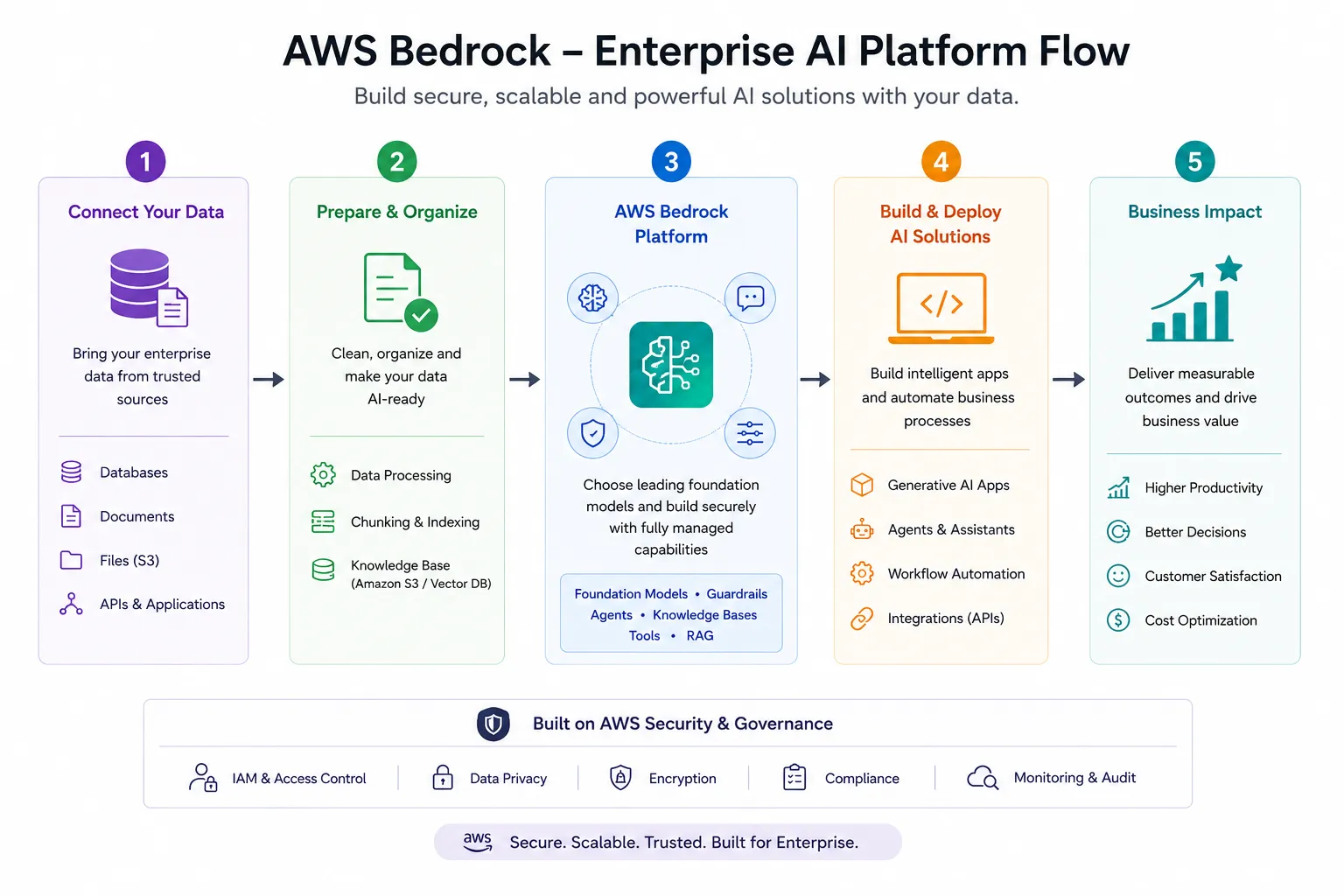
AWS Bedrock is a fully managed foundation model service that functions as a model marketplace with enterprise infrastructure wrapped around it. It provides access to models from Anthropic (Claude), Meta (Llama), Mistral, Cohere, Amazon Titan, and others, all within AWS’s unified security and identity framework.
Key Technical Capabilities
- Intelligent Prompt Routing: Automatically reroutes prompts between models (e.g., Claude Sonnet to Claude Haiku) to balance cost and performance without application-layer changes.
- Bedrock Guardrails: Available for both text and image outputs; blocks up to 88% of harmful outputs and hallucinations via Automated Reasoning Checks.
- AgentCore: A production-grade agent builder with access management, observability, and MCP server integration compatible with tools like Kiro and Cursor AI.
- Knowledge Bases: Native RAG pipelines connected to S3, RDS, and third-party data sources with no custom orchestration required.
Strengths
- The broadest third-party model catalog of the three platforms
- Native integration with AWS IAM, CloudTrail, VPC, and KMS
- Low vendor lock-in; swap models with minimal code changes
- Supports multi-model strategies under a single billing and governance layer
Limitations
- Fine-tuning controls are limited; the platform leans on RAG and prompt engineering over true model training
- The visual MLOps interface is less mature compared to SageMaker or Vertex AI pipelines
- Smaller community ecosystem than Azure for Enterprise AI Platform support and third-party tooling
Real-World Deployment
Netcore Cloud built Co-Marketer on Amazon Bedrock, a multi-agent Enterprise AI platform that cut campaign setup time from hours to minutes, with early-access users reporting up to 10× greater ROI. The deployment used Bedrock’s serverless multi-agent architecture with no custom infrastructure management required.
Best Fit
Organizations already operating on AWS that require access to multiple foundation model providers under a single, consistent compliance and access control framework.
Azure OpenAI
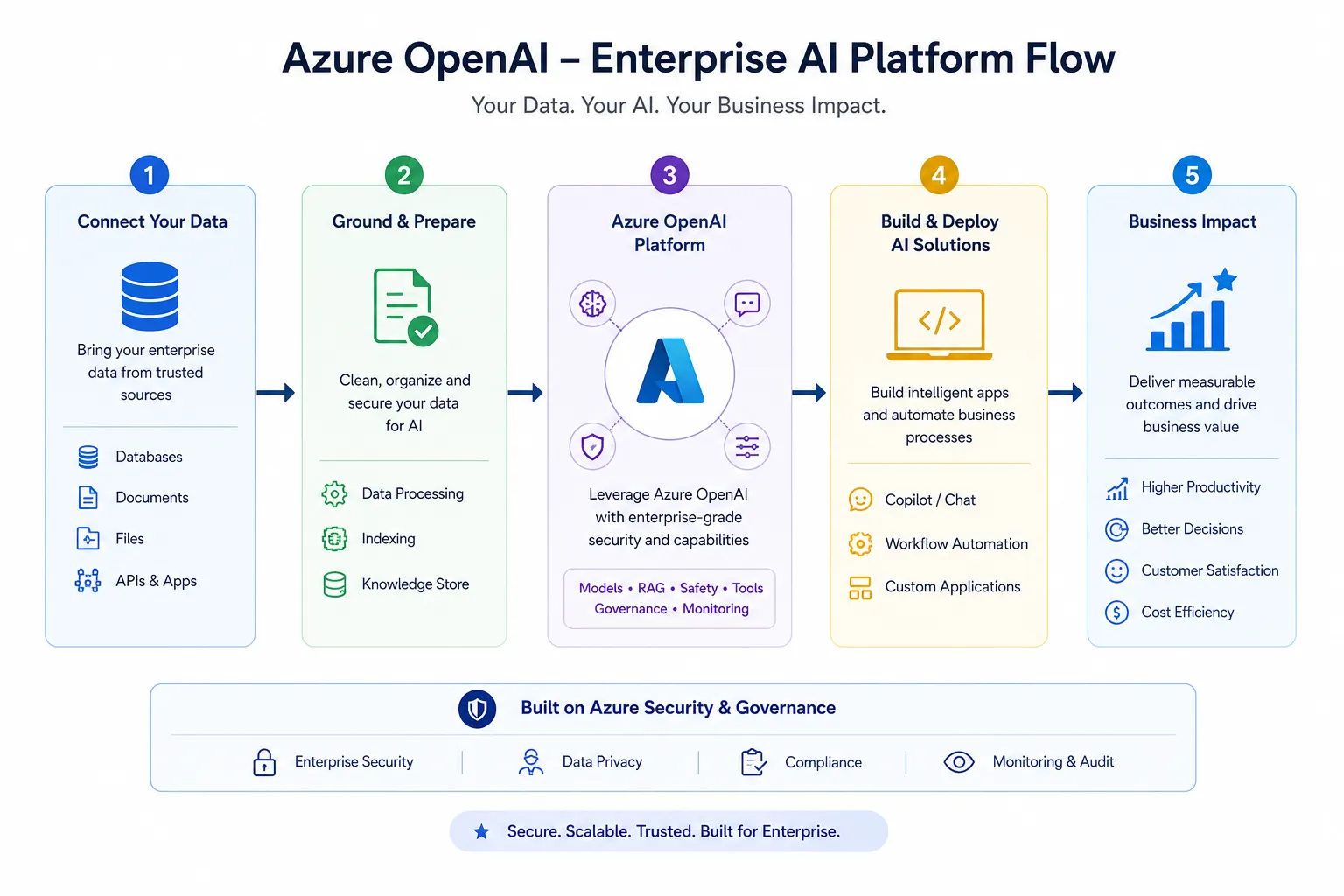
Azure OpenAI is a direct integration of OpenAI’s models within Microsoft’s enterprise cloud platform. It is not a model marketplace; it surfaces GPT-4o, GPT-4o-mini, GPT-4 Turbo, and the o1 reasoning model series exclusively. The differentiation is Microsoft’s enterprise security layer, compliance certifications, and deep ecosystem integration rather than model variety.
Key Technical Capabilities
- Azure AI Foundry Deep Research: Enables grounded, context-rich agents connected to internal systems, SharePoint, and Azure Cognitive Search for enterprise-wide research workflows.
- Microsoft Agent Framework: An open-source SDK for multi-agent systems using the MCP server and Agent2Agent (A2A) protocol.
- OpenAI on Your Data: Grounds LLMs in private datasets without model retraining, enforcing data residency, security, and privacy rules at the platform level.
- Compliance Coverage: HIPAA, ISO 27001, SOC 2, FedRAMP, and GDPR-aligned controls built into the service layer.
Strengths
- Deepest compliance certifications of the three platforms, preferred for healthcare, finance, and legal verticals
- Native integration with M365 Copilot, Teams, Dynamics 365, Azure Cognitive Search, and Power Platform
- Contractual SLAs on GPT-4o and o1 models, the only managed option for running these at enterprise scale with guarantees
- Role-based access control via Azure Active Directory with full audit logging
Limitations
- Restricted exclusively to OpenAI’s model lineup, with no access to Claude, Llama, or Gemini natively
- Enterprises not on the Azure infrastructure face significant integration friction
- Pricing can be substantially higher for equivalent throughput compared to Bedrock’s multi-model options
Real-World Deployment
Acentra Health built MedScribe on Azure OpenAI to automate healthcare appeal response letters. Within six months, the deployment saved 11,000 nursing hours and $800,000 in costs, reduced letter-writing time by 50%, and achieved a 99% nurse approval rate, a validated Enterprise AI Platform ROI in a HIPAA-compliant environment.
Source:
Source: Acentra Health × Azure OpenAI – Microsoft Customer Stories
Best Fit
Organizations standardized on Microsoft Azure, Microsoft 365, or hybrid Microsoft environments that require strict compliance coverage and deep integration with existing productivity and identity infrastructure.
Google Vertex AI
What It Is
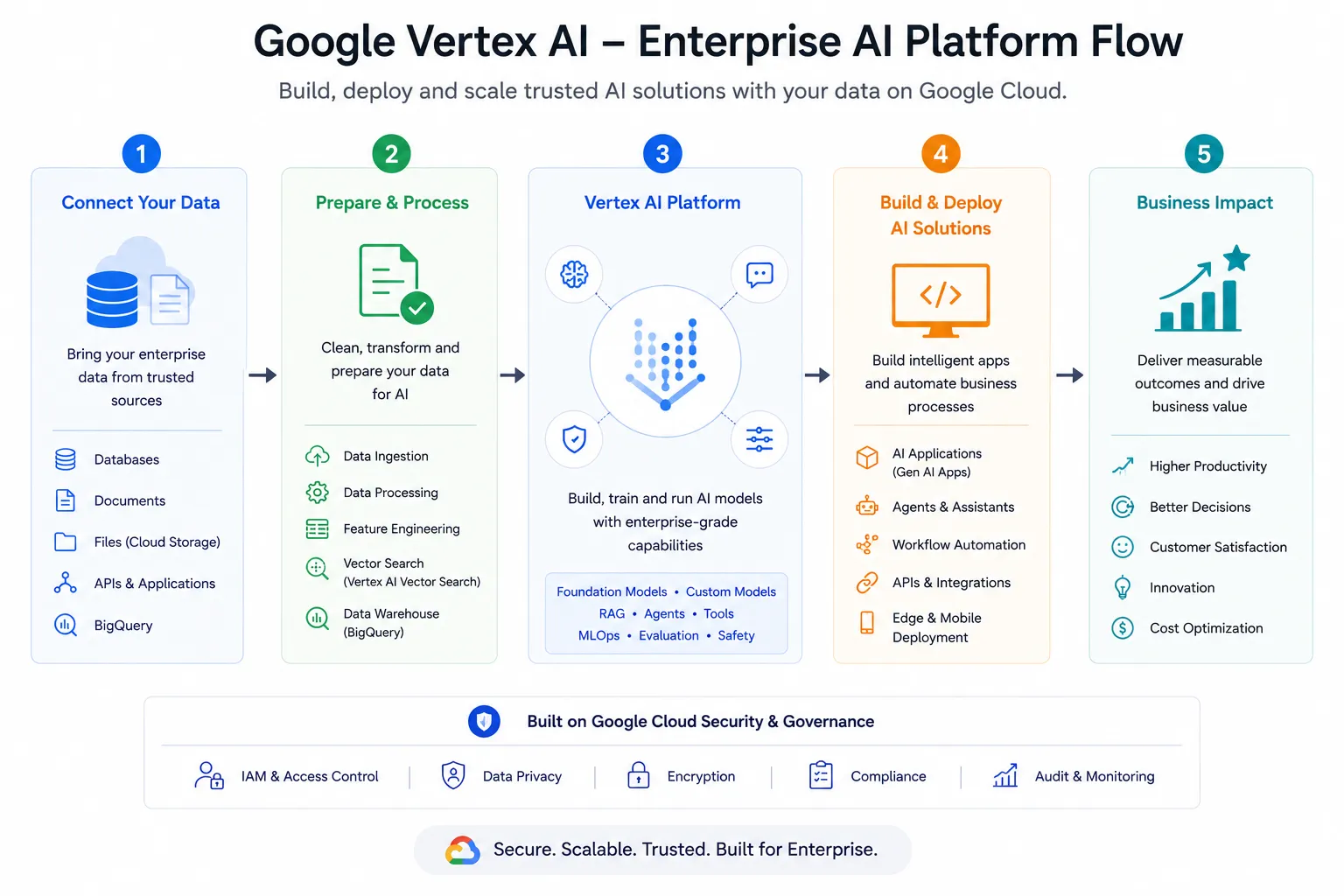
Google Vertex AI is a unified machine learning platform that combines Google’s proprietary Gemini models with third-party model access via Model Garden. It integrates natively with Google Cloud’s data analytics ecosystem, BigQuery, Dataflow, Cloud Storage, and Looker, making it distinct from the other two platforms in its orientation toward data engineering and custom model workflows.
Key Technical Capabilities
- Gemini 1.5 Pro: Supports a 1 million token context window, the largest available on any managed Enterprise AI platform as of early 2026. Suited for long-document analysis, large codebases, and video understanding.
- Model Garden: Access to open-source and third-party models, including, as of mid-2025, Claude via Anthropic’s Google Cloud partnership.
- Vertex AI Agent Builder: Low-code agent development environment with built-in grounding against Google Search and enterprise data sources.
- MLOps Tooling: Native model monitoring, drift detection, pipeline orchestration (Kubeflow Pipelines), and experiment tracking within the same environment as your training data.
- AutoML and Custom Training: Fully managed training pipelines for organizations that need to go beyond foundation model prompting into custom model development.
Strengths
- Deepest native ML tooling and data pipeline integration of the three platforms
- Longest context window for production Enterprise AI workloads
- Strong open-source model support and flexibility
- An integrated analytics stack eliminates the need to move data across cloud boundaries for training and inference
Limitations
- Enterprise sales support and onboarding experience trail AWS and Azure
- Interface complexity can slow deployment velocity for teams that prefer simpler API-first workflows
- The community ecosystem for Enterprise AI support is less extensive than Azure’s
Real-World Deployment
Radisson Hotel Group used Vertex AI for ML-driven ad personalisation, achieving a 50% marketing productivity gain and 20%+ revenue lift. Fluna’s automated legal agreement analysis using Vertex AI and Gemini 1.5 Pro, reaching 92% data extraction accuracy on sensitive documents, is a strong example of Enterprise AI Platform value in analytics-led GCP workloads.
Best Fit
Data-heavy organizations, analytics-first teams, and enterprises already running GCP infrastructure that require custom model training, experiment management, or long-context document processing at scale.
Head-to-Head: Key Decision Factors
Model Availability
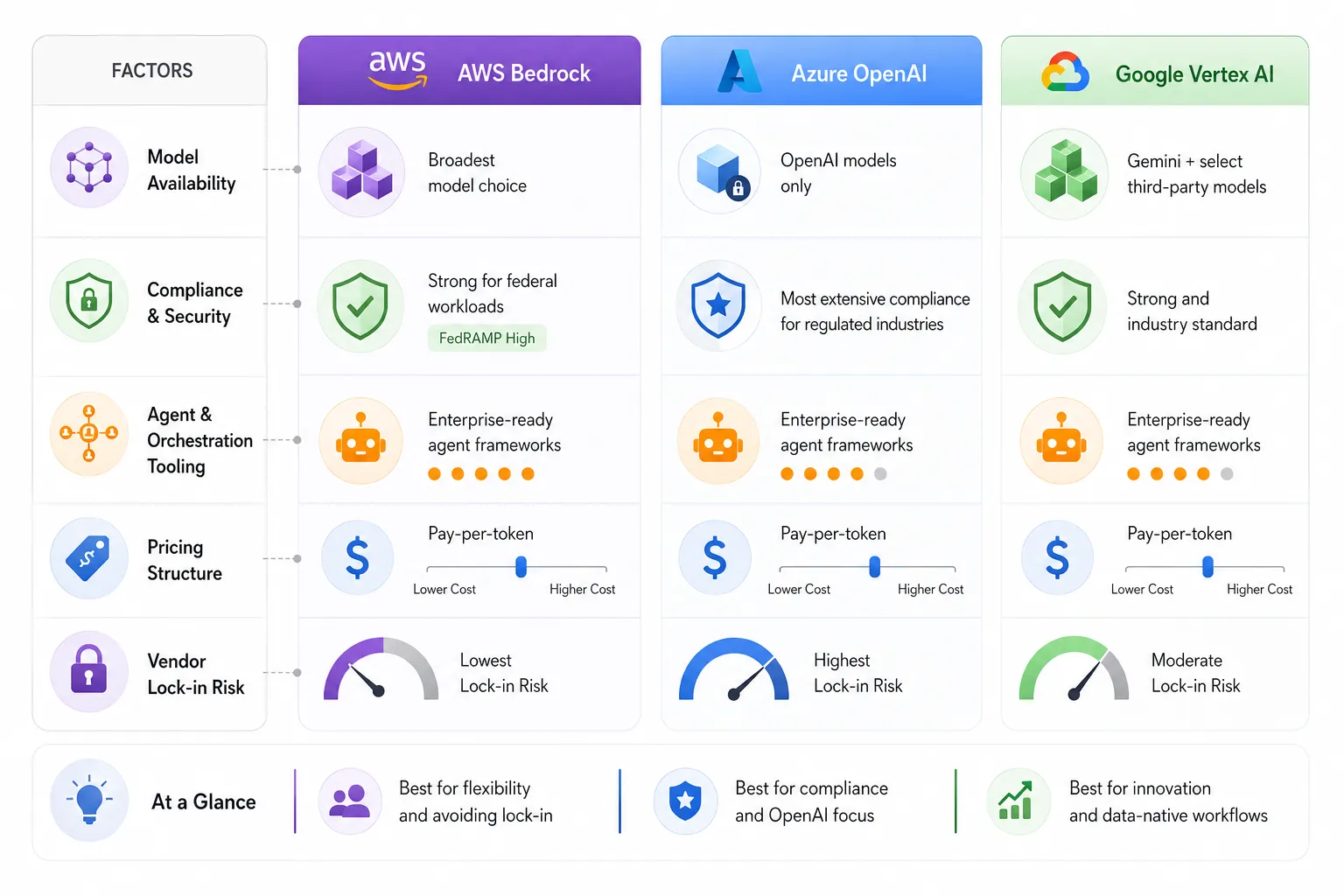
- AWS Bedrock offers the broadest third-party model catalog.
- Azure OpenAI is restricted to OpenAI’s roadmap.
- Google Vertex AI sits in the middle, offering Gemini natively and select third-party models via Model Garden, including Claude as of mid-2025.
Compliance and Security
All three platforms hold SOC 2, HIPAA, and ISO 27001 certifications. Azure OpenAI has the most extensive compliance portfolio and is the standard choice for Enterprise AI Platform in regulated US industries. AWS Bedrock’s FedRAMP High authorization makes it a stronger option for US federal workloads.
Agent and Orchestration Tooling
All three platforms launched production-grade agent frameworks in late 2025. AWS AgentCore, the Microsoft Agent Framework, and Vertex AI Agent Builder each support multi-agent patterns and MCP integration, making agent capability largely equivalent at the architecture level. Differences emerge in integration depth with each cloud’s native services.
Pricing Structure
All three use pay-per-token pricing with per-model rates. No platform is categorically cheaper; the total cost depends on model selection, volume, fine-tuning compute, egress fees, and agent orchestration overhead. Any viable cloud AI for business strategy must account for all these layers, not just the model inference line item. Enterprises should benchmark real workloads against all three before finalizing agreements.
Vendor Lock-in Risk
- AWS Bedrock carries the lowest lock-in risk due to its multi-model architecture.
- Azure OpenAI carries the highest, tied entirely to OpenAI’s model roadmap.
- Google Vertex AI sits between the two, with Gemini as the native offering and limited but growing third-party access.
How to Choose: A Decision Framework
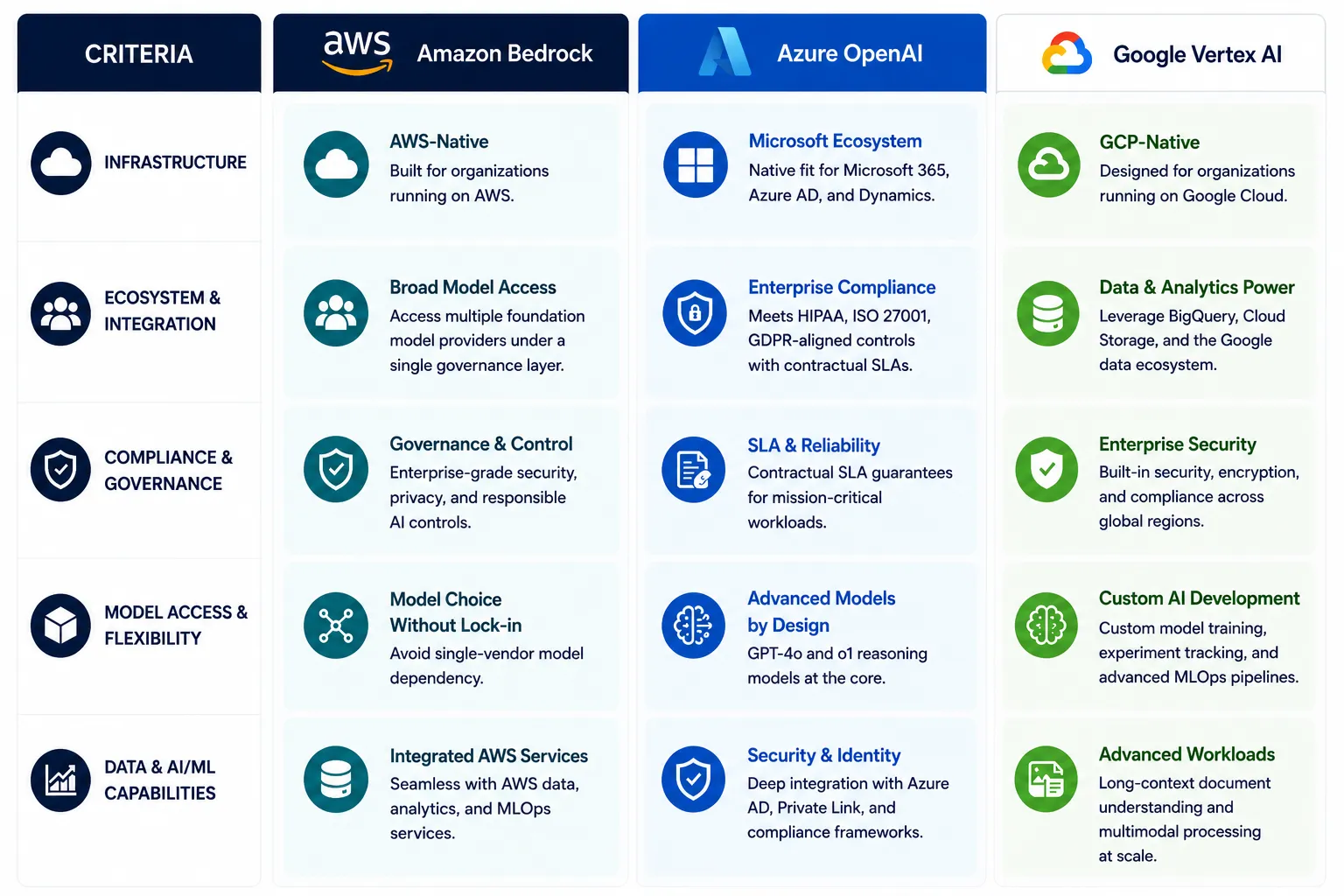
Use the following Enterprise AI Platform. Comparison criteria to narrow platform selection:
Choose AWS Bedrock when:
- Your infrastructure is AWS-native
- You need access to multiple foundation model providers under a single governance layer
- Avoiding single-vendor model dependency is a strategic priority
Choose Azure OpenAI when:
- Your organization runs on Microsoft 365, Azure AD, or Dynamics
- Compliance requirements mandate HIPAA, ISO 27001, or GDPR-aligned controls
- GPT-4o or o1 reasoning models are central to your use case and require contractual SLA guarantees
Choose Google Vertex AI when:
- Your data resides in GCP (BigQuery and Cloud Storage)
- Your team requires custom model training, experiment tracking, or advanced MLOps pipelines
- Long-context document or multimodal processing is a primary workload
Parloa
Parloa is an enterprise AI agent platform engineered to automate complex customer service interactions across voice and chat. Unlike general AI services, Parloa focuses on end-to-end orchestration, allowing organizations to deploy reliable agents that eliminate wait times and handle high-volume inquiries with human-like precision.
Key Technical Capabilities
- AI Agent Lifecycle: A unified environment for designing, testing, and optimizing enterprise-ready AI agents at scale.
- Omnichannel Orchestration: Native support for high-stakes voice and digital chat, ensuring consistency across all customer touchpoints.
- Real-Time Translation: Advanced multilingual support that allows agents to handle global conversations with high accuracy.
- Deep Integration: Seamless connectivity with enterprise stacks like SAP and major telephony systems.
Strengths
- Specialized for high-volume, high-stakes customer service environments.
- Enterprise-grade security and compliance built-in (ISO 27001, SOC 2, HIPAA).
- Proven reduction in staff workload and significant wait time elimination.
Limitations
- Narrower focus on customer service compared to the general-purpose capabilities of AWS or Azure.
- Initial setup requires integration with existing telephony and CRM infrastructure.
Real-World Deployment
BarmeniaGothaer implemented Parloa’s “Mina” AI agent to automate their switchboard, achieving a 100% workload reduction and a significant increase in customer NPS.
Best Fit
Large enterprises in insurance, travel, or retail requiring specialized, reliable AI agents to modernize contact centers and deepen customer loyalty.

SpaceXAI
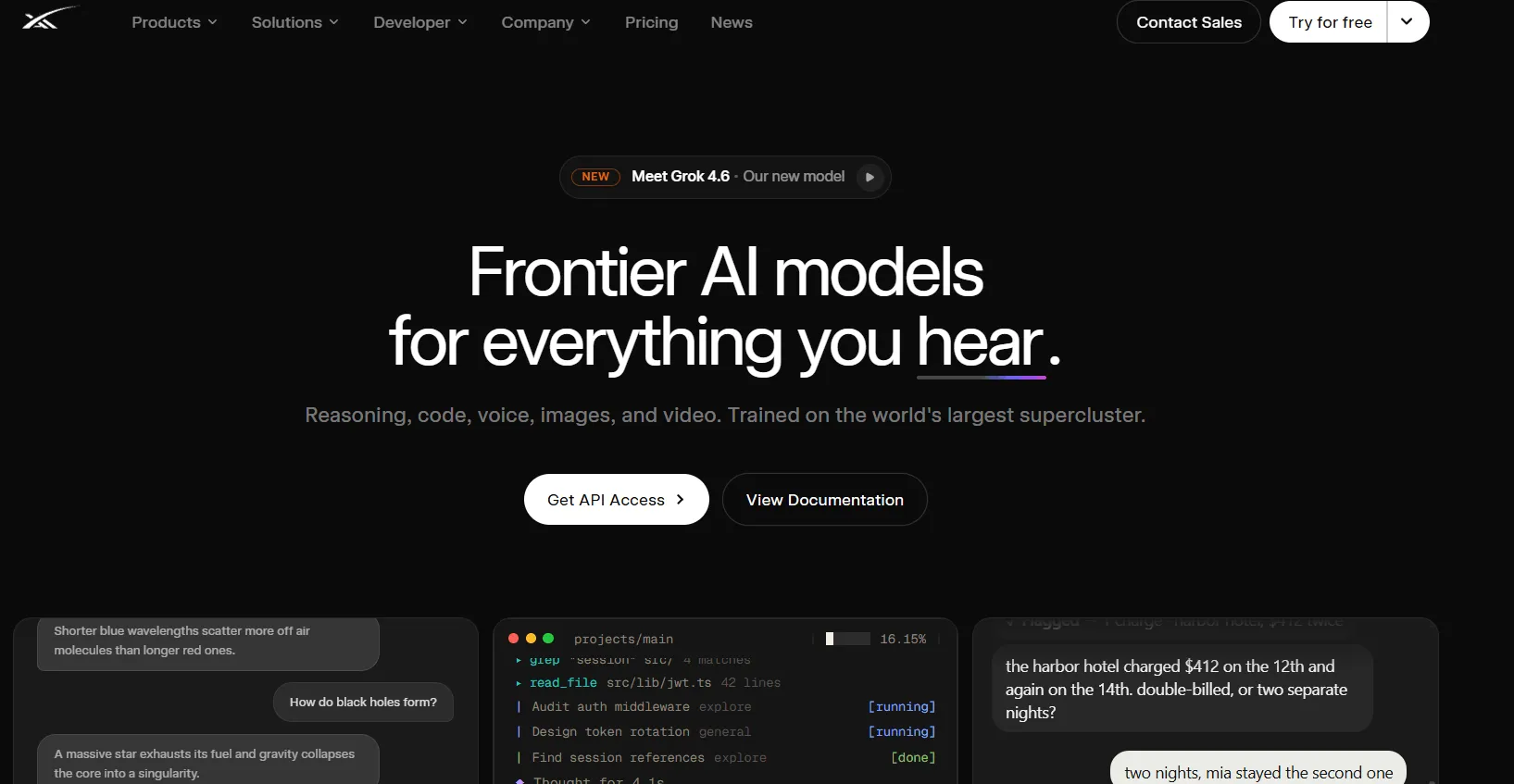
SpaceXAI is the company behind Grok, offering a unified frontier intelligence stack designed to understand the universe through a single API. By integrating text, code, voice, and visual modalities into one model family, SpaceXAI enables enterprises to deploy “useful AI” that transitions from simple chat to high-stakes autonomous work across web, desktop, and terminal environments.
Key Technical Capabilities
- Grok 4.6 Reasoning: A flagship model optimized for coding, truthfulness, and long-running agents, featuring a 500k token context window to handle complex multi-file engineering tasks.
- SpaceXAI Console: A centralized interface providing one API key for all modalities, including real-time voice (Grok Voice), image/video generation (Grok Imagine), and live search.
- Autonomous Agent Stack: Supports multi-step, multi-file workflows via Grok Build in the terminal and Grok Bot, which leverages its own computer environment to finish real-world tasks.
- Cursor Integration: Seamlessly brings Grok’s intelligence to the developer’s primary surface, enabling engineers to build ambitious software with AI coding agents.
Strengths
- Unified API for every modality reduces architectural complexity for multimodal applications.
- Industry-leading reasoning performance for agentic tool calling and long-context engineering.
- “Useful AI” focus that prioritizes task completion over simple assistant interactions.
- Native multi-platform presence across CLI, IDE, and web.
Best Fit
Engineering-led organizations and developers who need a single, high-performance API to power complex autonomous agents, multimodal applications, and advanced software development workflows.
Summary
Enterprise AI platform selection is an infrastructure decision, not a product decision. The platform you build on determines your cost trajectory, compliance coverage, model flexibility, and the speed at which your teams can move from experimentation to production deployment.
AWS Bedrock is the right Enterprise AI Platform for teams that need model variety and AWS-native operations.
Azure OpenAI is the right Enterprise AI Platform for deployments embedded in the Microsoft ecosystem with strict regulatory requirements.
Google Vertex AI is the right Enterprise AI Platform for initiatives anchored in data engineering and custom model development on GCP.
Match the platform to your existing cloud footprint, compliance obligations, and team capabilities, not to benchmark reports or competitor announcements. Effective Cloud AI for Business adoption begins with infrastructure alignment, not model selection.
FAQs
Is AWS Bedrock cheaper than Azure OpenAI or Google Vertex AI?
Not by default; cost depends on model choice, token volume, and surrounding infrastructure; always benchmark your specific workload before committing.
Can I access Claude on Azure OpenAI or Google Vertex AI?
Claude is available natively on AWS Bedrock and on Google Vertex AI via the Anthropic-Google Cloud partnership launched mid-2025; it is not available on Azure OpenAI.
Which platform is best for HIPAA-compliant Enterprise AI deployments?
Azure OpenAI provides the most comprehensive HIPAA-aligned controls and is the most established choice in healthcare Enterprise AI Platform environments.
Does model lock-in matter when choosing an Enterprise AI platform?
Yes, Azure OpenAI restricts you entirely to OpenAI’s roadmap, while AWS Bedrock supports model swapping with minimal code changes; factor this into long-term architecture planning.
Which platform supports RAG pipelines best for enterprise use?
All three support RAG; AWS Bedrock Knowledge Bases and Azure’s OpenAI on Your Data offer the most enterprise-ready, low-configuration RAG implementations out of the box.
Is Google Vertex AI worth adopting if our data is not on GCP?
Unlikely, Vertex AI’s core advantages (BigQuery ML integration, Gemini long context, and MLOps pipelines) are most impactful when data already resides in Google Cloud.
Which platform is gaining the most Enterprise AI adoption in 2026?
Azure OpenAI leads in Microsoft-standardised enterprises, Bedrock leads for AWS-native multi-model strategies, and Vertex AI leads for analytics-heavy GCP workloads. Adoption patterns closely mirror existing cloud footprints.
How should enterprises evaluate these platforms before a final decision?
Run a structured 90-day evaluation using a real production Generative AI Deployment workload; measure latency, cost per output, governance alignment, and integration complexity before signing any enterprise agreement.