
Table of Contents
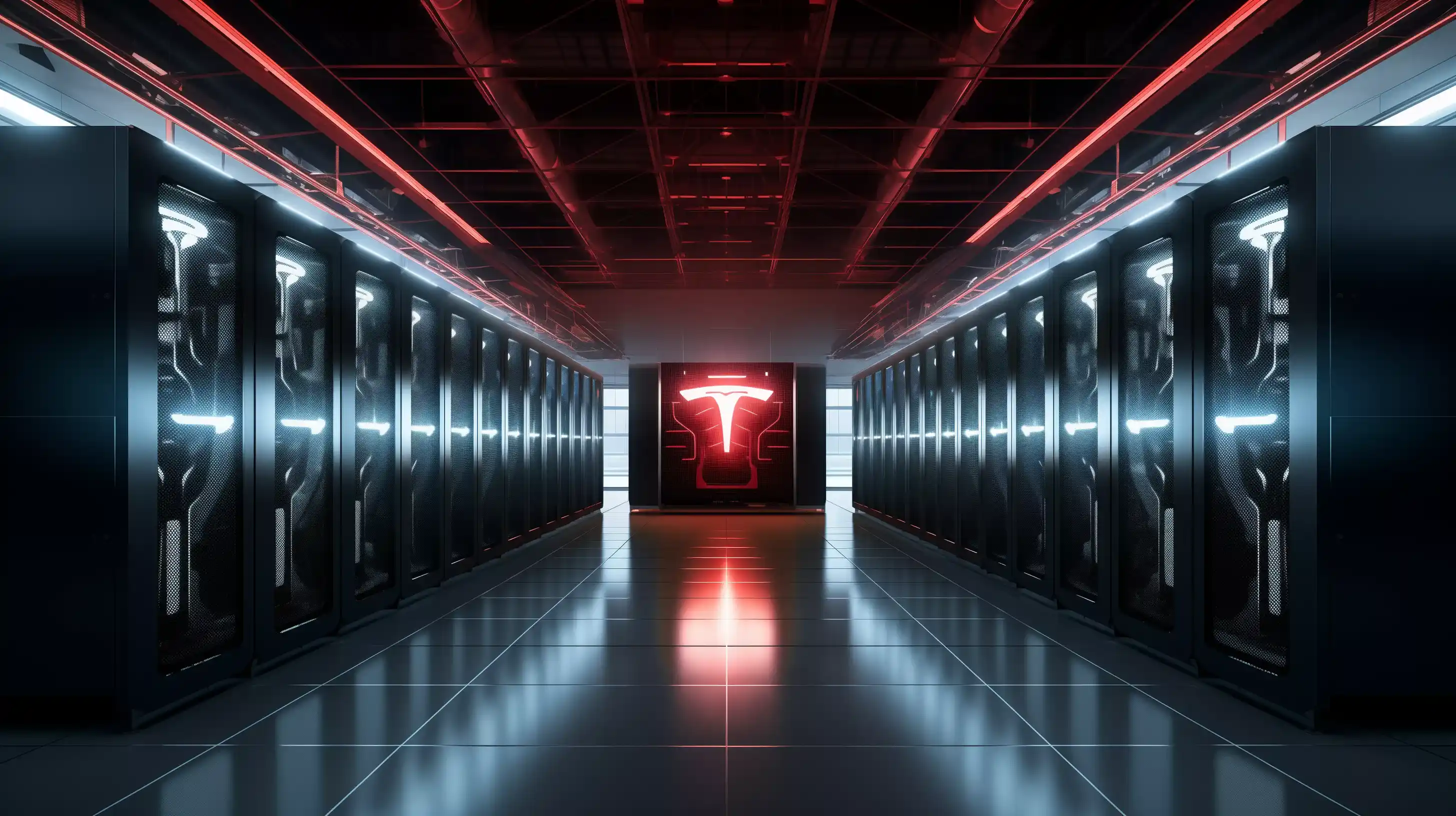
Tesla (TSLA 1.34%) is not just an auto company. It is also an ambitious player in the artificial intelligence (AI) field. To achieve its AI goals, Tesla needs to have supercomputers that can train complex models. That’s why Tesla created the Dojo computer, a massive machine that runs on 10,000 GPUs. The first Dojo computer cost about $300 million to build.
But Tesla is not stopping there. It recently announced that it will build another Dojo computer, with a price tag of $500 million, at its Gigafactory in Buffalo, New York. This project will not only boost Tesla’s AI capabilities but also benefit two other companies that are involved in the AI industry. These companies are Nvidia (NVDA 2.75%) and Taiwan Semiconductor Manufacturing (TSM 4.69%). They may offer better investment opportunities than Tesla itself.
How Nvidia benefits from Tesla’s Dojo computer
Nvidia is the leading provider of graphics processing units (GPUs), which are essential for AI data centers. GPUs can process large amounts of data faster and more efficiently than traditional CPUs, which makes them ideal for creating AI models.
Nvidia supplied the GPUs for Tesla’s first Dojo computer, and it will likely do the same for the second one. This means that Nvidia will earn substantial revenue from selling thousands of GPUs to Tesla. The GPUs will account for a large part of the $500 million cost of the Dojo computer, so Nvidia may get the biggest share of the pie.
Nvidia’s revenue in the third quarter of fiscal 2024 (ending Oct. 29, 2023) was $18.1 billion. If the $500 million sale to Tesla happened in Q3, it would have contributed about 3% to Nvidia’s revenue.
That may not seem like a lot, but it is important for Nvidia to keep growing its sales of GPUs to AI customers, as it needs to justify its high valuation.

How Taiwan Semiconductor benefits from Tesla’s Dojo computer
Another company that will gain from Tesla’s Dojo computer project is Taiwan Semiconductor, the world’s largest contract chip manufacturer. Taiwan Semiconductor does not design its own chips, but it makes chips based on the specifications of other companies, such as Tesla and Nvidia.
Taiwan Semiconductor produces chips for both Nvidia’s GPUs and Tesla’s vehicles. Tesla uses its Dojo computers to train AI models for its full self-driving feature, which requires advanced chips in its cars. Therefore, Taiwan Semiconductor will benefit from both the demand for GPUs and the demand for vehicle chips.
Taiwan Semiconductor’s CEO C.C. Wei said that semiconductors only make up a small fraction of the cost of a data center, but the demand for AI chips is so high that the company expects its AI chip revenue to grow at a 50% compound annual growth rate (CAGR).
By 2027, AI chips will make up a high percentage of Taiwan Semiconductor’s revenue, according to Wei.
Why Tesla’s Dojo computer is just the beginning
Tesla’s second Dojo computer is not the end of the story. On Tesla’s Q4 conference call, CEO Elon Musk said that the company plans to build more Dojo computers in the future, such as Dojo 1.5, Dojo 2, Dojo 3, and so on, if the investment pays off.
This is great news for Nvidia and Taiwan Semiconductor, as they will continue to see more demand for their products from Tesla and other AI customers.
The second Dojo computer will take some time to complete, so the impact on Nvidia’s and Taiwan Semiconductor’s businesses will not be immediate. But it is a clear sign of a trend that is transforming the business world.
AI is becoming more integrated into various industries and applications, and it requires powerful supercomputers to support it. Tesla’s Dojo computer is one example of how companies are investing in AI infrastructure.
As a result, investors who want to profit from the AI revolution may want to consider buying shares of key suppliers like Nvidia or Taiwan Semiconductor, as they have a competitive edge in the AI market.