Table of Contents
Your simple, complete guide to seeing a doctor, getting prescriptions, and managing your health, without leaving home.
Whether you are sick and cannot leave home, want to save time on routine check-ups, or live far from the nearest clinic, this guide answers every question about remote healthcare clearly and honestly.
What Is Remote Healthcare?
Remote healthcare, also called telehealth or telemedicine, simply means getting medical care through technology (a phone, tablet, or computer) instead of going to a clinic or hospital in person.
Think of it this way: instead of driving to your doctor’s office, sitting in a waiting room, and seeing a doctor for ten minutes, you open an app or website, connect via video call, and get the same consultation from the comfort of your home.
It covers a surprisingly wide range of services, from diagnosing a common cold to managing chronic conditions like diabetes and high blood pressure, to mental health therapy, follow-up appointments, and prescription renewals.
Quick Facts
- 76% of patients say telehealth is as good as in-person care
- Average saving of $150 per telehealth visit vs an ER visit
- 1 in 5 Americans now uses telehealth regularly
How Does Remote Healthcare Work?
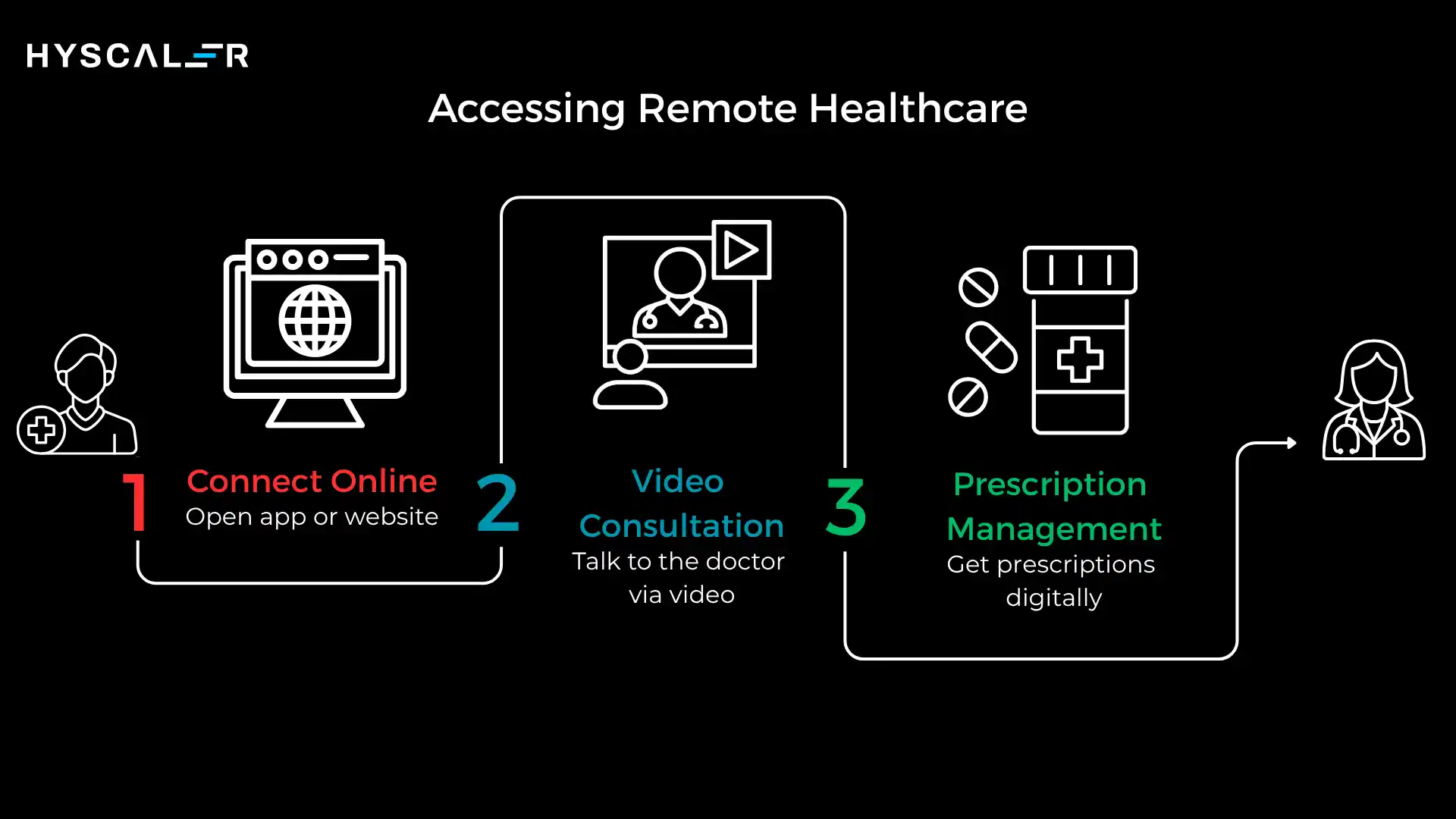
The process is simpler than most people expect.
Here is exactly what happens from start to finish:
- Choose a platform or provider: Your existing insurance may offer a telehealth service. You can also sign up on platforms like Teladoc, MDLive, Doctor on Demand, or your regular clinic’s patient portal.
- Book or join on-demand: Many services connect you with a doctor within minutes. Others let you schedule in advance, just like a traditional appointment.
- Prepare basic information: Have your symptoms, medical history, current medications, and insurance details ready. A photo of the problem area (rash, wound) can be very helpful.
- Join your video or phone call: The doctor will ask about your symptoms, review your history, and may ask you to show a throat, eye, or skin area on camera.
- Get your care plan: You will receive a diagnosis (if possible, remotely), a prescription sent directly to your pharmacy, referrals, or a follow-up plan, all digitally.
What Conditions Can Remote Healthcare Treat?
This is the question most people want answered.
Here is an honest breakdown:
Works Very Well Remotely
- Cold, Flu & Infections – sore throat, sinus infections, UTIs, ear infections, coughs, and fever
- Mental Health – anxiety, depression, stress, insomnia, through therapy and psychiatry via video
- Prescription Renewals – refilling regular medications without a new in-person visit
- Chronic Condition Management – monitoring diabetes, hypertension, asthma, thyroid conditions
- Dermatology – acne, rashes, eczema, and psoriasis are often diagnosed from photos.
- In paediatric care, common childhood illnesses are assessed without taking a sick child outside.
Needs In-Person Care (Telehealth Can Guide You)
- Chest pain, difficulty breathing, or stroke symptoms, call emergency services immediately.
- Broken bones, deep wounds, or injuries requiring physical examination
- Conditions that require blood tests, scans, or lab work
- Surgical consultations or complex physical procedures
How Much Does Remote Healthcare Cost?
Cost is one of the top concerns people have.
Here is a clear breakdown:
| Type of Visit | Without Insurance | With Insurance |
| General consultation | $40 – $80 | $0 – $20 copay |
| Mental health therapy | $80 – $150 | Varies by plan |
| Urgent care telehealth | $50 – $100 | $10 – $40 copay |
| Prescription consultation | $30 – $60 | Often free |
| Specialist consultation | $100 – $250 | Varies by plan |
Good news: Most major insurance plans in the US (including Medicare and Medicaid) now cover telehealth services.
Always check with your insurer before booking.
Many employers also offer free telehealth as part of their benefits package.
Even without insurance, a $50 telehealth call for a UTI diagnosis beats a $200 urgent care visit or hours in an ER waiting room.
Real Benefits of Remote Healthcare
Beyond convenience, remote healthcare solves real problems for real people:
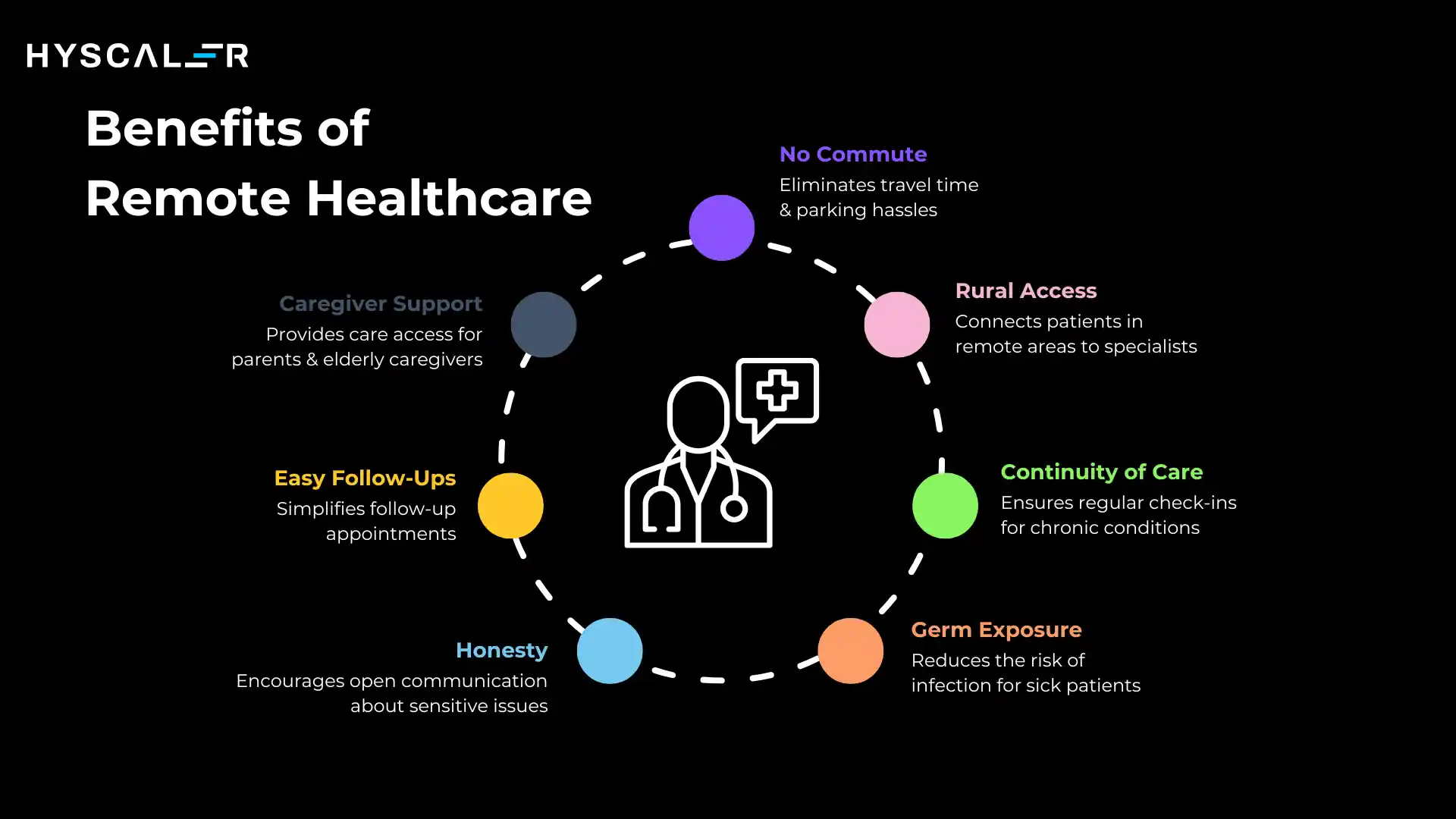
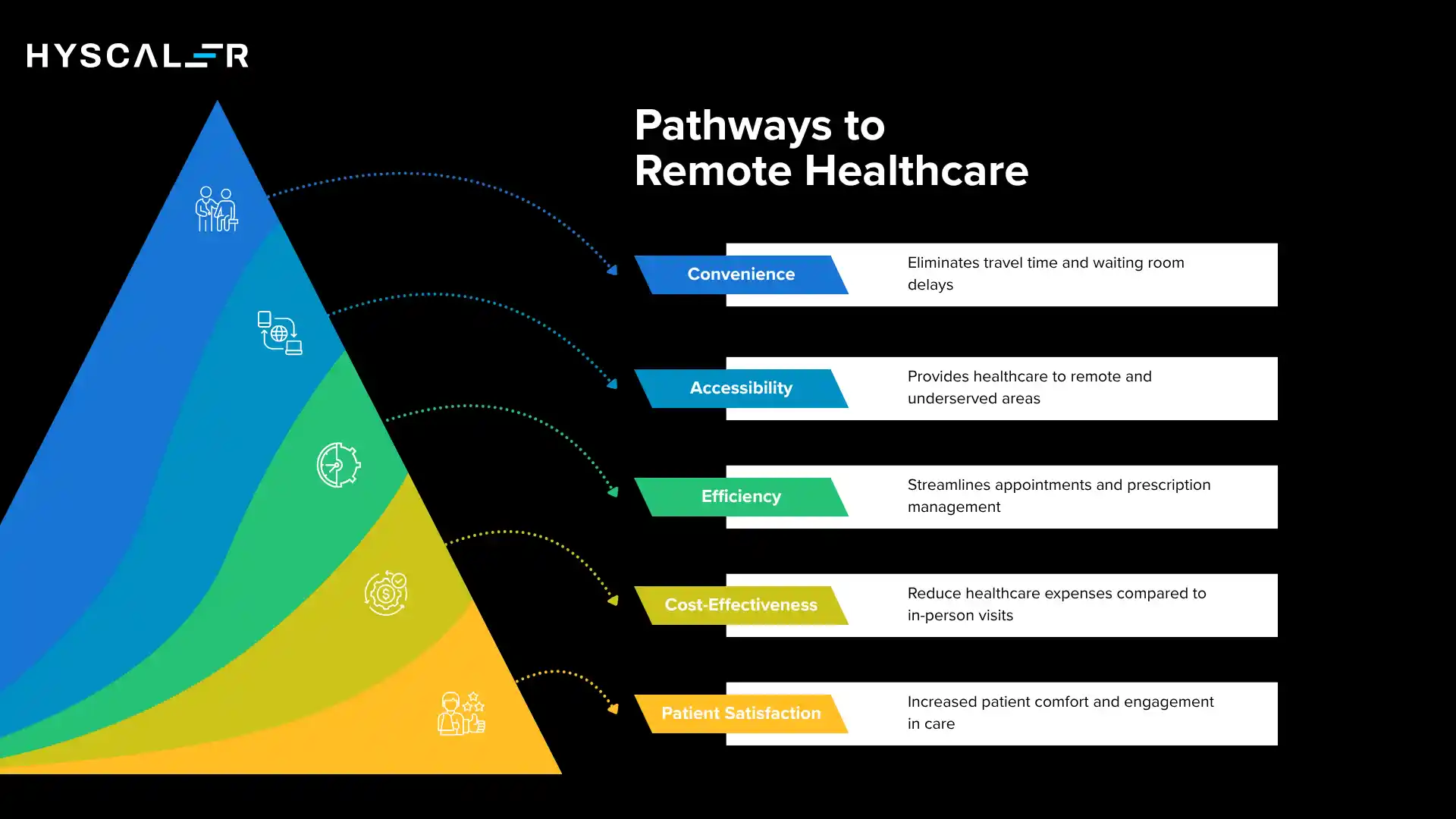
- No commute, no parking, no waiting room: A consultation that used to take half a day now takes 30 minutes total.
- Access for rural and underserved areas: If you live far from a specialist, telehealth connects you to doctors anywhere.
- Better continuity of care: Regular video check-ins make it easier to stay on top of chronic conditions.
- Less exposure to germs: Ideal when you are already sick or immunocompromised.
- Comfort encourages honesty: Many patients are more open about mental health or sensitive issues in their own homes.
- Easy follow-ups: Quick five-minute check-in calls are much easier to attend than repeat in-person visits.
- Works for caregivers: Parents with young children, or those caring for elderly relatives, can access care without logistical nightmares.
How to Access Remote Healthcare Today
Getting started is easier than setting up most apps on your phone.
Here is your quick-start guide:
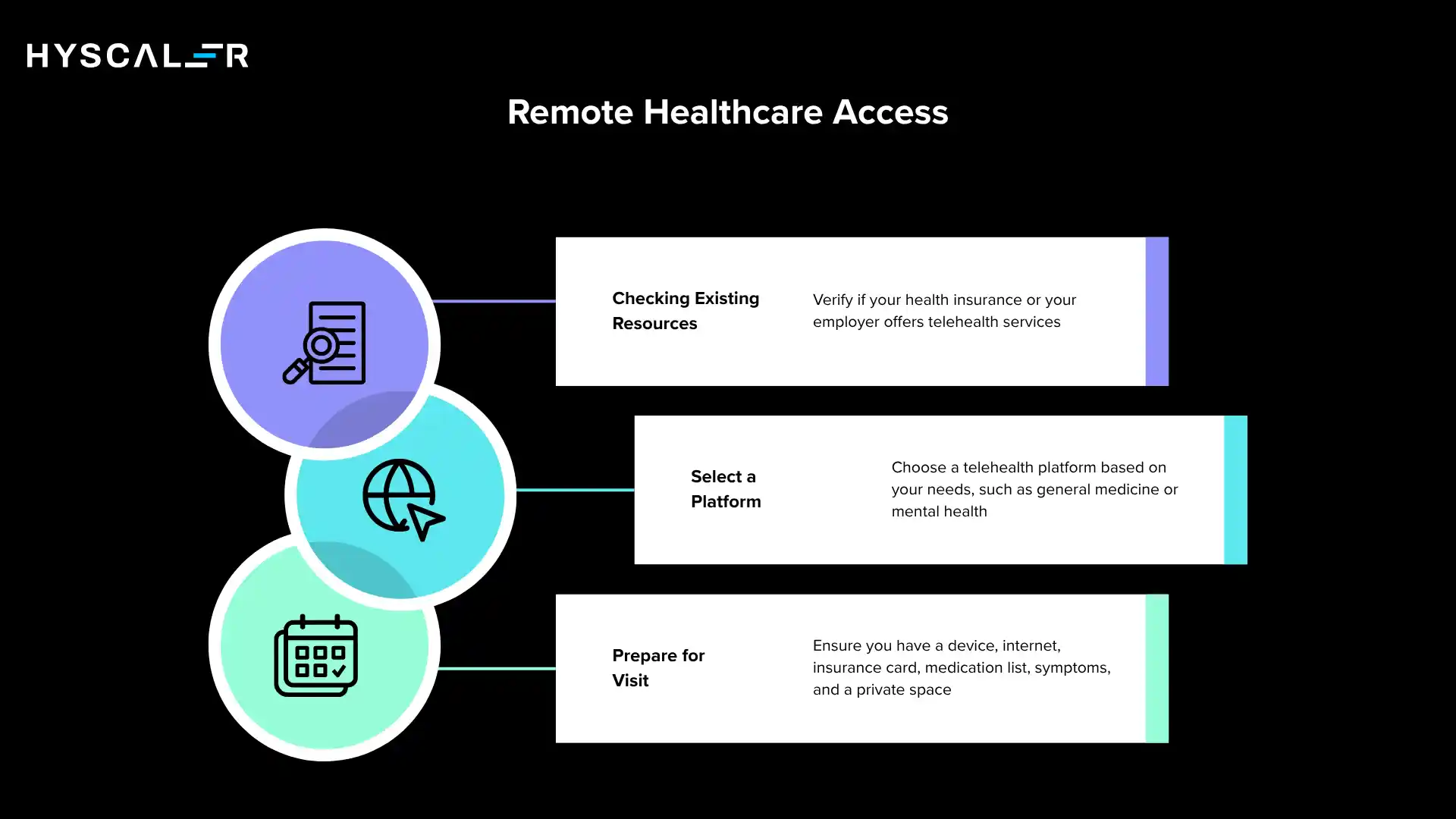
Step 1: Check What You Already Have
Before signing up for a new service, check if your health insurance already includes telehealth.
Log in to your insurer’s app or website and search ‘telehealth’ or ‘virtual care’.
Your employer benefits or GP practice may also offer video consultations.
Step 2: Choose a Platform (If Needed)
- Teladoc Health, one of the largest, covers general medicine, mental health, and more
- MDLive is strong for urgent care and behavioural health
- Doctor on Demand, good for families, video-first approach
- Amwell, a wide specialist network
- PlushCare is excellent for primary care and prescription renewals
- BetterHelp / Talkspace, specifically for mental health therapy
Step 3: What You Need for Your First Visit
- A smartphone, tablet, or computer with a camera and microphone
- A stable internet connection (Wi-Fi is ideal)
- Your insurance card and ID
- A list of current medications and dosages
- Your symptoms were written down clearly, when they started, and how severe they were
- A quiet, well-lit private space for your call
Limitations of Remote Healthcare
Remote healthcare is powerful, but it is not a replacement for all medical care.
Here is where it falls short:
- No physical examination: Doctors can observe but cannot physically examine you, listen to your heart, feel for lumps, or check reflexes.
- Lab work still requires a visit: Blood and urine tests, as well as imaging such as X-rays or MRIs, cannot be done remotely.
- Technology barriers: Elderly patients or those without reliable internet may struggle to access services.
- Not for emergencies: A telehealth doctor cannot call an ambulance or administer emergency treatment.
- Prescription limitations: Certain controlled substances cannot be prescribed via telehealth in many regions.
- Quality varies: Not all platforms have equally well-trained doctors. Choose reputable, accredited services.
The golden rule: when in doubt, go in person.
Remote healthcare is best for non-emergency conditions where a doctor’s assessment via camera is sufficient.
Remote Mental Healthcare
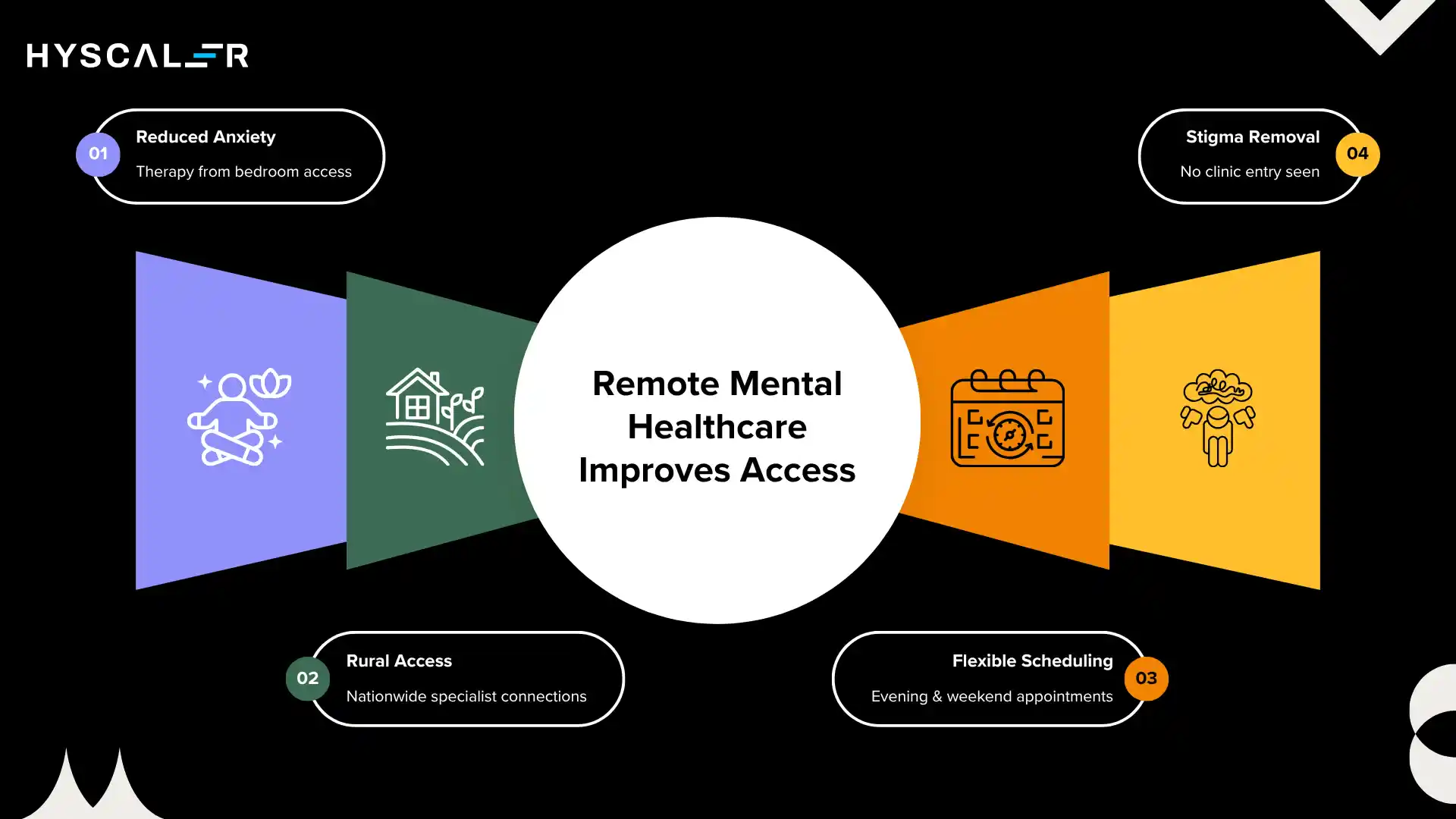
One of the biggest success stories of telehealth has been mental health care.
Therapy and psychiatry translate almost perfectly to video, often better than physical medicine, because conversation is the primary tool.
Remote mental healthcare has broken down enormous barriers:
- People who were too anxious to walk into a clinic can now access therapy from their bedroom
- Rural communities with zero local therapists can access specialists nationwide
- Scheduling is more flexible, evening and weekend appointments are common
- The stigma of being seen entering a mental health clinic is removed
Platforms like BetterHelp, Talkspace, and Headspace Care connect you with licensed therapists within days, rather than the months-long waits common with in-person services.
The Bottom Line
Remote healthcare is not a trend; it is the new normal.
For the vast majority of everyday medical needs, a telehealth appointment is faster, cheaper, and just as effective as a clinic visit.
It is especially transformative for people in rural areas, those with mobility challenges, busy parents, and anyone managing ongoing conditions.
Start by checking what your insurance already offers.
Chances are, you have access to virtual care right now and do not know it.
If not, a reliable platform like Teladoc or MDLive can connect you with a licensed doctor within the hour.
Your health does not have to wait in a waiting room.
FAQs
Is remote healthcare as good as seeing a doctor in person?
For many common conditions, infections, cold and flu, mental health, skin conditions, prescription renewals, and chronic disease management, remote healthcare is equally effective. Studies show high patient satisfaction with telehealth. However, for conditions requiring physical examination, lab tests, or imaging, in-person care remains necessary.
Can a telehealth doctor prescribe medication?
Yes, telehealth doctors can prescribe common medications and send them to your pharmacy. Controlled substances are restricted and may not be prescribed remotely, depending on location.
Does insurance cover remote healthcare?
Most U.S. insurance plans, including Medicare and Medicaid, cover telehealth, with expanded coverage since COVID-19. Many employers offer it for free. Check your plan or insurer for details and copays.
What do I need for a telehealth appointment?
You need a device with a camera, a stable internet connection, and your ID/insurance details. Have your symptoms and medications ready, and use a quiet, well-lit space. Most platforms work via a browser or app.
How quickly can I see a doctor through telehealth?
Telehealth offers quick access, with general consultations usually within 5–15 minutes. Specialist and mental health appointments typically require scheduling, but wait times are still shorter than in-person visits.
Is my health information safe with telehealth providers?
Reputable telehealth providers are required to comply with HIPAA regulations in the US, meaning your medical information is protected. They use encrypted video connections and secure data storage. Always use established, accredited platforms rather than generic video call apps for medical consultations.
Can I use telehealth for my child?
Yes. Many telehealth services offer paediatric care. You can connect a sick child with a doctor without leaving home, ideal for contagious conditions or late-night consultations when GP offices are closed. Most platforms allow parents or guardians to manage appointments for children.
What is the difference between telehealth and telemedicine?
Telemedicine refers specifically to remote clinical care (diagnosis, treatment, prescriptions), while telehealth is broader, including education, wellness, admin services, and monitoring. In everyday use, both simply mean consulting a healthcare provider online.