

Table of Contents
Figma, a leading company in the product design space, has unveiled FigJam AI, a new set of generative AI tools for its collaborative whiteboard service FigJam.
FigJam AI aims to help designers save time and effort by generating templates for various design and planning projects, such as flowcharts, icebreakers, brainstorming sessions, and 1:1 meeting planners.
It is currently in open beta and is free for all customers, regardless of their subscription tier.
How FigJam AI works
FigJam AI leverages the power of OpenAI foundation models, which are large-scale AI models that can perform a wide range of tasks across different modalities, such as text, images, and audio. FigJam AI uses these models to understand natural language prompts and produce relevant and useful outputs.
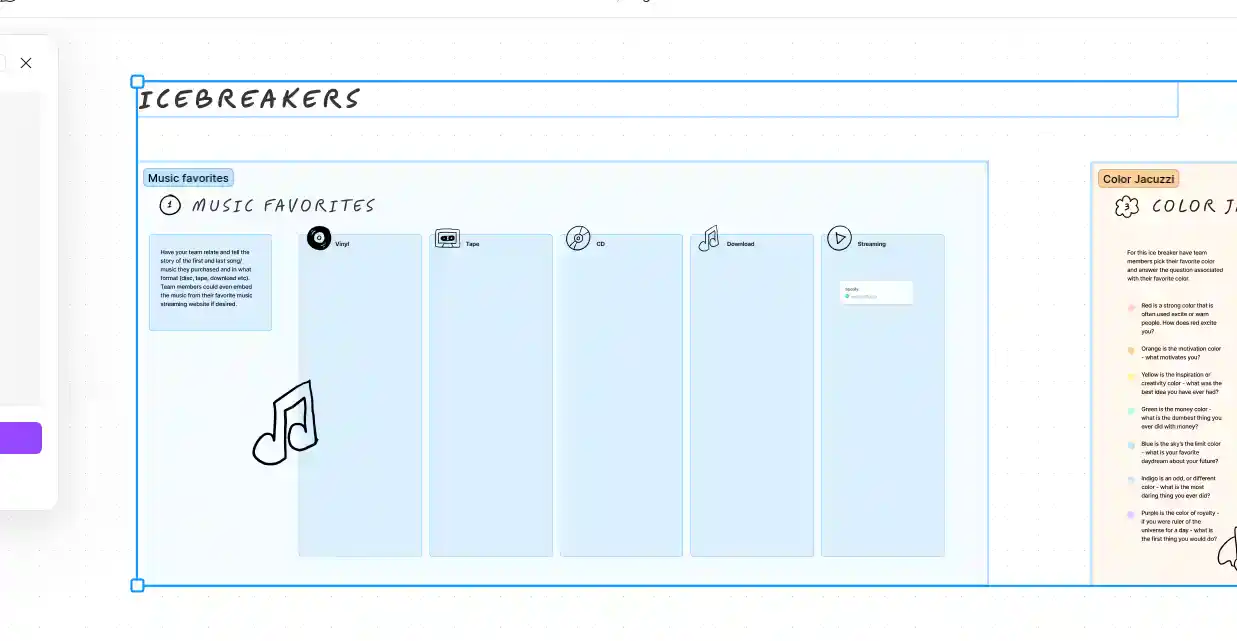
One of the main features is Generate, which allows users to create templates for their projects by either choosing from a list of suggested prompts or typing their own description in a text box. For example, if a user wants to create a Gantt chart, they can either select the prompt “Generate a Gantt chart” or type something like “I want a Gantt chart for my team’s quarterly goals”or “Generate a icebreaker”.
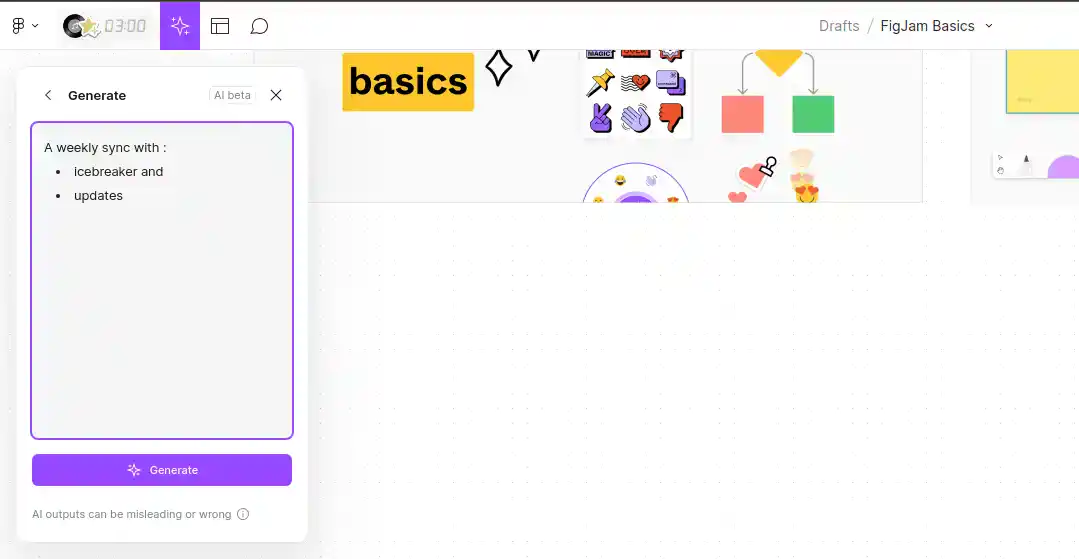
It will then generate a template with the appropriate elements, such as a timeline, the number of projects, and project milestones. The user can then customize the template by adding, deleting, or modifying any section as they wish.
Another feature of FigJam AI is Sort, which automatically organizes stickies, which are virtual sticky notes that users can use to jot down ideas, into different groups based on key themes.
For example, if a user has a bunch of stickies with ideas for a new product feature, It can sort them into categories such as user needs, design principles, technical requirements, and so on. This can help users to see the big picture and identify patterns and gaps in their ideas.
A third feature of its Summarize, which creates a summary of information taken from groups of stickies with a single click. For example, if a user has a group of stickies with feedback from a user testing session, FigJam AI can summarize the main insights and suggestions from the feedback. This can help users quickly digest and act on the information they have collected.
FigJam AI also integrates with Jambot, a ChatGPT-powered FigJam widget that Figma launched in beta in August. Jambot is a conversational chat agent that can help users with various tasks, such as generating ideas, finding inspiration, and giving feedback. Users can interact with Jambot by typing or speaking to it in natural language.
The benefits of FigJam AI
FigJam AI is designed to help designers and other creative professionals collaborate more effectively and efficiently on their projects.
By using FigJam AI, users can reduce the preparation time needed to manually create their collaborative whiteboard projects from scratch, leaving them with more time to focus on the more important and challenging aspects of their work. FigJam AI can also help users generate new ideas, explore different perspectives, and communicate their thoughts more clearly.
Figma co-founder and CEO Dylan Field said that the company is considering other AI-related developments and that these initial features for FigJam AI are “an obvious place to start.” He also said that the current version uses OpenAI foundation models, which can be easily swapped out for other foundation AI models in the future.
This could potentially enable it to support more modalities, such as image and audio inputs and outputs, and more use cases, such as prototyping and testing.
FigJam AI is part of Figma’s vision to create products that are more accessible and expand what’s possible. Field said, “Across the entire Figma platform, we’ve thought about all the ways that AI can be useful and narrowed it down to a few use cases where we can bake it into the product in a deep way that really helps.
It really matters that you’re not doing everything that you can possibly think of, but rather the things that are most impactful.”