

Table of Contents
Digital transformation has become a necessity for businesses in today’s fast-paced and technology-driven world. It is not just about implementing new technologies but also about reshaping processes, culture, and mindset to drive growth and remain competitive.
In this article, we will explore the key components of crafting a winning digital transformation strategy.
Understanding Digital Transformation
Digital transformation is the process of embedding digital technologies across every layer of an organization, reshaping how it operates, delivers value, and connects with its customers. It goes beyond adopting new tools; it’s a fundamental shift in strategy, culture, and execution.
At its core, this shift helps organizations:
- Build new business models by rethinking how products and services are delivered
- Improve customer experiences through personalized, data-driven interactions
- Increase operational efficiency by automating manual, repetitive processes
- Drive innovation by unlocking new capabilities through emerging technologies
Why it matters:
Organizations that commit to digital transformation position themselves to respond faster to shifting market trends and changing customer expectations, turning adaptability into a genuine competitive advantage. That said, this isn’t a plug-and-play process. It’s complex, resource-intensive, and only works with a clear, well-structured strategy behind it.
In the sections ahead, we’ll break down:
- How to build a practical framework to guide the journey
- The key elements that make digital transformation succeed
- The benefits it unlocks for organizations of any size
The Importance of Digital Transformation
Digital transformation is now more critical than ever. Rapid advancements in technology and changing consumer expectations have disrupted traditional business models. Companies that fail to adapt risk becoming irrelevant or losing market share to more digitally savvy competitors.
By embracing digital transformation, organizations can unlock a world of opportunities. It allows them to streamline operations, enhance agility, optimize decision-making processes, and leverage data-driven insights to drive growth and innovation.
For example, a retail company that adopts digital transformation can implement e-commerce platforms, personalized marketing strategies, and advanced analytics to better understand customer preferences and deliver tailored experiences. This can result in increased customer satisfaction, higher sales, and improved brand loyalty.
Furthermore, digital transformation enables organizations to tap into emerging technologies such as artificial intelligence, machine learning, and the Internet of Things (IoT). These technologies can revolutionize business processes, automate repetitive tasks, and enable predictive analysis, leading to improved efficiency and cost savings.
Key Elements:
While every organization’s digital transformation journey is unique, some common elements can contribute to their success:
- Clear Vision and Leadership: A well-defined digital transformation vision and strong leadership are crucial to rally support, drive change, and ensure alignment across the organization. Leaders need to communicate the benefits of digital transformation and inspire employees to embrace the necessary changes.
- Customer-Centric Approach: Understanding customer needs and preferences is essential for designing digital experiences that deliver value and build lasting relationships. Organizations should invest in customer research, data analytics, and user experience design to create seamless and personalized interactions across various digital touchpoints.
- Agile and Collaborative Culture: Building a culture that embraces change, encourages experimentation, and fosters collaboration is vital for driving innovation and adapting to evolving market dynamics. Organizations should empower employees to take risks, learn from failures, and continuously improve processes and products.
- Empowered Workforce: Equipping employees with the necessary digital skills and tools is essential for them to thrive in a digital-first environment and contribute to the organization’s success. Training programs and upskilling initiatives help the wider workforce adapt to new tools, while the leaders steering the change draw on executive education programs built around leading innovation and growth.
- Robust Technology Infrastructure: Implementing the right technology infrastructure is a foundation for successful digital transformation. It should enable scalability, flexibility, and security to support future growth. Organizations should invest in cloud computing, cybersecurity measures, data management systems, and integration platforms to create a robust digital ecosystem.
By focusing on these key elements, organizations can navigate the complexities of digital transformation and position themselves for long-term success in the digital age. Digital transformation is a strategic imperative for organizations seeking to thrive in today’s fast-paced and technology-driven business landscape.
It offers numerous benefits, including improved customer experiences, increased operational efficiency, and the ability to drive innovation. By embracing digital transformation and incorporating the key elements discussed, organizations can stay ahead of the curve and seize new opportunities in the digital era. Industry forecasts show global digital transformation spending climbing to $3.4 trillion, up from $2.5 trillion just two years earlier.
Building a Framework
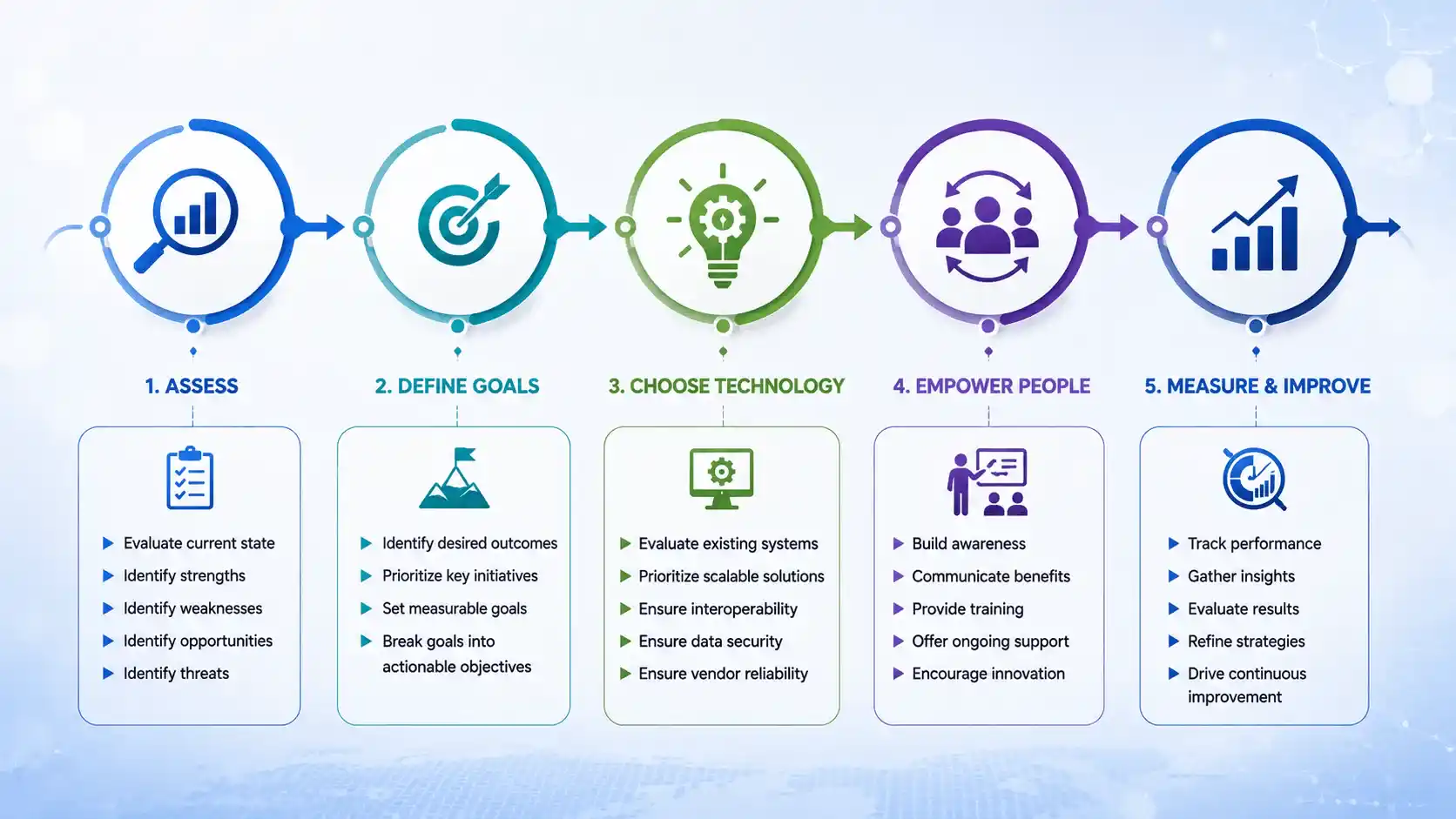
Successful execution demands meticulous planning, strategic deliberation, and a clear grasp of the company’s aims and aspirations. Below are the essential steps to build a strong digital transformation framework.
1️⃣ Identifying Business Goals
The first step in crafting a winning digital transformation strategy is aligning it with your organization’s overarching business goals. This starts with a thorough understanding of where the organization currently stands.
- Assess the current state; map out strengths, weaknesses, opportunities, and threats
- Identify desired outcomes and prioritize initiatives with the highest potential impact
- Break goals into smaller, actionable objectives to guide the transformation journey
- Enable incremental progress so the process stays manageable and measurable, with room to track and adjust along the way
2️⃣ Aligning Technology with Business Objectives
Technology plays a crucial role in digital transformation, but it should always map back to business objectives, a pattern seen across many successful examples of digital transformation.
- Evaluate existing systems before investing to pinpoint where technology can optimize processes, improve customer experience, or drive innovation
- Prioritize scalable solutions that grow with the business and support long-term goals
- Weigh key factors like interoperability, data security, and vendor reliability when selecting solutions
- Involve stakeholders across departments to ensure chosen technologies meet real, cross-functional needs
- Establish strong governance: define roles and responsibilities, set clear communication channels, and regularly monitor technology performance against business objectives
3️⃣ Developing a Change Management Strategy
Digital transformation often reshapes processes, workflows, and employee roles, which makes a solid change management strategy essential for a smooth transition.
- Build awareness and urgency around why the transformation matters
- Communicate benefits openly and proactively address employee concerns or resistance
- Invest in training and support to help employees build the skills needed for the new digital environment
- Foster a culture of innovation: encourage experimentation, reward new ideas, and create space for collaboration and knowledge sharing
Bringing it together: A strong digital transformation framework rests on three pillars: clear business goals, technology aligned with those goals, and a change management strategy that brings people along for the journey. Organizations that continuously evaluate and refine this framework are the ones positioned for long-term success.
Overcoming Challenges
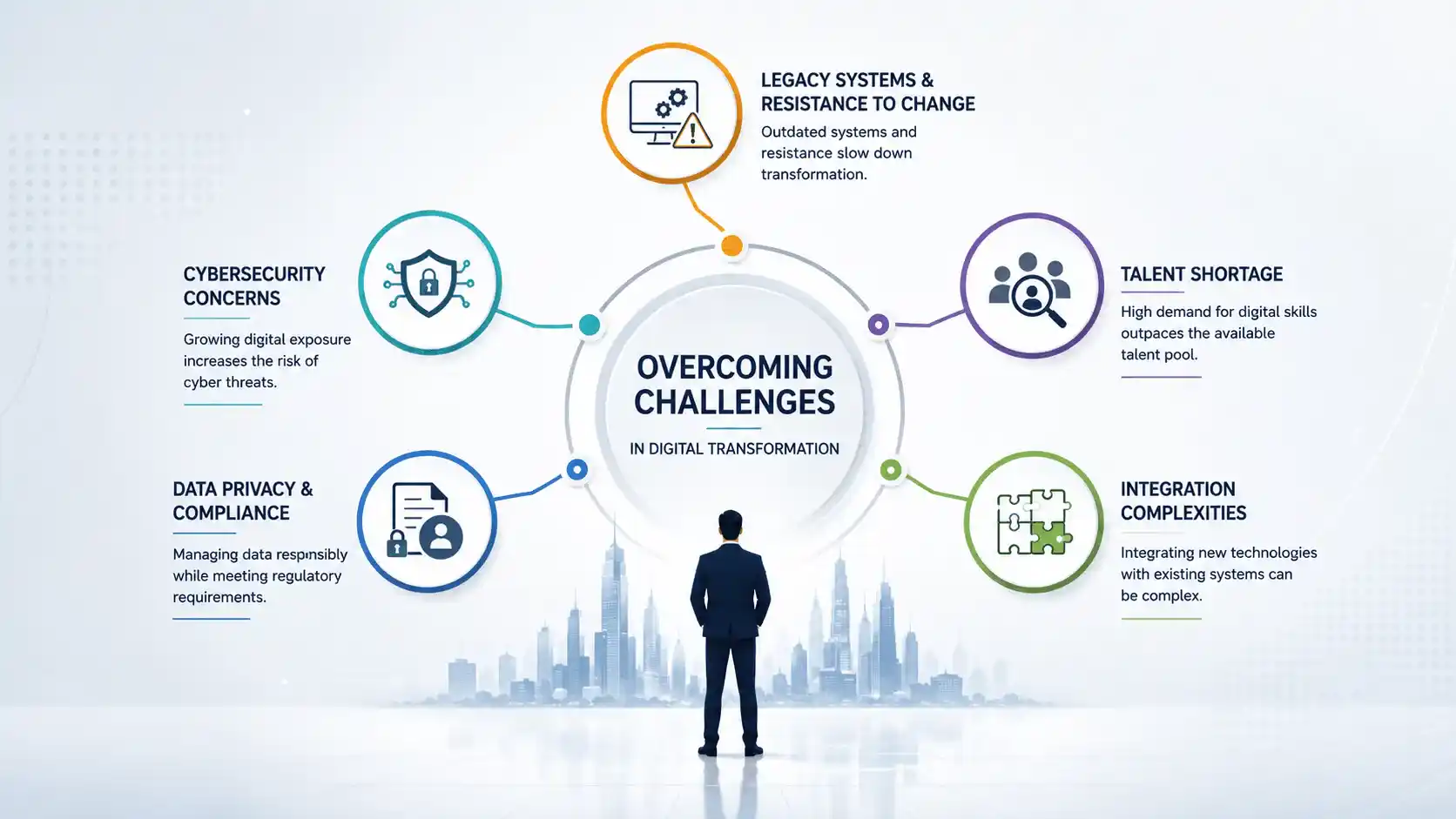
While digital transformation offers great rewards, it also presents unique challenges that organizations must overcome to succeed.
1. Legacy Systems and Resistance to Change
Many organizations are hindered by legacy systems that are not designed for the digital age. These systems can be deeply ingrained, making it difficult to adapt to new digital technologies. Additionally, resistance to change from employees and leadership can impede progress.
2. Cybersecurity Concerns
The expansion of digital landscapes opens up new avenues for cyberattacks. Ensuring the security of digital assets, customer data, and intellectual property is a critical challenge that organizations must address.
3. Data Privacy and Compliance:
Stricter data privacy regulations, such as GDPR and CCPA, require organizations to handle customer data with care. Complying with these regulations while utilizing customer data for business insights presents a significant challenge.
4. Talent Shortage:
The demand for digital skills often exceeds the available talent pool. Attracting and retaining individuals skilled in data analytics, artificial intelligence, cybersecurity, and other digital competencies can be challenging.
5. Integration Complexities:
Integration of new digital technologies with the existing systems can be complex. Ensuring seamless communication between different platforms, software, and devices is crucial for a successful digital transformation.
These challenges underscore the importance of careful planning, investment, and change management in the process of digital transformation. Join hands with HyScaler to ease your Digital Transformation process.
Measuring the Success
Tracking and measuring the success of digital transformation initiatives is essential to evaluate their impact and refine strategies for continuous improvement.
Key Performance Indicators
Identifying key performance indicators (KPIs) that align with your business goals is crucial to measure the success of digital transformation efforts. These KPIs can vary depending on the nature of your organization, but some common ones include revenue growth, customer satisfaction, operational efficiency, and employee productivity.
Regularly monitor and analyze these KPIs to gain insights into the effectiveness of your digital transformation strategy and make data-driven decisions. Presenting those results to leadership using an online presentation maker can help drive faster buy-in for your next phase of investment.
Continuous Improvement and Adaptation
Digital transformation is a continuous journey rather than a singular event. It requires organizations to embrace a culture of continuous improvement and adaptation to stay ahead of evolving market trends and customer expectations.
Regularly evaluate the effectiveness of your digital initiatives, gather feedback from stakeholders, and iterate your strategy accordingly. Embrace innovation and remain agile to capitalize on emerging technologies and opportunities.
Future Trends in Digital Transformation
As technology continues to evolve, so will the opportunities and challenges in digital transformation. Here are a couple of future trends that organizations need to keep an eye on:
The Role of AI and Machine Learning
Artificial intelligence (AI) and machine learning (ML) are poised to play a significant role in future digital transformations. These technologies can automate processes, enhance decision-making, and unlock new insights from vast amounts of data.
Organizations leveraging AI and ML will have a competitive advantage in areas such as personalized customer experiences, predictive analytics, and supply chain optimization.
The Impact of 5G and IoT on Digital Transformation
The widespread adoption of 5G connectivity and the Internet of Things (IoT) will further accelerate digital transformation. 5G’s higher speed and lower latency will enable more connected devices and seamless interactions, paving the way for innovative applications in various industries.
IoT devices will generate vast amounts of data, providing organizations with valuable insights for optimizing processes, improving products, and delivering personalized experiences at scale.
Conclusion
In today’s digital era, crafting a winning digital transformation strategy is essential for organizations to stay competitive and thrive. It requires a clear vision, a customer-centric approach, a robust technology infrastructure, and a culture of continuous improvement and adaptation.
By overcoming challenges, aligning technology with business objectives, and measuring success through meaningful KPIs, organizations can navigate the complexities of the digital transformation journey and unlock new opportunities for growth and innovation.
As technology continues to evolve, organizations must stay informed about emerging trends like AI, ML, 5G, and IoT, to capitalize on their potential and stay ahead of the competition. Join hands with HyScaler to begin your digital transformation journey today.
FAQs
What is a digital transformation strategy?
It’s a structured plan for using digital technology to change how a business operates and delivers value to customers. It covers people, processes, and tools together, not just new software.
Why do most digital transformation initiatives fail?
Most failures come from weak change management, not bad technology. Employee resistance, unclear goals, and lack of leadership buy-in derail projects more often than tooling issues.
What’s the difference between digitization, digitalization, and digital transformation?
Digitization is converting analog to digital data. Digitalization is using that data to improve processes. Digital transformation is the broader shift in strategy, culture, and business model.
What are the biggest roadblocks companies run into?
Legacy systems, cybersecurity gaps, data privacy compliance, talent shortages, and integration complexity are the most commonly cited roadblocks across industries.
What KPIs actually matter for measuring digital transformation success?
Common KPIs include revenue growth, customer satisfaction scores, operational efficiency gains, and employee productivity, chosen based on what the initiative was meant to improve.
Can digital transformation help with cybersecurity, or does it increase risk?
Both. Expanding digital infrastructure widens the attack surface, but transformation done right also brings modern security tools and practices that older systems typically lack.