Table of Contents
In today’s competitive B2B landscape, lead generation has shifted from manual prospecting to AI-powered automation. With nearly 98% of website visitors remaining anonymous and buyer intent fading within seconds, speed and precision are critical.
New tools help sales teams find buyers. These tools enrich data and score leads fast. They also automate follow-up tasks. Older methods like cold calling cannot do this at scale. Manual LinkedIn searches also fail to scale. This guide reviews the best B2B lead generation tools. We will help you select tools that fit your current technology. Also, they must match your budget. Finally, these tools must consistently push good leads into your sales pipeline.
What is B2B Lead Generation?
B2B lead generation is the process of identifying, attracting, and qualifying potential business customers who match your Ideal Customer Profile (ICP). Unlike B2C lead generation, B2B has distinct characteristics:
- Longer Sales Cycles: Decisions involve multiple stakeholders and require extended evaluation periods
- Relationship-Driven: Success depends on building trust and proving credibility over time
- Complex Decision-Making: Purchases involve entire teams rather than individual buyers
- Higher Value Transactions: B2B deals typically involve larger investments and longer-term commitments
Key Features to Look for in B2B Lead Generation Tools
When evaluating lead generation tools, focus on features that streamline your workflow rather than create busywork:
1. Automation Depth
The best tools handle repetitive tasks without disrupting your existing processes. Look for platforms that automate email sequences, follow-ups, lead scoring, and data enrichment.
2. Lead Scoring Accuracy
Effective lead scoring distinguishes serious prospects from casual browsers. Advanced tools use AI and behavioral signals to prioritize leads based on intent, fit, and timing.
3. Data Quality and Verification
Accurate, verified contact information is essential. Tools should offer real-time email verification, phone number validation, and regular database updates to minimize bounce rates and wasted outreach.
4. Integration Capabilities
Seamless integration with your CRM, email marketing platform, and other tools ensures smooth data flow and prevents information silos.
5. Privacy Compliance
GDPR compliance is non-negotiable. Ensure tools process data legally, particularly when operating in European markets. Tools that focus on company-level data rather than personal data often have simpler compliance requirements.
Top B2B Lead Generation Tools
Here are the leading B2B lead generation platforms, categorized by their primary function:
1. ZoomInfo – Enterprise Data & Intent Signals
Best For: Large organizations needing comprehensive data coverage and intent signals
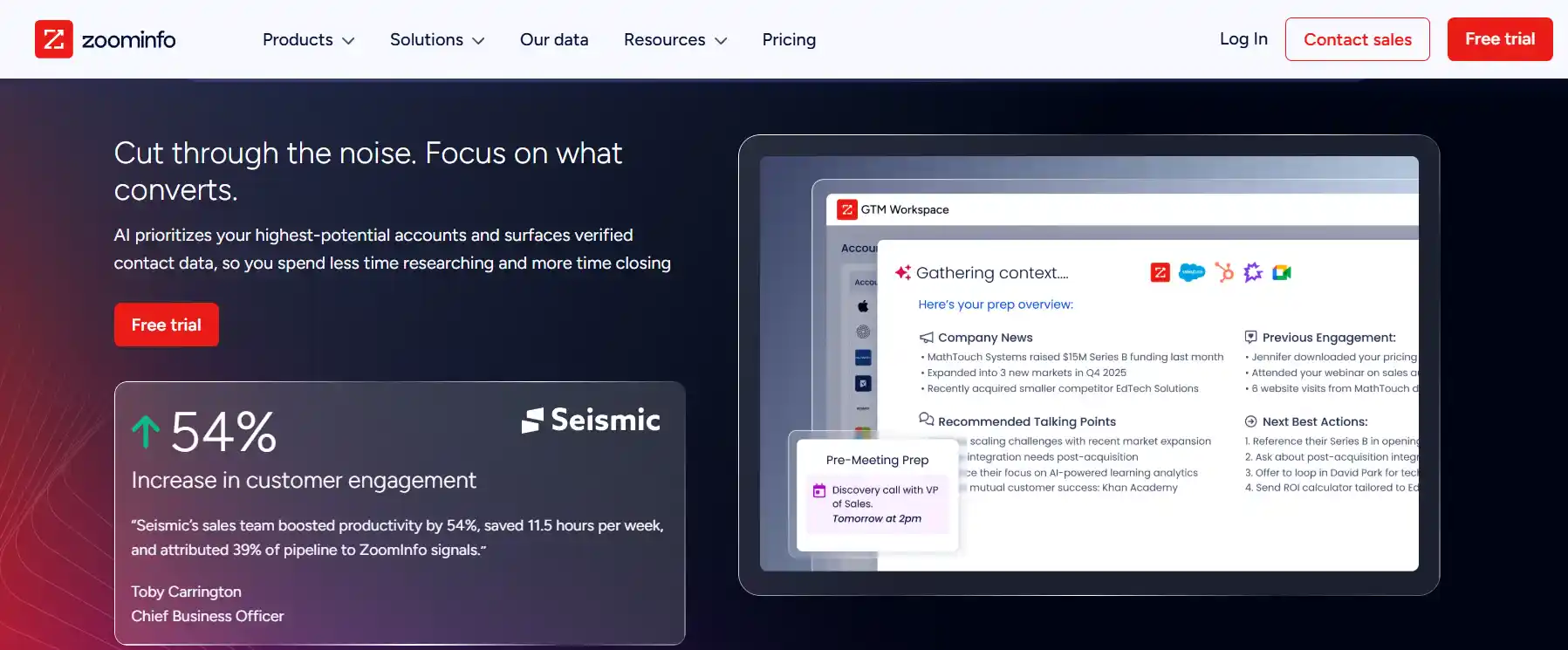
ZoomInfo is the market leader for enterprise B2B teams requiring maximum data coverage. It combines extensive company databases with buying intent signals and engagement tools, making it ideal for account-based marketing programs.
Key Features:
- Massive B2B contact database with verified information
- Advanced intent data and buying signals
- Technographic and firmographic insights
- CRM integration and workflow automation
2. Apollo.io – All-in-One Sales Platform
Best For: Teams wanting data, engagement, and automation in one platform
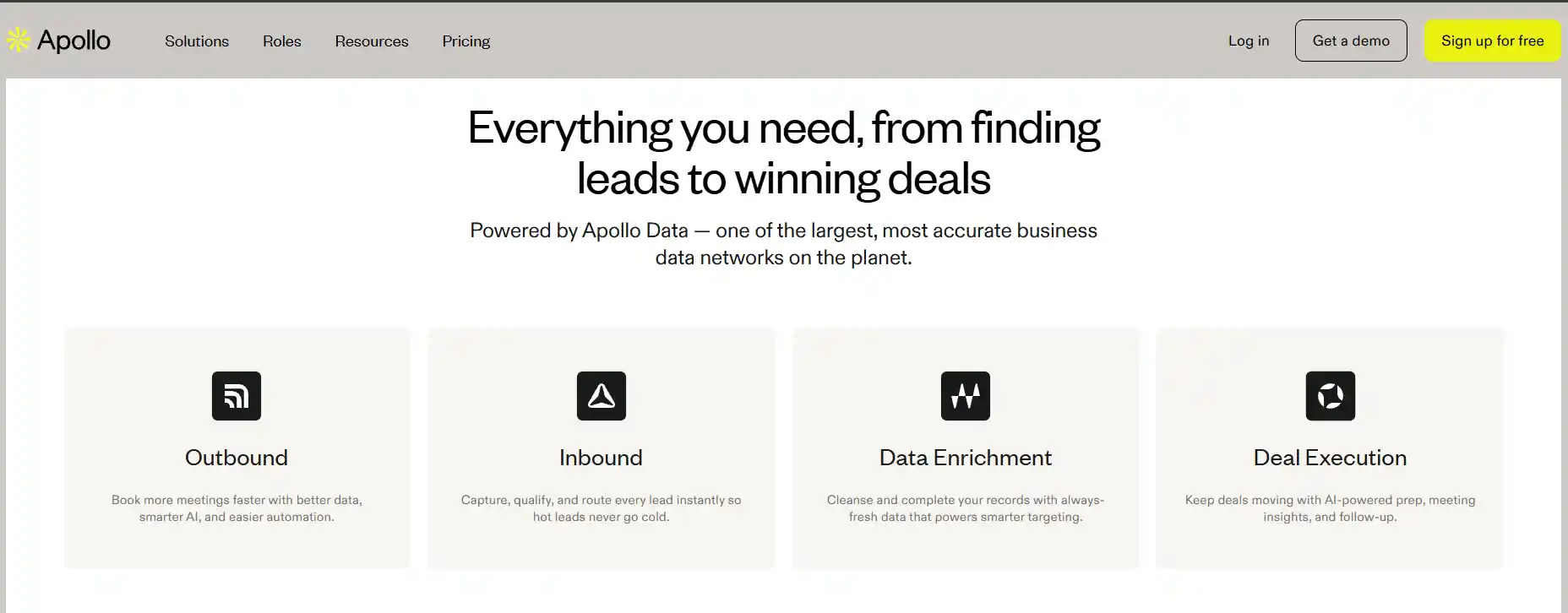
Apollo.io combines a large B2B database with sales engagement tools, making it popular with SDR teams and small agencies. It provides both prospecting data and outreach infrastructure in a single platform.
Key Features:
- 200+ million verified contacts
- Email sequencing and automation
- LinkedIn prospecting integration
- Lead scoring and analytics
3. LinkedIn Sales Navigator – Professional Network Prospecting
Best For: B2B professionals leveraging LinkedIn for relationship building
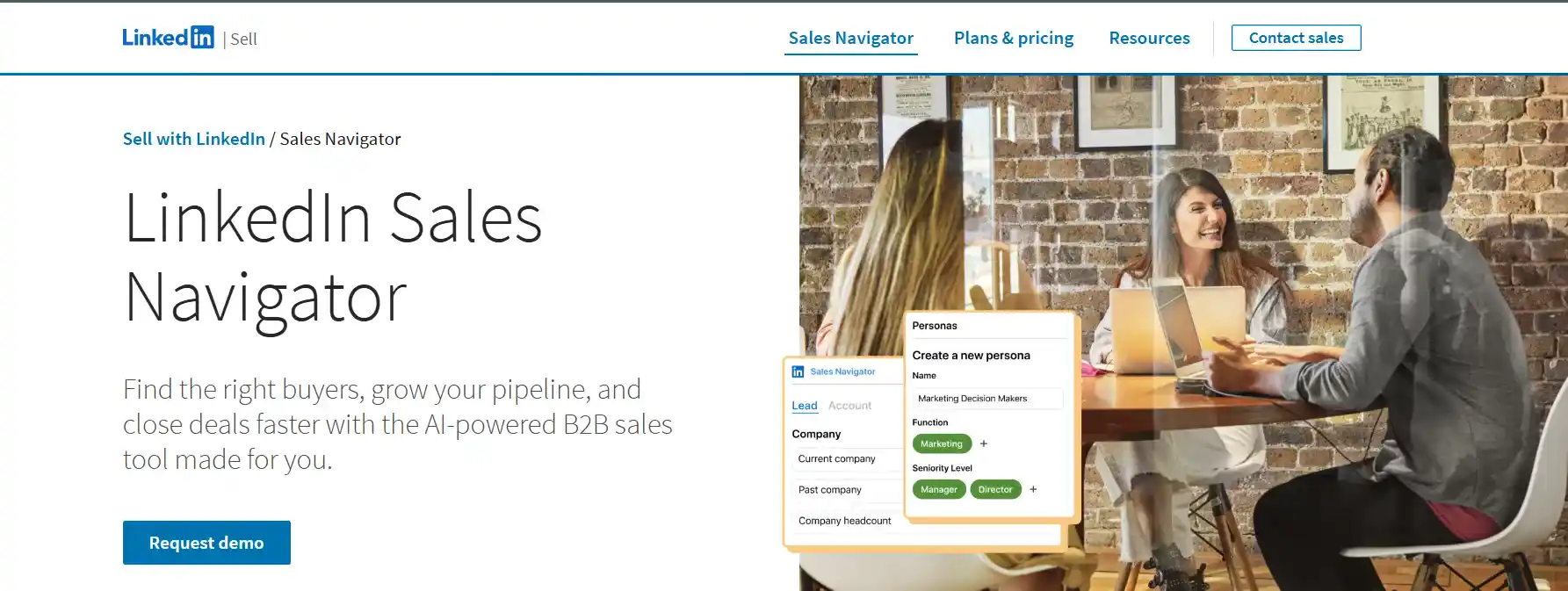
LinkedIn Sales Navigator provides advanced search capabilities and insights for connecting with decision-makers on the world’s largest professional network.
Key Features:
- Advanced lead and company search filters
- InMail messaging to any LinkedIn member
- Real-time alerts on saved leads
- CRM platform integration
4. UpLead – Verified Contact Data
Best For: Teams prioritizing data accuracy and real-time verification
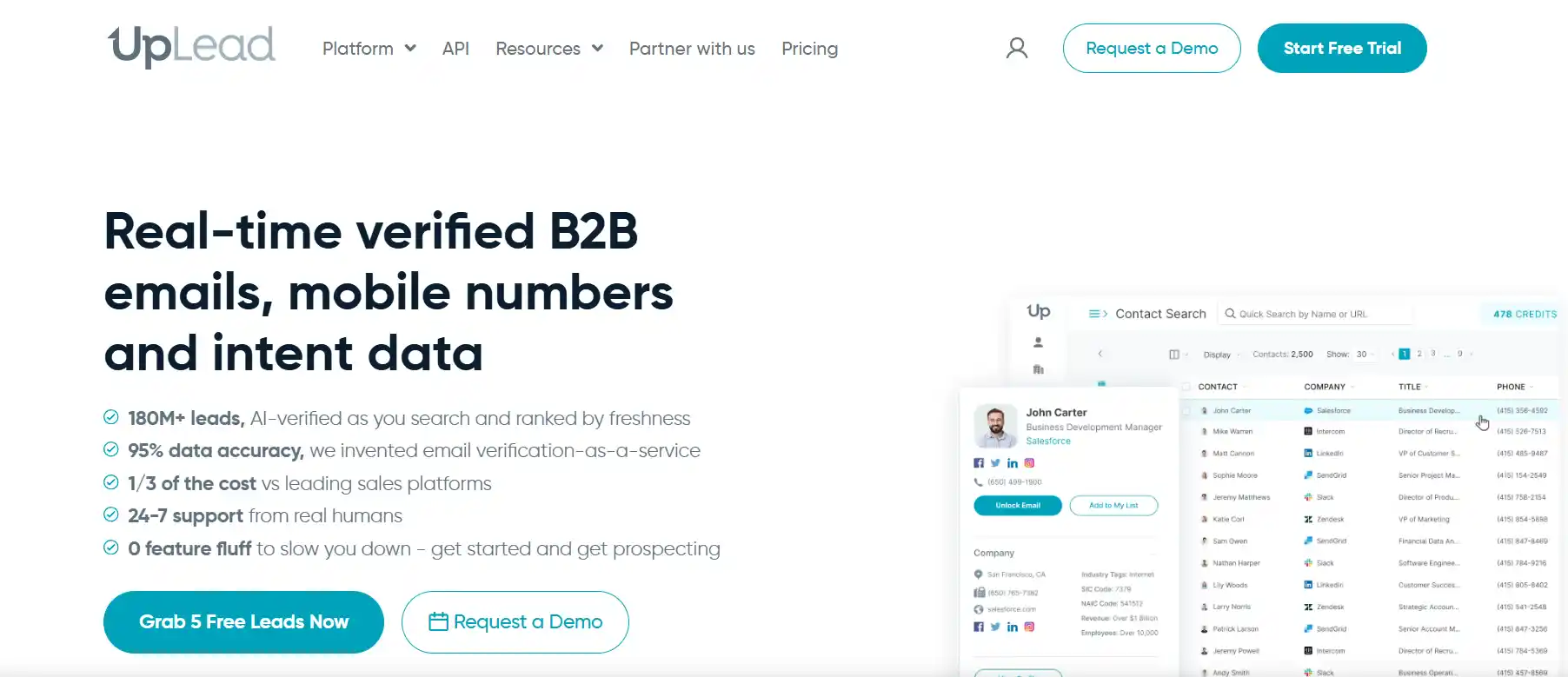
UpLead specializes in providing verified B2B contact information with real-time validation, helping teams reduce bounced emails and wasted outreach efforts.
Key Features:
- Real-time email verification
- Advanced search filters by industry, revenue, and location
- Data enrichment with firmographic details
- Seamless CRM integrations
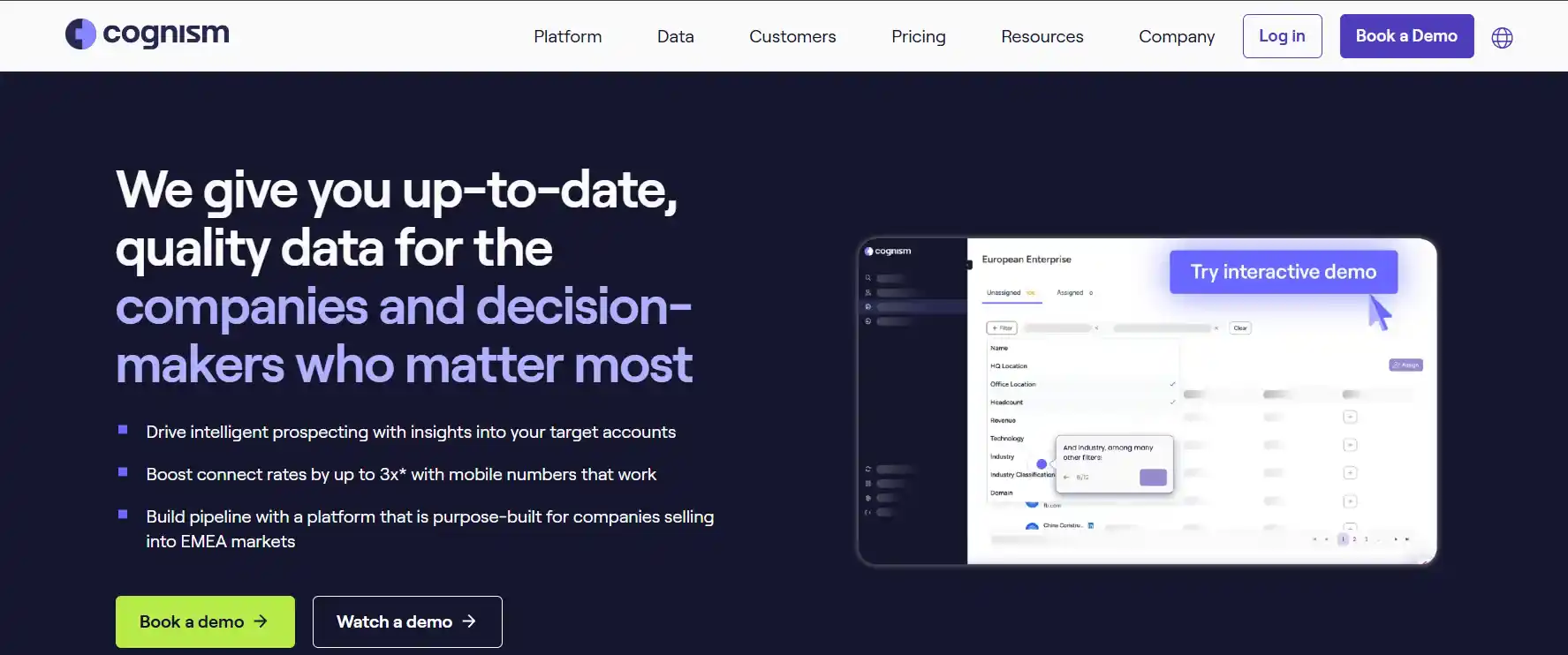
5. Cognism – GDPR-Compliant European Data
Best For: European markets and GDPR-compliant prospecting
Cognism focuses on GDPR-compliant B2B prospecting with particular strength in European and UK markets, providing verified contact details while maintaining regulatory compliance.
Key Features:
- GDPR-compliant data collection
- Verified mobile phone numbers
- Diamond Data® for highly accurate contacts
- Intent data integration
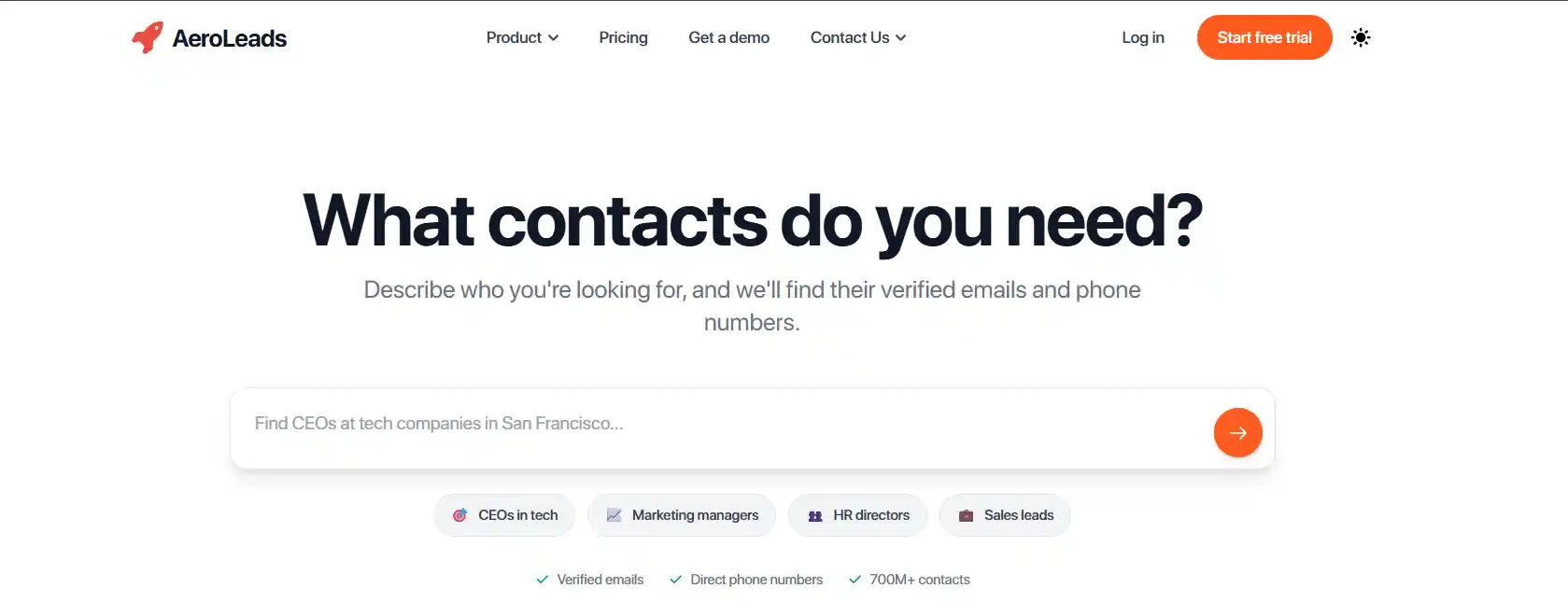
6. AeroLeads – B2B Prospecting & Contact Discovery
Best For: Finding verified business emails and phone numbers
AeroLeads helps sales and marketing teams discover accurate B2B contact details directly from platforms like LinkedIn, making outbound prospecting faster and more efficient.
Key Features:
- Email and phone number discovery
- LinkedIn and Chrome extension support
- Contact list building and export
- CRM integrations
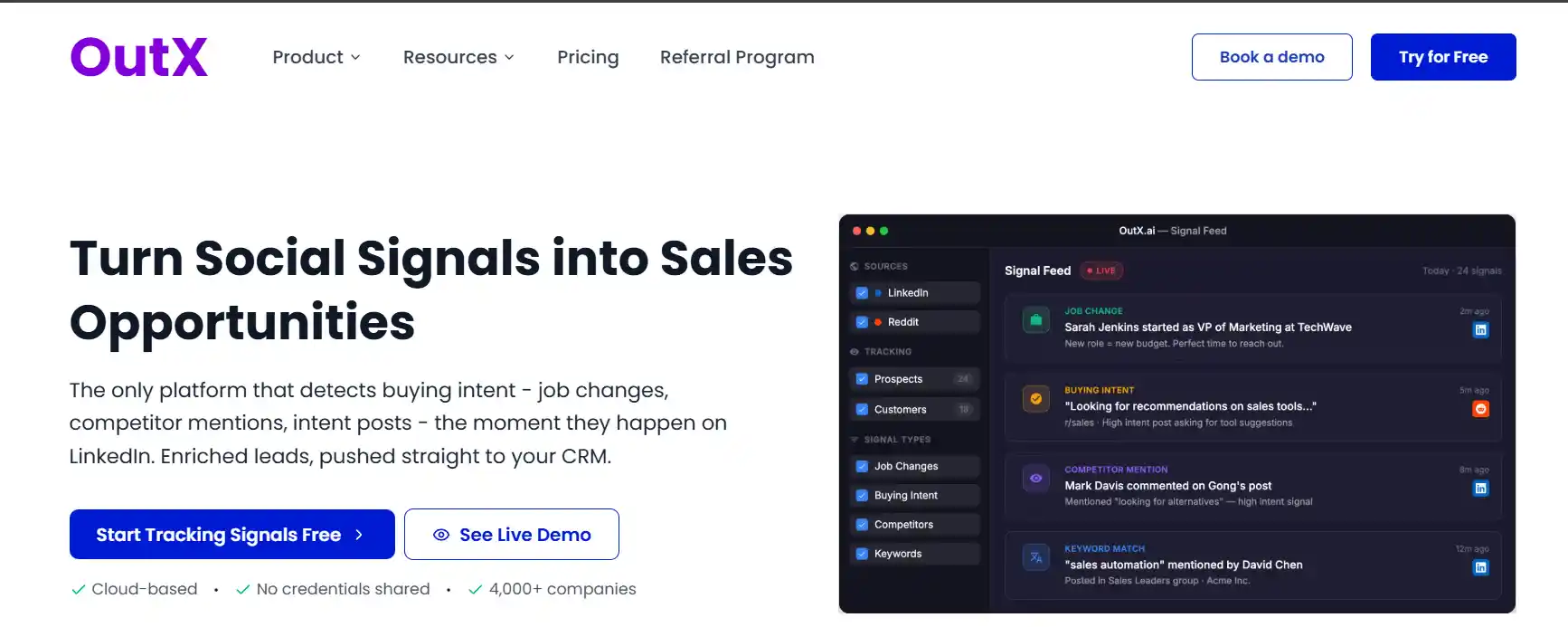
7. OutX – AI-Powered Outbound Lead Generation
Best For: Automated outbound prospecting and email outreach
OutX uses AI-driven workflows to identify prospects, personalize outreach, and automate follow-ups, helping teams scale outbound lead generation with minimal manual effort.
Key Features:
- AI-based prospect targeting
- Automated cold email sequences
- Personalization at scale
- CRM and workflow integrations
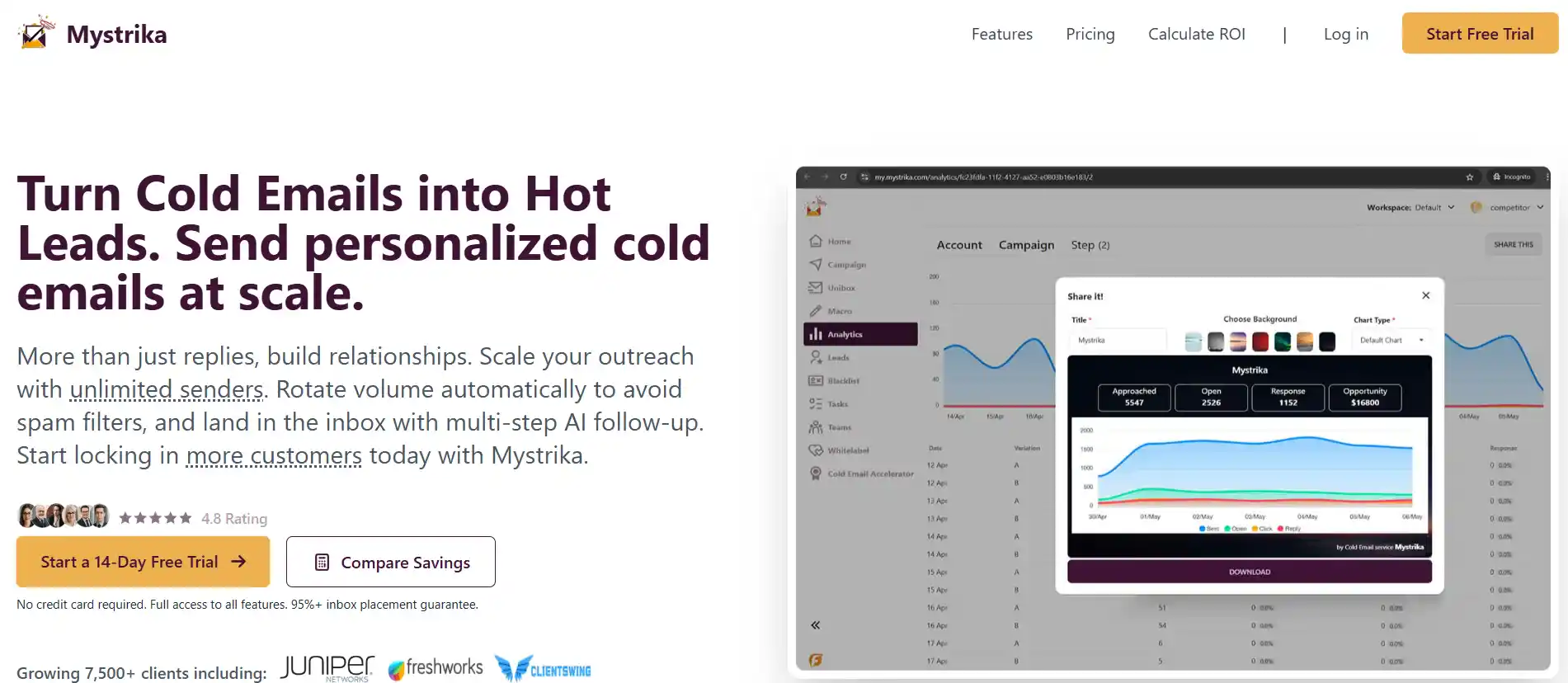
8. Mystrika – Cold Email Outreach Automation
Best For: Scaling cold email campaigns with high deliverability
Mystrika enables teams to run large-scale cold email campaigns while maintaining inbox health and personalization.
Key Features:
- Multi-inbox rotation
- Automated email warm-up
- Smart follow-up sequences
- Campaign analytics and reporting
9. Prospectoo – Lead Prospecting & Data Extraction
Best For: Fast B2B prospecting and contact data extraction
Prospectoo helps sales teams quickly extract and organize prospect data from multiple online sources for outbound campaigns.
Key Features:
- Automated prospect data extraction
- Contact and company enrichment
- Export-ready lead lists
- Simple integration with outreach tools
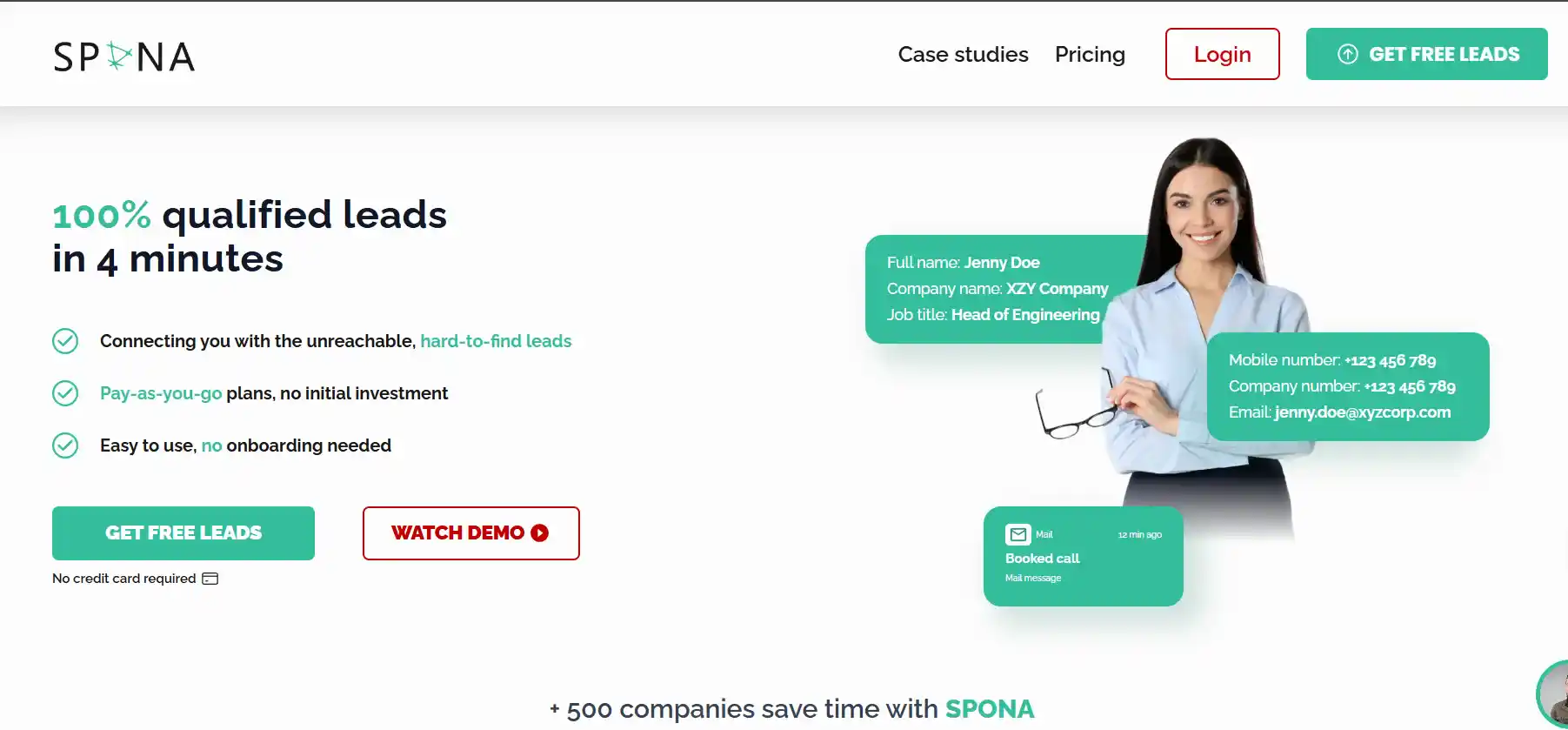
10. SponaSales – Real-Time Lead Engagement
Best For: Capturing and engaging high-intent leads in real time
SponaSales focuses on real-time engagement through chat-based interactions, helping businesses qualify and convert website visitors instantly.
Key Features:
- Real-time chat and engagement tools
- Lead qualification workflows
- Automation for inbound conversations
- CRM integration for lead tracking
How to Choose the Right Tool for Your Business
Selecting the right B2B lead generation tool depends on several factors specific to your business needs:
Scenario 1: Website Visitor Identification
If you want to identify companies visiting your website, choose tools like Leadinfo or Leadfeeder. Focus on identification rates in your geographic region and ensure GDPR compliance.
Scenario 2: Outbound Prospecting
For contact details and outbound campaigns, consider Apollo.io, Cognism, or UpLead. Pay close attention to data quality in your target markets and email verification accuracy.
Scenario 3: Data Enrichment
If you need to enrich existing leads and automate complex workflows, Clay offers powerful orchestration capabilities. Consider how it integrates with your current technology stack.
Scenario 4: Enterprise ABM Programs
For comprehensive account-based marketing at enterprise scale, ZoomInfo or 6sense provides the depth and intent signals needed. Allocate an appropriate budget for implementation and training.
Best Practices for B2B Lead Generation
Regardless of which tools you choose, follow these best practices to maximize your lead generation success:
- Define Your Ideal Customer Profile (ICP): Clearly identify your target audience based on industry, company size, role, and pain points. This focus improves lead quality and conversion rates.
- Prioritize Data Quality: Regularly clean your database, verify email addresses, and remove outdated contacts. Quality matters more than quantity.
- Implement Lead Scoring: Use behavioral signals, engagement metrics, and firmographic data to prioritize leads most likely to convert.
- Personalize Outreach: Generic messages get ignored. Use the data from your tools to craft personalized, relevant communications that address specific pain points.
- Test and Optimize: Continuously A/B test email subject lines, messaging, and outreach timing. Use analytics to identify what works and refine your approach.
- Align Sales and Marketing: Ensure both teams agree on lead definitions, qualification criteria, and handoff processes to prevent leads from falling through the cracks.
Conclusion
The B2B lead generation landscape offers a wide range of powerful tools tailored to every stage of the buyer journey. From enterprise data platforms like ZoomInfo to all-in-one solutions such as Apollo.io and niche tools like Hunter and Leadfeeder, success depends on choosing the right mix, not more tools.
Focus on platforms that integrate well with your CRM, fit your budget, and support your core goals, whether outbound prospecting, inbound leads, or ABM.
When paired with a clear ICP, smart lead scoring, and personalized outreach, these tools can convert traffic into qualified leads and drive consistent, predictable revenue.
FAQ
What are lead generation tools?
Lead generation tools are software solutions that help businesses identify, capture, qualify, and manage potential customers by collecting data, tracking intent, and automating outreach and follow-ups.
How to get 100 leads a day?
You can get 100 leads a day by combining automated outbound prospecting, high-intent inbound channels, lead generation tools, and consistent follow-up workflows.
What is a CRM for leads?
A CRM for leads is a system that captures, organizes, tracks, and manages potential customers throughout the sales pipeline to improve conversions and follow-ups.
Which app is best for lead generation?
Apollo.io is often considered the best lead generation app because it combines prospecting, data enrichment, and outreach automation in one platform, while tools like HubSpot and ZoomInfo suit more specific or enterprise needs.
Do lead generation tools support automated lead nurturing?
Yes, most modern tools automate lead nurturing through workflows, scoring, and personalized follow-ups.