

Table of Contents
Imagine a world where traffic congestion is a thing of the past. Your daily commute transforms from a stressful ordeal into a smooth, efficient journey managed by a network of intelligent systems. This is no longer science fiction. AI in transportation is the unfolding reality of 2026, powered by Artificial Intelligence (AI). From robotaxis completing millions of rides every week to AI-optimized supply chains reacting in real time, the transportation sector is experiencing its most dramatic transformation in a century.
This updated exploration examines how AI is not just revolutionizing transportation but fundamentally redefining mobility for a new era with the very latest data, milestones, and market figures as of early 2026.
The Current State of AI in Transportation (2025–2026)
The AI in the transportation market has entered a phase of explosive, sustained growth. According to Precedence Research (November 2025), the global market reached $5.53 billion in 2025, up from approximately $4.27 billion in 2024, and is projected to grow at a compound annual growth rate (CAGR) of 22.7% to reach approximately $34.83 billion by 2034. North America maintains its dominant position with a 40.8% market share in 2025, led by the United States, which alone accounts for $1.55 billion in market value.
Key 2025–2026 Market Highlights:
- Global AI in transportation market value: $5.53 billion (2025), growing to $6.78 billion (2026)
- North America holds 40.8% market share; the US alone accounts for $1.55 billion
- Deep learning leads technology adoption with ~45.6% share
- Hardware (sensors, cameras, processors) holds the largest segment at ~54.1%
- Autonomous trucks lead application segments at ~42.6% market share
- Major investors include SoftBank Vision Fund, Andreessen Horowitz, Toyota Ventures, and GM Ventures
- NVIDIA’s automotive revenue grew 21% to $1.1 billion in 2024, driven by AI cockpit and self-driving platforms
Key Technology Advancements
The journey of AI in transportation continues to be paved by several converging advancements:
- Machine Learning & Deep Learning: Deep learning now accounts for roughly 45.6% of AI adoption in transportation. These algorithms allow vehicles and logistics systems to learn continuously from vast datasets, improving decision-making in complex, real-world environments.
- Computer Vision: AI-powered vision systems now achieve object recognition accuracy that rivals and often exceeds human perception. Cities such as Bengaluru reported AI traffic cameras detecting 87% of violations in the first half of 2025.
- Sensor Fusion: The combination of LiDAR, RADAR, cameras, and ultrasonic sensors gives autonomous systems a 360-degree understanding of their environment, enabling safe operation in complex urban traffic.
- Vehicle-to-Everything (V2X) Communication: The V2X market, valued at $5.91 billion in 2025, is growing at a remarkable 37.8% CAGR as vehicles increasingly communicate with each other, infrastructure, and cloud platforms in real time.
- Digital Twins: Cities and transport operators are deploying virtual replicas of infrastructure and traffic networks, enabling real-time simulation of disruptions, policy changes, and construction impacts before they affect real passengers.
Autonomous Vehicles
Autonomous vehicles have moved decisively from the realm of pilots and prototypes to commercial-scale deployment. The milestone shift in 2025–2026 is not just technical; it is operational and cultural.
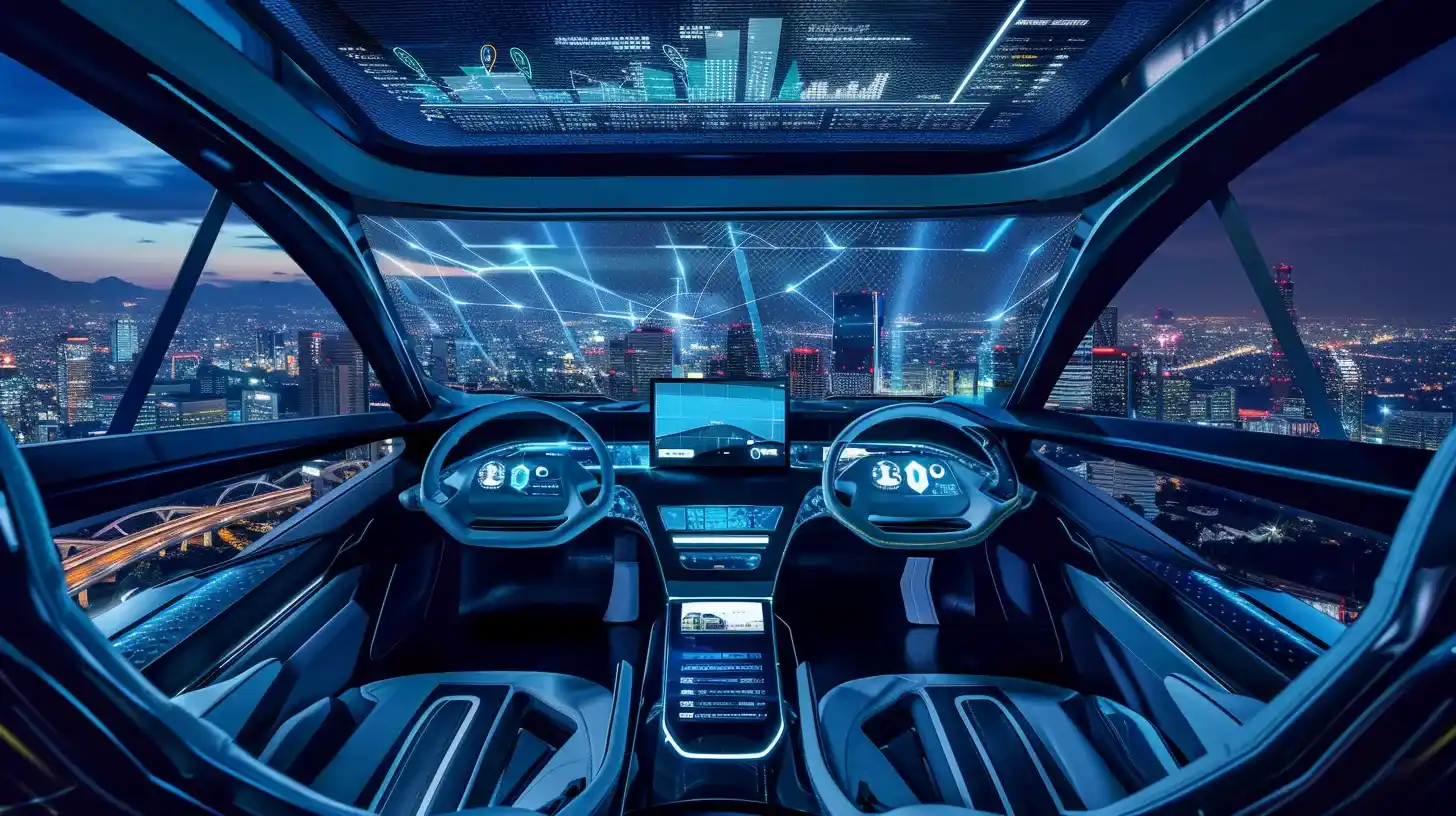
Waymo: The Robotaxi Leader in 2026
Waymo stands as the world’s most advanced commercial robotaxi operator. As of March 2026, the company operates 3,000 autonomous vehicles, provides 500,000 paid rides per week, and logs 4 million rider-only miles every week. In 2025 alone, Waymo served over 14 million trips, more than triple the previous year’s total, with cumulative lifetime trips exceeding 20 million.
Key Waymo Milestones (2025–2026):
- Currently operating driverless in 10+ US cities, including San Francisco, Phoenix, Los Angeles, Austin, Atlanta, Miami, and Dallas
- Expanding to 20 more cities in 2026, including first international launches in London and Tokyo
- Targeting 1 million rides per week by the end of 2026, four times the current volume
- Raised a $16 billion in funding in February 2026 at a $126 billion valuation
- Plans to build 2,000+ vehicles at its Arizona manufacturing facility by the end of 2026
- Autonomous vehicles logged over 267 million autonomous miles by the end of 2025
- Safety data: more than a 10-fold reduction in serious injury crashes compared to human drivers
- 67% of San Francisco residents now support driverless robotaxis, up from 44% in 2023
The Broader Autonomous Vehicle Landscape
Waymo is not alone. Across the industry, approximately 35% of new vehicles being developed globally now incorporate AI technologies such as Advanced Driver Assistance Systems (ADAS). MarketsandMarkets projects approximately 291,000 SAE Level-3 vehicles in commercial use in 2025, with fully autonomous vehicles expected to account for around 15% of the total vehicle market share within the next decade.
Autonomous trucking is another high-growth frontier. Long-haul trucking is emerging as the optimal starting point for full autonomy, standardized highway routes, geofenced operations, and large potential cost savings are accelerating deployment. The autonomous truck segment already leads AI transportation applications with 42.6% market share in 2025.
Remaining Challenges
- Cybersecurity: As fleets scale to thousands of connected vehicles, protecting against cyberattacks on vehicle control systems remains a top priority for regulators and manufacturers alike.
- Ethical Decision-Making: Autonomous systems must be programmed with transparent frameworks for complex moral scenarios, a challenge that involves ethicists, engineers, and policymakers.
- Regulatory Patchwork: In the United States, Waymo has had to lobby state-by-state (Oregon, for example, had not yet legalized robotaxis as of early 2026). International expansion adds further legal complexity.
- Public Acceptance Gap: While acceptance is high in markets like China and India (75%+ open to AI in vehicles), only 20–30% of consumers in the US, Germany, and UK support autonomous vehicles, pointing to the need for continued safety demonstration and public engagement.
AI in Public Transportation & Smart Cities
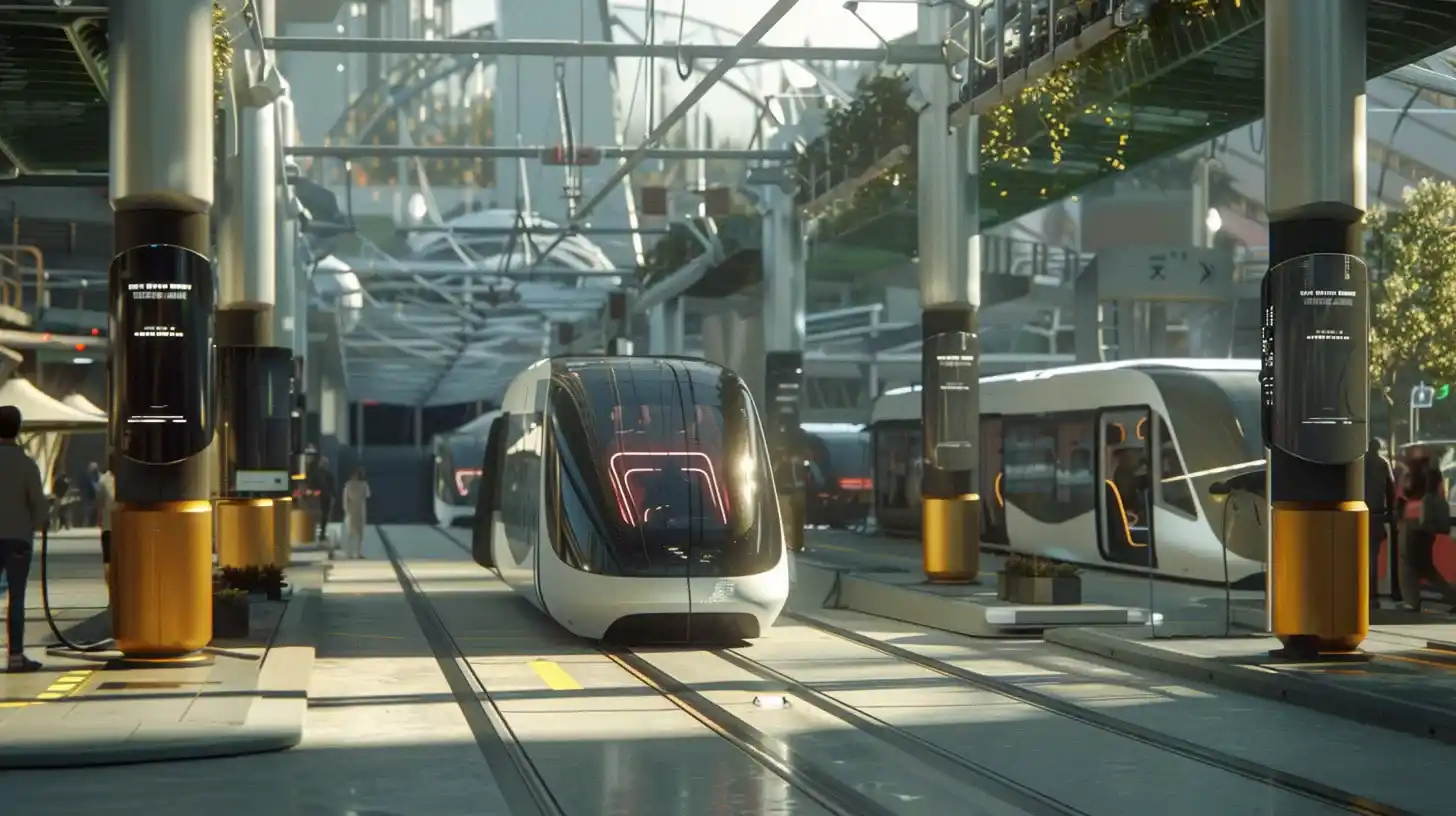
Smart cities are increasingly treating AI as core infrastructure, not a pilot project. A Deloitte-ThoughtLab survey of global city leaders in 2025 confirmed that leading US cities are actively deploying AI for traffic management, smart parking, transportation planning, and intelligent routing.
These planning efforts can also draw on Streetlight’s reliable average daily traffic counts to compare roadway volumes and provide longer-term context for transportation decisions.
AI-Powered Traffic Management
AI traffic management has moved from promise to proven performance:
- AI retime traffic signals and suggest better routes, cutting road congestion by up to 30% (Forbytes, 2025)
- AI traffic prediction models now reach approximately 90% accuracy
- An open-access study of 100 Chinese cities found AI-controlled adaptive signals cut peak-hour trips by 11% and off-peak trips by 8%, avoiding approximately 31.73 Mt of CO₂ per year.
- New York City’s congestion pricing initiative (January 2025) led to one million fewer vehicles entering Manhattan in its first month, with travel times improving 10–30% on key crossings.
- Pittsburgh’s AI-driven traffic system achieved a 20% reduction in both congestion and CO₂ emissions.
- Transport for London used AI to optimize bus and train schedules, achieving a 10% boost in on-time performance and 15% reduction in passenger wait times.
- Singapore’s AI traffic monitoring reduced congestion in downtown areas by approximately 15%
Global Innovation Examples
Cities worldwide are scaling AI-powered mobility:
- Singapore: The city continues to pioneer AI-powered autonomous bus routes and real-time tracking systems for the entire city-state. For entrepreneurs looking to establish a presence in this innovation-driven market, company registration in Singapore can provide a solid foundation for launching and growing a business.
- Dubai: The Roads and Transport Authority deployed AI traffic signal optimization and the integrated S’hail mobility platform, creating a unified multi-modal travel experience.
- London: Beyond traffic management, London is welcoming Waymo for international testing, a first for any robotaxi operator, while its AI bus-scheduling improvements have cut wait times by 15%.
- Stockholm & Amsterdam: IoT integration with AI analysis has delivered significant reductions in travel times and improvements in traffic efficiency across both cities.
AI in Logistics and Supply Chain
AI in logistics and supply chain has become the operational backbone of global logistics. The agentic AI market in supply chain and logistics alone was valued at $8.67 billion in 2025 and is projected to reach $16.84 billion by 2030, as companies shift from bolt-on AI tools to AI-native, fully integrated workflows.
What Worked in 2025: Proven AI Wins
- Demand Forecasting: The most consistent AI win in 2025 was improving demand forecasts by integrating external signals, real-time inventory data, weather, and economic indicators alongside historical sales. Retailers with large store networks saw meaningful reductions in carrying costs and stockouts.
- Route Optimization: ML-powered route optimization saves 10–20% in fuel costs and delivers an average 22% reduction in transit times across major platforms. McKinsey reports that AI route optimization shortens daily driver travel times by approximately 15%.
- Predictive Maintenance: AI analysis of sensor data from vehicle fleets cuts repair costs by 10–20% by identifying mechanical issues before breakdowns occur.
- Capacity Matching: AI matching platforms connect shippers with available transport capacity, reducing empty miles by up to 45% while cutting carbon emissions.
- Warehouse Automation: AI-powered computer vision systems help warehouses process goods faster, reduce errors, and optimize space utilization. Autonomous Mobile Robots (AMRs) are now widely deployed across major fulfillment centers.
What’s Scaling in 2026: The Next Wave
In 2026, AI is moving from an optional enhancement to an expected operational infrastructure in logistics. Key scaling trends include:
- Agentic AI Workflows: Agentic systems are beginning to automate end-to-end replenishment and sourcing decisions without human intervention. McKinsey’s recent research found that early adopters of generative and agentic AI have already cut operational costs to four-fifths of previous levels.
- AI-Native Planning Platforms: Instead of bolt-on AI copilots, logistics providers are rebuilding core systems with AI embedded directly into planning, transportation, and warehouse workflows.
- Context-Aware AI Assistants: Unlike the stateless AI of 2025, 2026’s AI assistants remember shipment histories, learn supplier performance patterns, and track user preferences, evolving from reactive tools to proactive partners.
- Drone Delivery: Drone delivery has transitioned from pilot programs to a regulated operating model in select markets. It functions best where economics, route density, payload profiles, and regulatory conditions align, particularly in rural and suburban delivery.
- Autonomous Trucking Corridors: Several US states and parts of Europe have approved limited autonomous trucking lanes. These systems initially complement drivers on long-haul stretches, handling standardized highway segments.
Case Study: Maersk AI-Driven Remote Container Management
Maersk, the global shipping leader, deployed an AI-driven Remote Container Management (RCM) system combining IoT sensors on refrigerated containers with machine learning to monitor temperature, humidity, and CO2 levels in real time. When anomalies are detected, the system automatically triggers alerts and recommends corrective actions. Maersk also deployed its ‘Captain Peter’ AI virtual assistant, which provides customers with container tracking visibility and proactive delay notifications using natural language processing.
The Environmental Impact of AI-Driven Transportation
AI in transportation is emerging as a powerful tool in the fight against transportation-related emissions, which remain one of the largest contributors to global greenhouse gas output.
- Traffic Signal Optimization: AI-controlled adaptive signals across 100 Chinese cities avoided approximately 31.73 Mt of CO2 annually by reducing unnecessary idling and stop-and-go driving.
- Route Optimization: Shyftbase (2025) reports that ML-powered route optimization saves 10–20% in fuel. Broader AI traffic management systems improve traffic flow by up to 30% through signal timing and dynamic routing.
- Congestion Reduction: Smart traffic systems can decrease energy use and greenhouse gas emissions by as much as 20% overall (Juniper Research).
- EV Fleet Management: AI is critical to managing the charging logistics of growing electric vehicle fleets, optimizing when, where, and how quickly vehicles charge based on grid conditions, cost, and operational schedules.
- Sustainable Infrastructure Planning: Cities are using AI to design transportation networks that favor walkable neighborhoods, cycling infrastructure, and efficient public transit over car-centric sprawl.
Ethical and Safety Considerations
As AI integration in transportation accelerates, the ethical and regulatory landscape has grown more sophisticated and more urgent.
Safety: The Data Is Compelling
AI-driven autonomous vehicles now have a significant safety record to draw from. Waymo reports more than a 10-fold reduction in serious injury crashes compared to human drivers across its commercial fleet. AI in Transportation is projected to reduce traffic accidents caused by human error by up to 50% as ADAS adoption grows, a dramatic potential benefit given that human error accounts for over 90% of road accidents globally.
Key Ethical Challenges in 2026
- Privacy & Surveillance: AI systems in transportation collect vast amounts of behavioral and location data. Robust data protection frameworks (GDPR, CCPA, and emerging national AI laws) are essential to maintain public trust.
- Algorithmic Bias: An AI algorithm trained on biased datasets can perpetuate inequitable outcomes, for example, optimizing service for wealthy areas while underserving marginalized communities. Ongoing monitoring and diverse training data are critical mitigations.
- Workforce Displacement: Automation is reshaping employment in trucking, logistics, and fleet operations. Governments and businesses are developing retraining programs, though scale and pace remain contested.
- Explainable AI (XAI): In 2026, logistics managers and regulators are demanding transparency into how AI systems arrive at decisions, particularly in route planning, inventory allocation, and autonomous driving scenarios. XAI is becoming a compliance requirement, not just a best practice.
- Cybersecurity: Fleets of connected vehicles represent large attack surfaces. Protecting vehicle control systems from malicious interference is paramount, especially as vehicles become network-connected and software-defined.
The Regulatory Landscape
Regulatory frameworks are evolving rapidly but unevenly. In the US, autonomous vehicle approval happens state by state, creating operational patchworks for companies like Waymo. In Europe, the EU AI Act (effective from 2024–2026) is establishing risk-based frameworks for AI systems, including those in transportation. Internationally, the need for harmonized testing standards and cross-border autonomous vehicle protocols is increasingly urgent as operators target global expansion.
The Economic Implications of AI-Driven Transportation
The economic impact of AI in transportation is already being felt in reduced costs, new investment flows, and emerging markets.
- Cost Savings: Companies adopting AI report transportation cost reductions of approximately 15% through better planning, automation, and real-time decision-making. Autonomous delivery pods can cut last-mile shipping costs by up to 70% compared to human drivers.
- Massive Investment Flows: Waymo alone raised over $11.1 billion between 2020 and 2024, followed by a $16 billion round in February 2026 at a $126 billion valuation. The US Department of Transportation allocated $50 million in SMART grants to 34 communities in March 2024 for AI-enhanced transportation technologies.
- New Market Creation: Autonomous vehicles, robotaxi platforms, AI-powered field service software, and V2X infrastructure are creating entirely new industries with billions in addressable revenue.
- Job Transformation: While automation displaces some roles, it creates significant demand for data scientists, AI engineers, cybersecurity specialists, and new operational roles managing autonomous fleets.
- Equity Challenge: The economic benefits of AI transportation must be distributed equitably. Without deliberate policy, efficiency gains may concentrate in wealthy urban areas while rural and underserved communities lag.
The Future Prospects of AI in Transportation (2026 and Beyond)
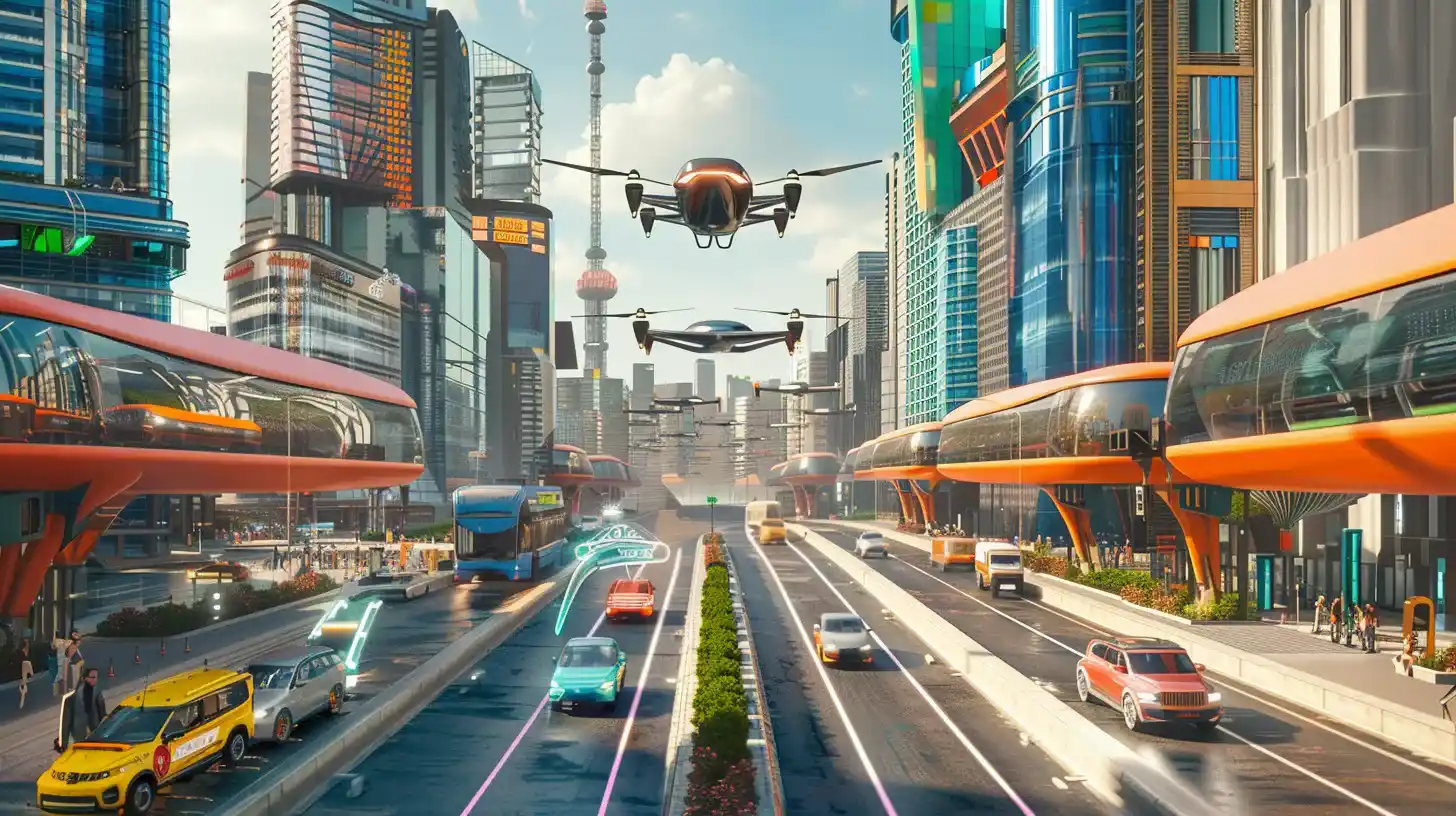
The trajectory of AI in transportation is clear: from cautious pilots to commercial scale, from single cities to global networks, from isolated tools to integrated intelligent systems. Here is what lies ahead:
Near-Term (2026–2028)
- Waymo and rivals expand robotaxi operations to 25+ cities globally, approaching 1 million rides per week
- Autonomous trucking corridors become commercially operational in select US and European states
- AI-native logistics platforms replace legacy TMS and WMS systems across major 3PLs
- V2X infrastructure deployment accelerates as connected vehicles exceed 25% of new car sales
- AI consolidation: platform providers (cloud, ERP, 3PL) absorb niche AI logistics startups into unified ecosystems
Medium-Term (2028–2034)
- AI in the transportation market is projected to exceed $34 billion by 2034 (Precedence Research), with some forecasts reaching $71 billion by 2035
- Fully autonomous vehicles are expected to reach approximately 15% of the total vehicle market share
- AI-integrated smart city transport networks become standard in major global cities
- Humanoid robotics begins to scale in warehouse and last-mile delivery environments
- AI-driven energy optimization in transport connects directly with smart grid infrastructure
Emerging Technologies on the Horizon
- Hyperloops: Several projects continue development of vacuum-tube high-speed transport systems, with potential for commercial deployment before 2035 in select corridors.
- Advanced Air Mobility (eVTOL): Electric vertical takeoff and landing vehicles (air taxis) are in advanced testing phases. Dubai, Singapore, and several US cities have committed to pilot routes, with regulatory frameworks developing in parallel.
- AI-Optimized Rail: Machine learning is transforming rail scheduling, predictive maintenance, and dynamic pricing for passenger and freight rail networks globally.
- Quantum Computing for Logistics: Early-stage research is exploring how quantum computing could solve the complex combinatorial optimization problems in large logistics networks exponentially faster than classical AI.
Conclusion
AI in transportation is no longer a future promise; it is a present reality, reshaping how billions of people and trillions of dollars of goods move around the world. The market has scaled from billions to tens of billions. Robotaxis are completing millions of rides per week. Supply chains are forecasting, routing, and replenishing with minimal human intervention. Traffic systems are adapting in real time to cut emissions and congestion.
The road ahead still holds genuine challenges: regulatory harmonization, cybersecurity, equitable access, and public acceptance all require sustained effort. But the direction of travel toward safer, smarter, greener, and more efficient transportation is unmistakable.
As of April 2026, AI has not simply changed the way we move. It is becoming the infrastructure through which movement itself is coordinated city by city, route by route, mile by mile.
FAQ
What is the size of the AI in the transportation market in 2026?
According to Precedence Research, the global AI in transportation market is valued at approximately $6.78 billion in 2026, growing from $5.53 billion in 2025, on a trajectory toward $34.83 billion by 2034.
How many autonomous rides is Waymo completing?
As of March 2026, Waymo provides approximately 500,000 paid rides per week, with a target of 1 million rides per week by the end of 2026. The company has logged over 20 million cumulative rides since commercial operations began.
How much can AI reduce transportation costs?
Companies adopting AI report transportation cost reductions of approximately 15% through better planning, automation, and real-time decisions. Route optimization alone can save 10–20% in fuel costs.
Is AI in transportation safe?
Safety data from Waymo’s commercial fleet shows more than a 10-fold reduction in serious injury crashes compared to human drivers. Broader adoption of AI and ADAS systems is projected to reduce human-error accidents by up to 50% as deployment scales.
What is the environmental impact of AI in transportation?
AI traffic management can reduce greenhouse gas emissions by up to 20%. Studies of adaptive AI traffic signals across 100 Chinese cities showed avoidance of approximately 31.73 million tonnes of CO2 per year. Route optimization saves 10–20% in fuel consumption fleet-wide.
What are the biggest challenges for AI in transportation?
Key challenges in 2026 include uneven regulatory frameworks across jurisdictions, public acceptance gaps (especially in Western markets), cybersecurity risks for connected fleets, algorithmic bias, workforce displacement, and the upfront capital costs of AI implementation.