

Table of Contents
Notion is a tool that aims to replace the clutter of files, folders, attachments, and incompatible software apps that make up modern knowledge work. However, finding the information you need in it can still be a challenge. That’s why Notion is launching a new feature called Q&A, which CEO Ivan Zhao describes as an omniscient AI secretary who knows everything and can find it in a snap.
Introducing Notion Q&A
Notion Q&A is available to all its users, whether they use it alone or as part of their job, and it costs between $8 and $10 per person per month. The feature is similar to other tools like Microsoft’s Copilot, Google’s Duet AI, Dropbox Dash, and Google’s NotebookLM. They all try to solve the same problem: information retrieval is a complex AI problem and a valuable one, if you can get it right.
How Q&A Works
Notion Q&A is a combination of search engine and chatbot. If you ask Q&A, “What is the office Wi-Fi password?” it will try to find the answer as long as it is stored in it; if you ask, “Where are our onboarding templates?” it will search for every page about onboarding. Everything Q&A talks about is linked to its pages, too, to make sure the tool doesn’t invent and fabricate information.
Like any good chatbot, Q&A can also answer vague questions. During a demo, Zhao pulled up a database someone had made of recent tech articles. He asked for a list of recent articles by David Pierce, which he answered with links to the database pages for those articles.
Then, he asked if there were any companies I hadn’t written about recently; the bot, with a mix of Notion data and the so-called “world knowledge” contained within the underlying model itself, stated that it had been a while since I had written about Amazon.
The Strengths and Weaknesses of Notion Q&A
That demo shows both the strengths and weaknesses of a tool like Q&A. It only knows what’s in its database.
A tool like Q&A, Copilot, or Duet is only as useful as the data it can access, and it’s a huge challenge to effectively run your business or life from a single tool. Zhao says Notion is thinking about ways to connect to more data, but admits that it’s a challenge.
Another tricky thing about Q&A, Zhao tells that, managing access and permissions. Your company may all work in a single instance, but everyone has different levels of access to different kinds of stuff, sometimes decided on a file-by-file basis. How do you ensure that everyone sees only what they need to see?
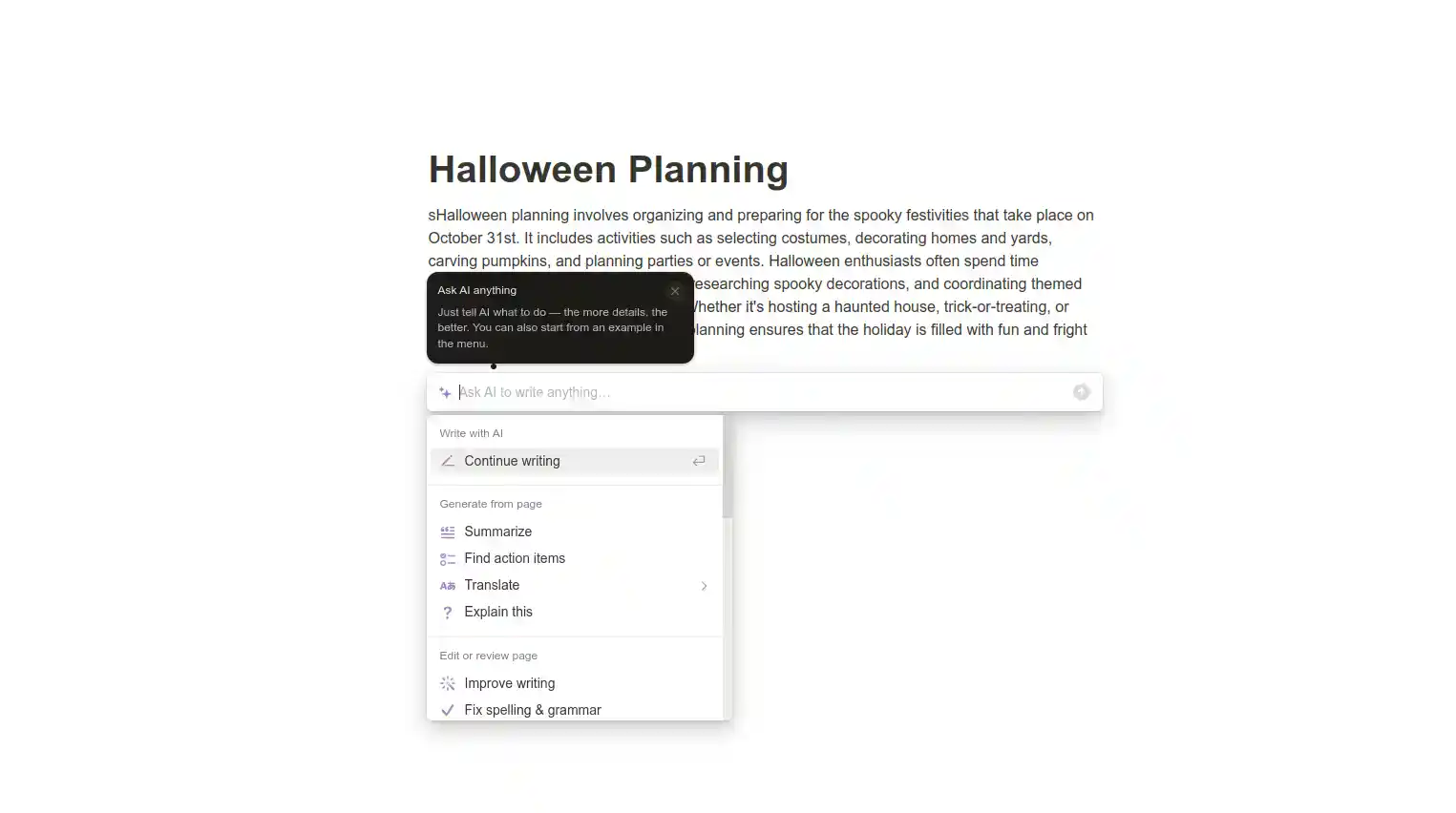
Zhao showed a demo to explain. He opened Notion’s Q&A pop-up and typed the question “Who’s on a PIP?” For obvious reasons, not everyone in the company should be able to see the list of everyone on a performance improvement plan, so this was a good test of the access system.
When Zhao logged in as himself, the question was answered; when he logged in with lower permissions, Q&A simply said it couldn’t find anything.
That demonstration went well, but Zhao claims there are numerous more complicated examples and ways this could go wrong. Part of what a tool like Q&A can do is retrieve information you didn’t even know existed and wouldn’t find on your own, which makes the boundaries even more important.
The Future of Notion Q&A
Notion’s existing AI tools, which are mostly used for generative writing and note-taking, have been well-received in the months since their release.
Zhao says Q&A is the start of solving the other (and maybe more important) half of the problem: helping people navigate the masses of stuff that come with modern life. It’s not the most flashy use of AI, certainly, to replace files and folders. But for a lot of people, it might be the most useful.