

Table of Contents
If you thought that generative AI was only good for creating fake text and images, think again. Video is the next frontier for AI, and a new startup called Haiper is ready to take on the challenge.
Haiper is a video AI that can create realistic and diverse videos from text prompts, images, or existing videos. It was founded by two former Google DeepMind researchers, Yishu Miao and Ziyu Wang, who have a passion for 3D reconstruction and video generation.
It is not the first video AI to emerge, but it is one of the few that you can try for yourself right now. Unlike OpenAI’s Sora, which is still in closed beta, it has a public demo that lets you generate short videos for free.
How Haiper works
It uses a deep neural network to learn from a large dataset of videos. It can then generate new videos that match the style, content, and motion of the input. For example, you can give Haiper a text prompt like “a cat playing with a ball” and it will create a two-second HD video of that scene.
Or you can give it a static image and it will animate it with realistic movement. You can also use it to “repaint” a video in a different style, such as turning a cartoon into a live-action scene.
It can also extend a video by adding more frames to it. This feature is still in development, but it could be useful for creating longer and smoother videos. For instance, you could use it to turn a short clip of a person dancing into a full-length music video.
How Haiper compares to Sora
Sora is another video AI that was recently announced by OpenAI, the famous research lab behind GPT-3 and DALL-E. Sora can generate high-quality videos from text prompts, such as “a robot doing a backflip”. Sora’s videos are impressive, but they are also very limited. Sora can only generate 15 seconds of video at a time, and it is not available to the public yet. Only a handful of selected developers have access to Sora’s API.
Haiper, on the other hand, is more accessible and versatile. It can generate videos from text, images, or videos, and it has a public demo that anyone can use. Haiper’s videos are not as high-quality as Sora’s, but they are still realistic and diverse. It can also generate longer videos at a lower resolution, up to 10 seconds at 480p.
How Haiper can benefit you
Haiper is not just a toy for generating fun videos. It is also a powerful tool for creating engaging and creative content. It can help you with:
- Entertainment: You can use it to create your mini-movies, animations, or music videos. You can also use it to remix or enhance existing videos with new styles or effects.
- Education: You can use it to create educational videos that illustrate concepts or phenomena. For example, you can use it to show how a volcano erupts, how a plant grows, or how a machine works.
- Marketing: You can use it to create eye-catching videos that showcase your products or services. For example, you can use it to show how your app works, how your clothing looks, or how your food tastes.
- Art: You can use it to express your artistic vision and create original videos that inspire and amaze you. You can also use it to collaborate with other artists and explore new possibilities.
How to get started with Haiper
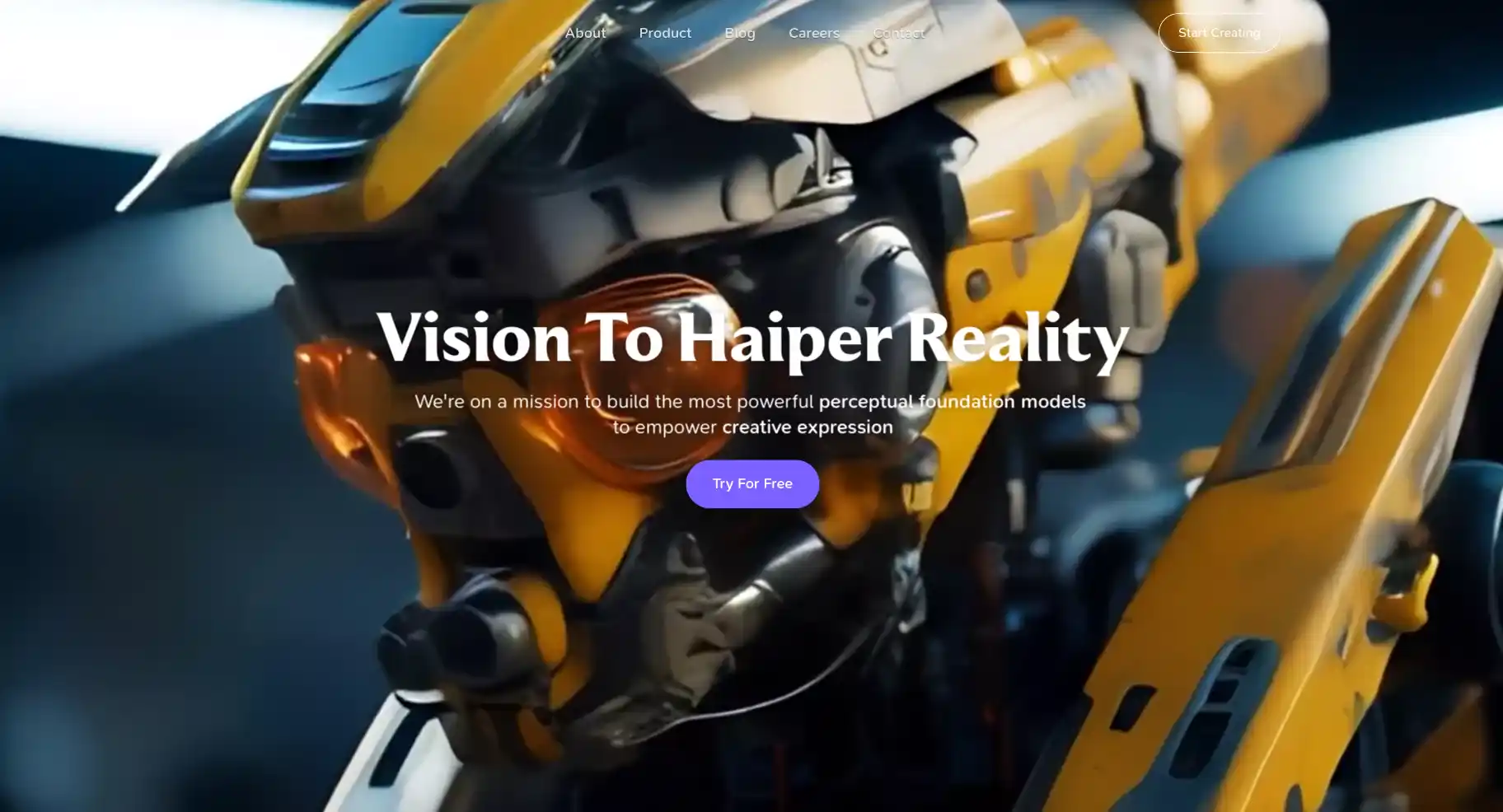
It is still in its early stages, but it is already showing great potential. If you want to try it for yourself, you can visit its website and use its demo. You can also sign up for its newsletter to get updates and news.
If you are a developer and want to integrate Haiper into your projects, you can apply for its closed API. Haiper is looking for feedback and suggestions to improve its model and features. It is also considering making its model open-source in the future so that more people can use and contribute to it.
Haiper is a new challenger for OpenAI’s Sora and a new opportunity for video creation. It is not just another video AI, but a video AI for everyone.