Table of Contents
The relationship between brands and search engines has changed. For B2B SaaS companies, the time of capturing clicks from blue links is finished. Now, the new measure of success is called Share of Model. It is happening in real-time, not far off in the future. Predictions show that traditional search engine use may decline by 25% by 2026.
“Organic and paid search are vital channels for tech marketers seeking to reach awareness and demand generation goals,” said Alan Antin, Vice President Analyst at Gartner. “Generative AI (GenAI) solutions are becoming substitute answer engines, replacing user queries that previously may have been executed in traditional search engines. This will force companies to rethink their marketing channels strategy as GenAI becomes more embedded across all aspects of the enterprise.”
As people increasingly rely on AI for quick answers, the old ways of search engine optimization no longer work.
This change has created a new field called Generative Engine Optimization (GEO). GEO focuses on optimizing content to be mentioned in AI-generated answers.
To track success, B2B SaaS leaders need to use a new key performance indicator: Share of Model (SOM). SOM measures how often a brand is mentioned in responses from AI models like ChatGPT or Google’s AI Overviews. It shows a brand’s influence in the AI’s understanding of a topic, not just on a search results page.
This document aims to provide a thorough analysis of the top GEO tools. This analysis will help marketing directors pick the right platform to improve Share of Model. We will start by discussing the key aspects of this new search landscape.
The New Search Paradigm
Understanding the shift from search engines to AI-driven models is crucial for success. In the old model, search engines gave users a list of links. The users then had to piece together the information. Now, with AI, the system provides a direct answer by synthesizing information first.
This change means that old performance measures, which focused on showing up in a list of links, no longer work. The traditional user journey is changing. For example, ranking first for a keyword matters less if AI gives a clear summary of a competitor’s answer.
Research shows this shift. A Pew Research Center study found that when an AI summary is available, users click on organic results only 8% of the time. This drop in clicks means brands must fight to be included in the AI’s answer.
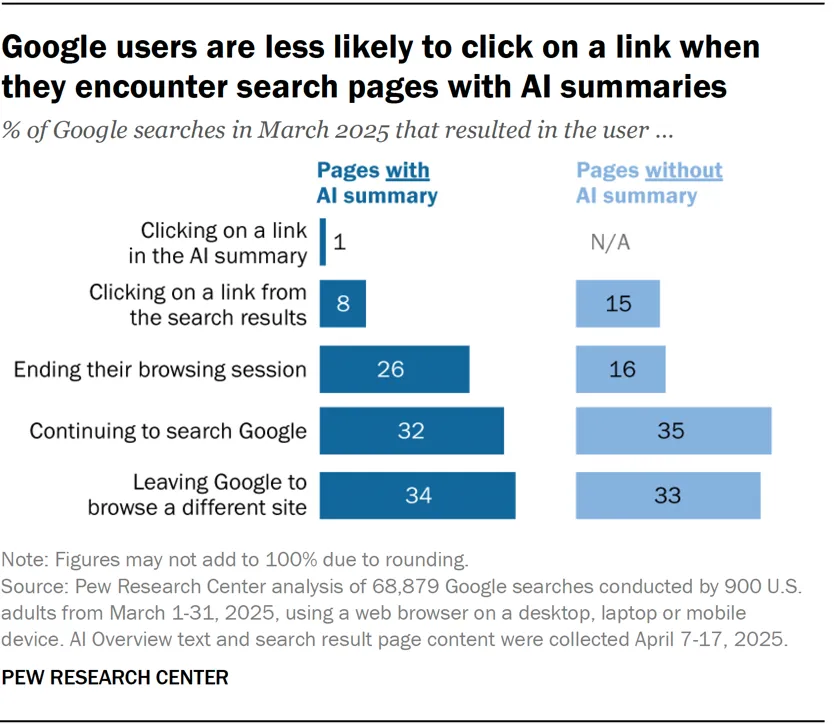
The new key measure for success is Share of Model. This is very different from the old Share of Voice.
| Criteria | Share of Voice (Traditional SEO) | Share of Model (GEO/AEO) |
| Primary Goal | Rank high to capture clicks to a website. | Be cited as the answer within the AI interface. |
| Measurement | Rankings, Impressions, Click-Through Rate (CTR). | Citation Frequency, Sentiment Analysis, Entity Association. |
| Content Strategy | Keyword density, backlink volume, and long-tail variations. | Information Gain, Entity Salience, Structured Data (JSON-LD). |
| Technical Focus | Core Web Vitals, Mobile Responsiveness, URL Structure. | Knowledge Graph alignment, Schema markup, Fact corroboration. |
| User Behavior | User browses multiple sites to find an answer. | User accepts the synthesized answer provided by the AI. |
The direct implication of this shift for B2B SaaS companies is the critical risk of becoming invisible in the new AI-driven discovery funnel.
A brand that fails to adapt will be excluded from the synthesized answers that are quickly becoming the primary source of information for its target audience.
To succeed, businesses must reorient their strategies around the core principles that drive visibility in generative engines.
The Pillars of a Successful GEO Strategy
Before evaluating any tool, it is essential to understand the fundamental principles that drive visibility in generative engines.
A successful GEO strategy is not about chasing algorithm updates but about building a durable foundation of authority, clarity, and credibility that AI models are trained to recognize and reward.
These pillars will serve as the evaluation criteria for the tools analyzed in the next section.
- Information Gain and Data Authority: Large Language Models (LLMs) are designed to reduce redundancy and reward content that provides net new knowledge or “Information Gain.” To be cited, your content must add unique value. This can be achieved through proprietary data from original studies, the introduction of unique frameworks, and the presentation of nuanced, contrarian perspectives. Content that includes verifiable evidence is particularly powerful; research shows that including citations, quotations from relevant sources, and statistics can significantly boost source visibility, with an increase of over 40% across various queries. AI-native formats are also becoming important for visibility. Many brands now create tutorials, explainers, and product walkthroughs using an AI video generator to provide unique multimedia content that AI systems can reference and summarize alongside written content.
- Structural and Semantic Optimization: For an AI to trust and cite your content, it must first be able to read and understand it unambiguously. This requires structuring content for machine readability. Key tactics include using clear definitions, implementing robust JSON-LD schema (e.g., Article, FAQPage) to explicitly define entities, and formatting headers as questions that directly mirror user queries. A page with a vague heading like “Features” is less effective than one with a header like “What features does my product include?” followed by a concise answer.
- Credibility and Trust Signals: Credibility and Trust Signals: AI models are trained to identify signals of Expertise, Experience, Authoritativeness, and Trustworthiness (E-E-A-T), principles that closely align with modern security frameworks such as zero trust network access. In the generative era, the influence of brand mentions from credible sources now significantly outweighs traditional backlinks. Data shows that brand web mentions have a 0.664 correlation with visibility in AI Overviews, while the correlation for backlinks lags at just 0.218. To build credibility, it is also crucial to cite external authorities within your own content, creating a “neighborhood of trust” that signals to the AI that your brand is a reliable participant in the expert conversation.
With these principles in mind, we can now turn our attention to the practical tools designed to execute a modern GEO strategy. Justin Morgan, aka the Dental Marketing Guy, suggests that the best SEO for dental practices combines local listings, review management, and content marketing
Competitive Analysis of Leading GEO Tools
This section provides a detailed, head-to-head analysis of the market’s leading Generative Engine Optimization platforms. Each tool is designed to address the challenges of the new AI-driven search landscape, but they differ in focus and ideal use cases. Each will be evaluated based on its primary focus, key features, and strategic value for a B2B SaaS company aiming to increase its Share of Model.
1. AthenaHQ
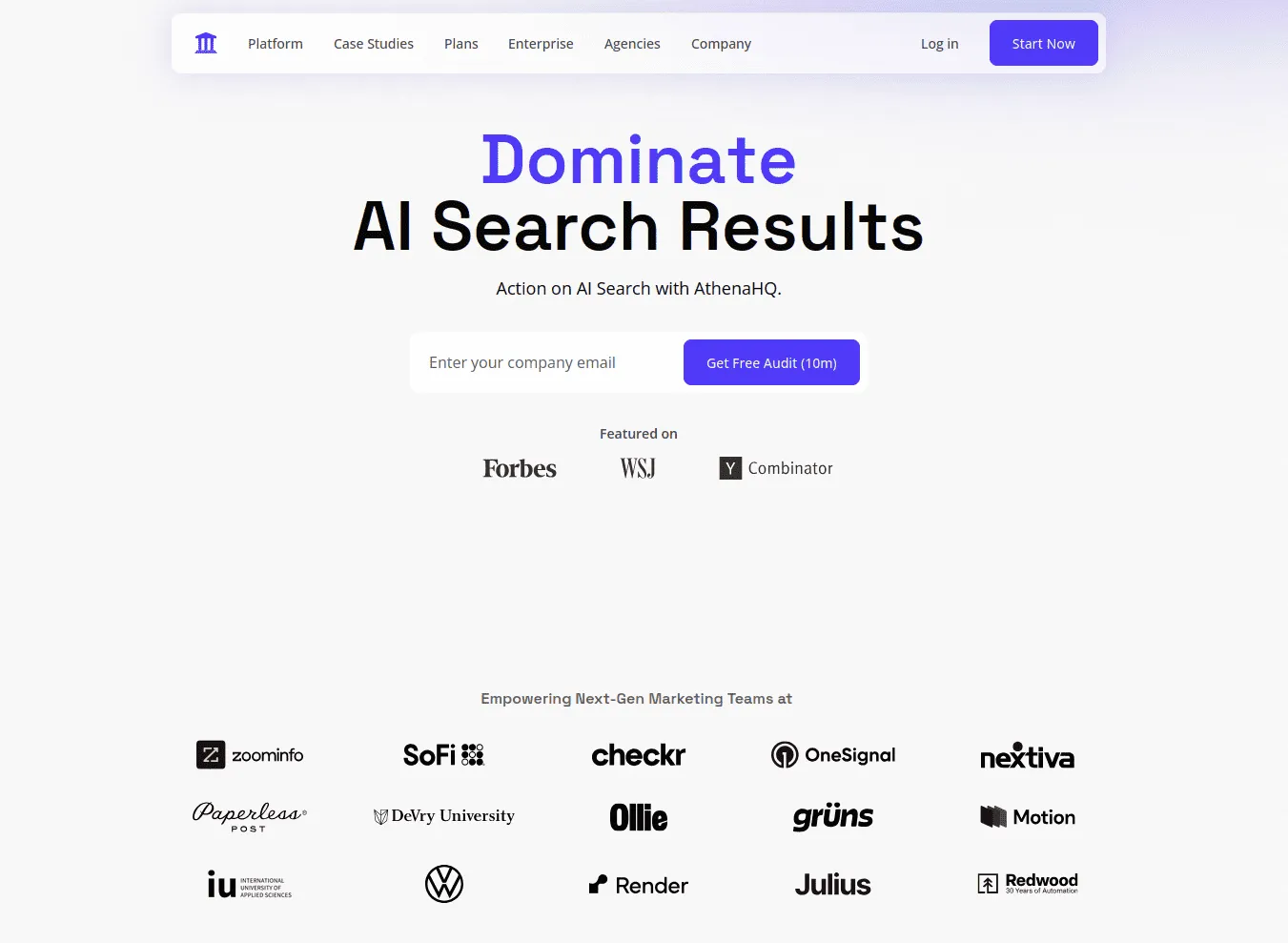
- Primary Focus: AthenaHQ is a comprehensive monitoring and action platform designed to provide a 360-degree view of brand presence across generative engines like ChatGPT, Perplexity, Claude, and Gemini.
- Key Features:
- Centralized action center with AI-generated recommendations.
- Comprehensive monitoring solution for brand mentions and representation.
- Tracking of queries where your brand performs well or needs improvement.
- Strategic Value for B2B SaaS: Founded by technical experts from Google Search and DeepMind, AthenaHQ offers deep, credible insights. Its combination of robust monitoring and actionable recommendations supports all three GEO pillars, making it ideal for enterprise-level B2B brands that are serious about protecting their brand presence as traditional search declines. This makes it the right choice for a VP of Marketing or CMO tasked with establishing a market-leading GEO program.
- Pricing: The Self-Serve plan is priced at $95/month.
2. Semrush
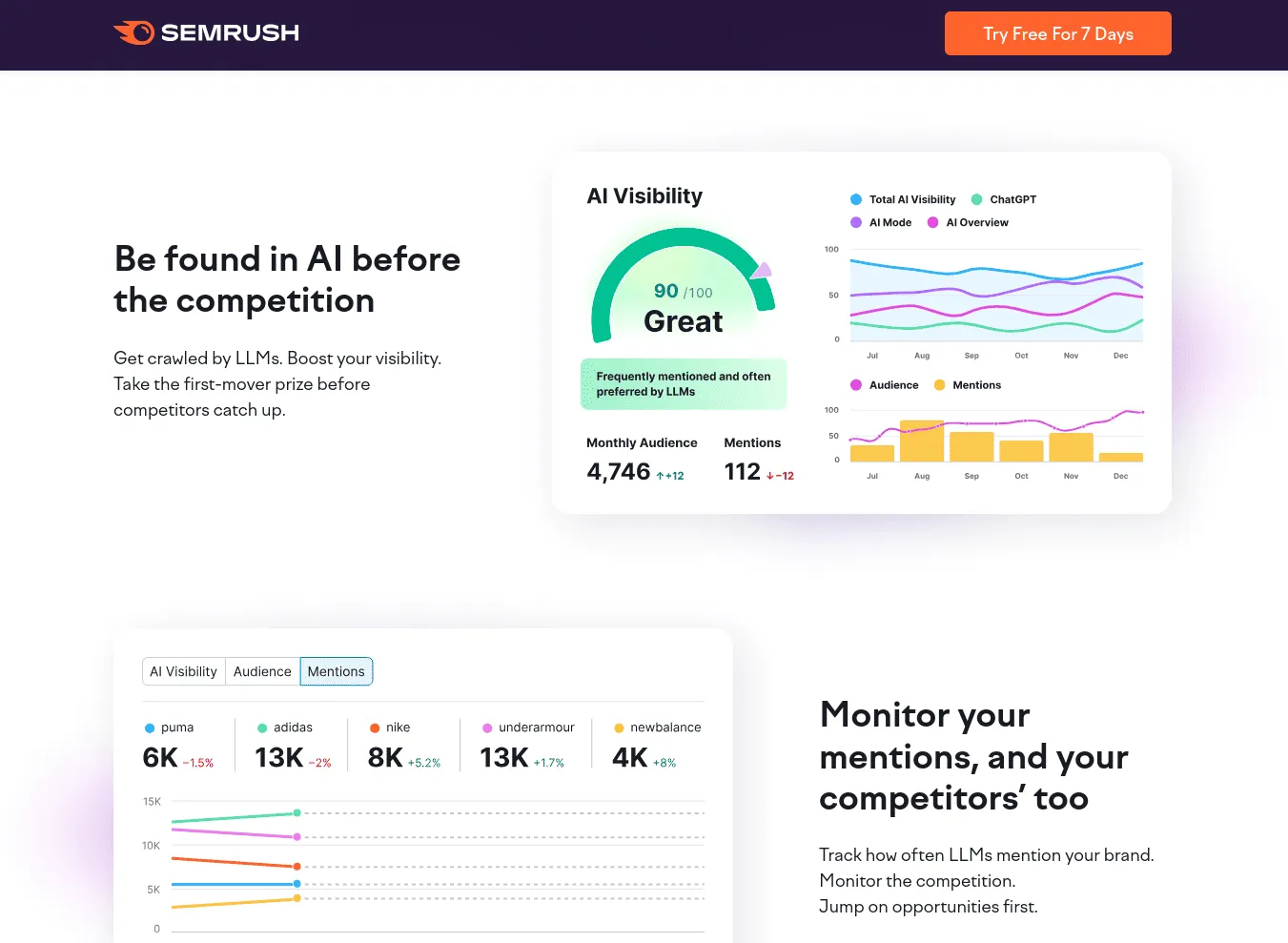
- Primary Focus: Semrush is an established, all-in-one SEO platform that has expanded its offerings to include GEO capabilities, positioning itself as a unified solution for modern search visibility.
- Key Features:
- Integration with existing SEO tools and workflows.
- AI search visibility monitoring.
- Competitive analysis for AI search performance.
- Strategic Value for B2B SaaS: Semrush’s primary value lies in its seamless integration, allowing teams to incorporate GEO monitoring without adopting a separate tool. It is particularly effective for executing on Pillar 2 (Structural Optimization) within established processes and monitoring signals for Pillar 3 (Credibility and Trust). This makes it the logical choice for a Director of SEO looking to expand their team’s remit into GEO without disrupting established workflows or reporting structures.
- Pricing: Pricing for its GEO-specific features is integrated into its broader subscription tiers. Contact Semrush for enterprise pricing.
3. Goodie AI
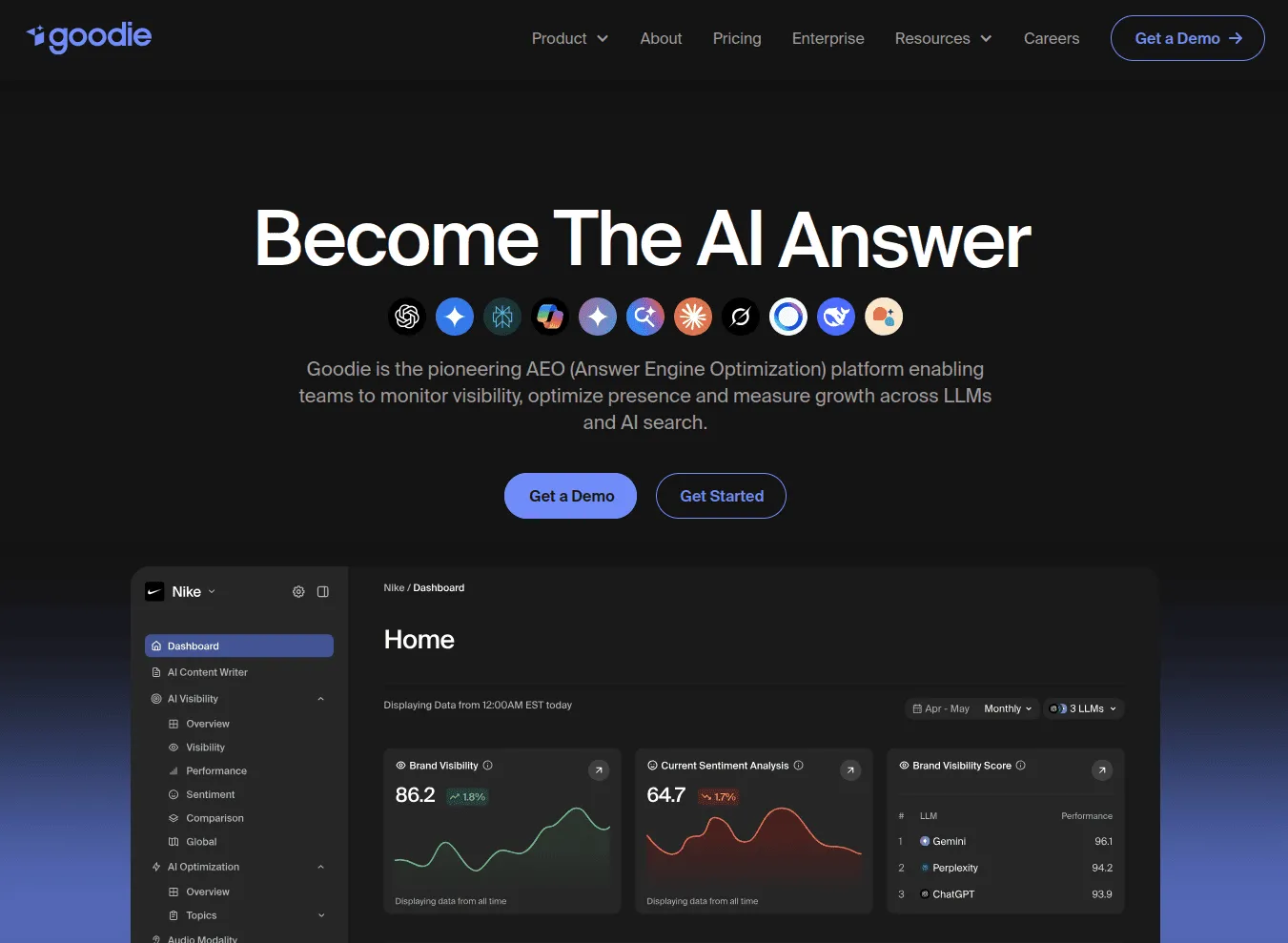
- Primary Focus: Goodie AI is a comprehensive generative search optimization platform designed to help brands establish and improve their presence in AI-generated results.
- Key Features:
- AI search visibility monitoring.
- Content optimization recommendations.
- Brand mention tracking across multiple AI platforms.
- Strategic Value for B2B SaaS: Goodie AI serves as a solid foundational tool for marketing teams looking to build a dedicated GEO practice. It provides the core monitoring and content insights needed to execute on Pillar 2 (Structural Optimization) and Pillar 3 (Trust Signals). This makes it a strong contender for a newly appointed Head of GEO or a marketing team creating a specialized function for AI search.
- Pricing: The Pro plan starts from $495/month billed annually.
4. Rankscale

- Primary Focus: Rankscale is a full-suite platform for tracking, analyzing, and optimizing brand visibility across major AI search engines, including Perplexity, ChatGPT, and AI Overviews.
- Key Features:
- Site audit for AI search performance.
- Content optimization for better AI search rankings.
- Citation and brand sentiment monitoring.
- Competitor analysis.
- Strategic Value for B2B SaaS: Rankscale is strategically suited for businesses ready to deeply integrate a comprehensive AI search strategy into their marketing operations. Its end-to-end capabilities offer a holistic solution for executing on all three strategic pillars, from auditing for Pillar 2 (Structural Optimization) to monitoring brand sentiment for Pillar 3. It is designed for businesses making a significant, long-term investment in GEO as a core growth driver.
- Pricing: Starts from a $20/month.
5. Otterly
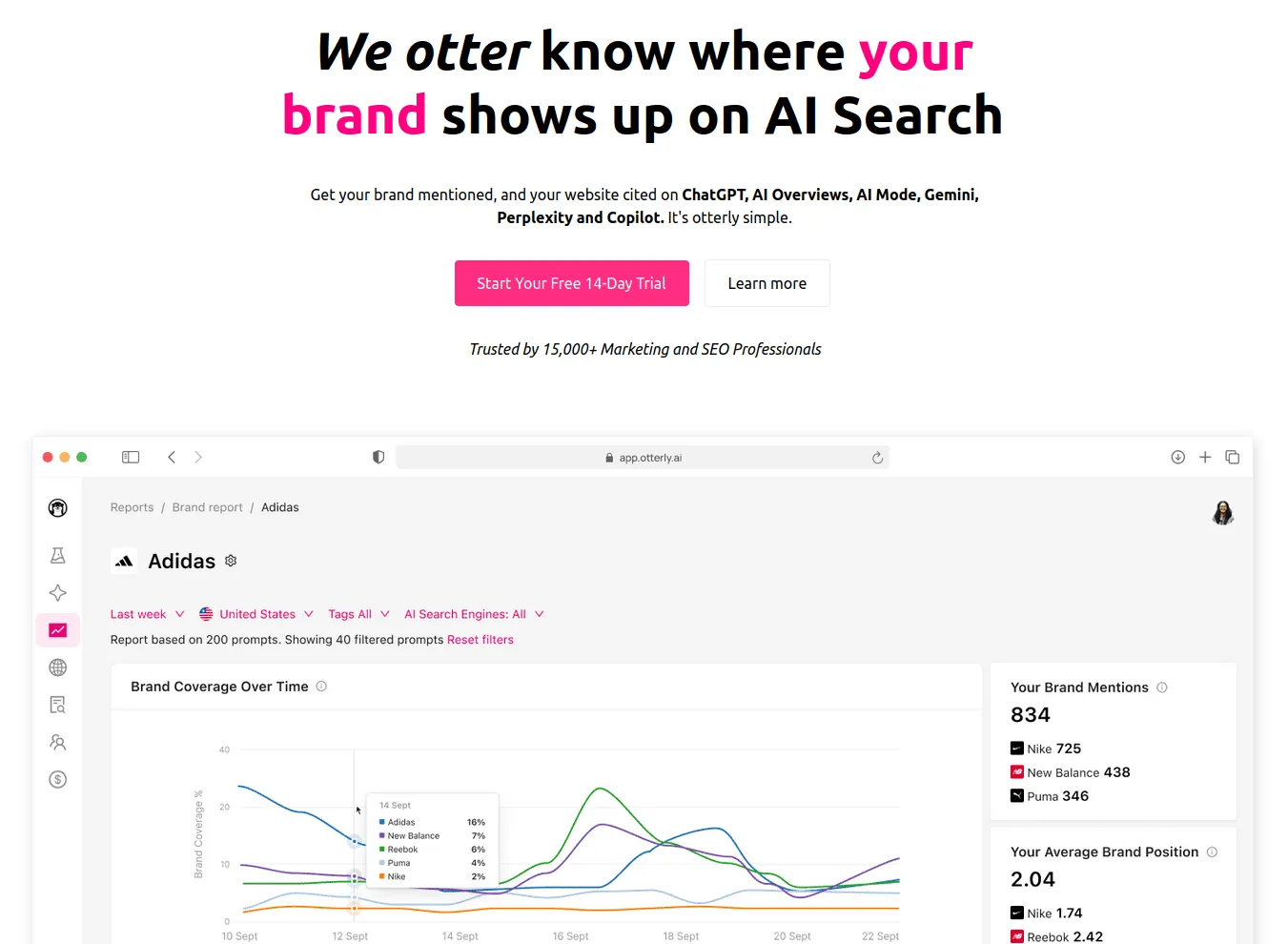
- Primary Focus: Otterly is a specialized tool for the automated tracking of links and brand mentions across key AI search platforms, including ChatGPT and Google AI Overviews.
- Key Features:
- Automatic tracking of brand mentions and links.
- Link citation, brand position, and sentiment tracking.
- Automated weekly reports.
- Strategic Value for B2B SaaS: Otterly’s value is its efficiency and accessibility. Its core value is in providing an efficient, automated solution for monitoring Pillar 3 (Credibility and Trust Signals) by tracking the high-correlation metric of brand mentions. With both free and affordable paid options, it is the ideal entry point for a Content Marketing Manager tasked with establishing an initial baseline for brand mentions before committing to a larger platform.
- Pricing: Offers free and paid options, with paid plans starting at $29/month.
6. Brand Radar
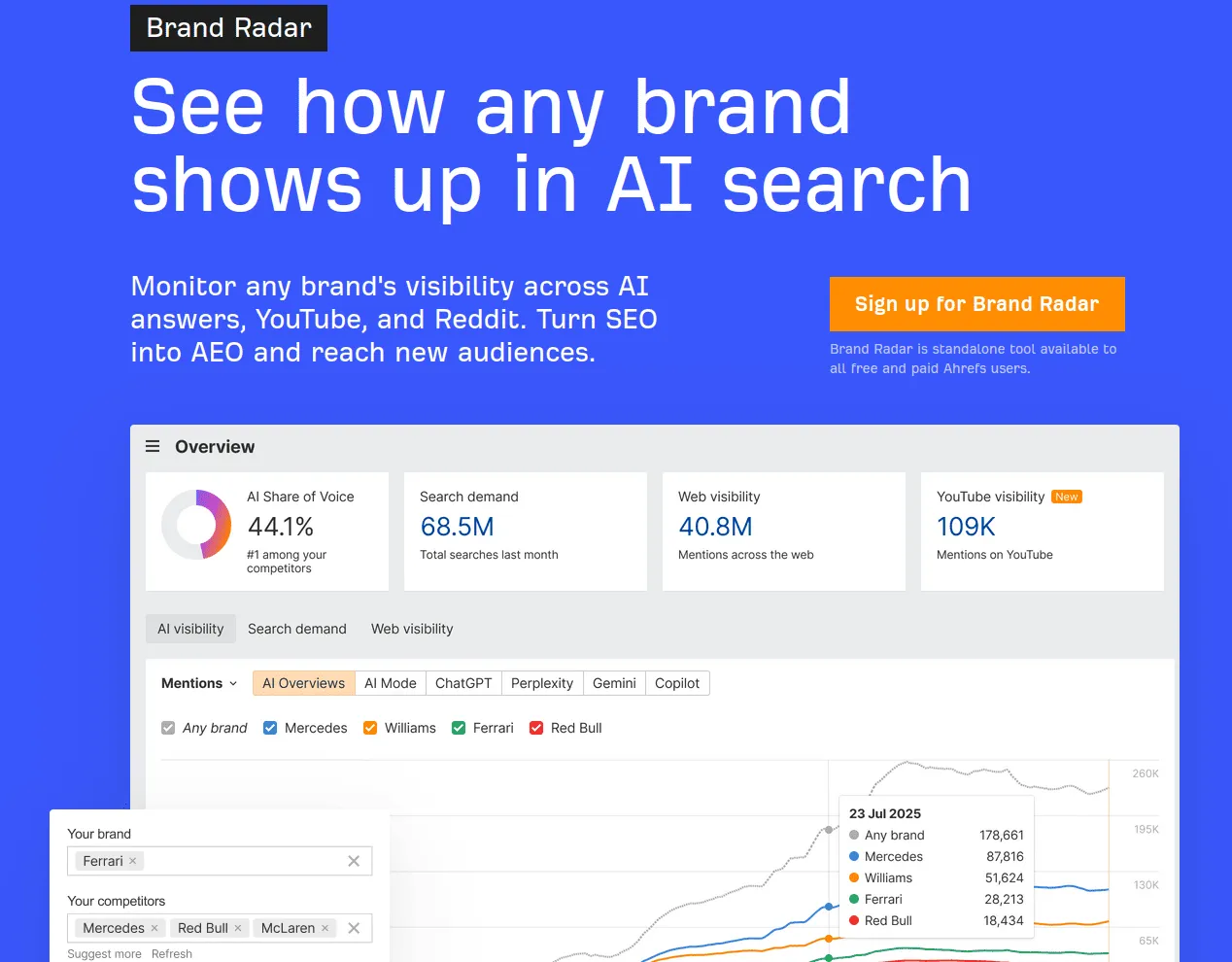
- Primary Focus: Ahrefs Brand Radar is a must-have if you’re tired of being invisible in AI results. It scans 150 million real prompts to see exactly where AI actually mentions your brand across platforms like ChatGPT and Perplexity.
- Key Features:
- Its Web Explorer scans billions of pages to find unlinked brand mentions, which is vital since AI systems prioritize plain text over traditional backlinks.
- You can monitor your Share of Voice across platforms like ChatGPT, Gemini, and Google AI Overviews using a visibility index built on 150 million real prompts.
- The Content Gap tool reveals exactly which topics your rivals cover that you’re missing, helping you reclaim those stolen AI citations.
- Strategic Value for B2B SaaS: Its “Web Explorer” feature offers massive value for B2B SaaS. It tracks unlinked mentions across billions of pages, which is vital because AI models build authority from plain text even without a backlink. Also, you can benchmark your “Share of Voice” against rivals to see who the AI favors in your niche.
- Pricing: It starts at $129/month for a Lite plan.
This individual analysis provides a clear picture of each tool’s strengths; we will now synthesize this information into a comparative framework to guide selection.
Comparing Generative Engine Optimization Tools
Choosing the right GEO platform requires aligning a tool’s capabilities with your organization’s specific needs, budget, and strategic maturity. This section synthesizes the individual analyses into a clear, comparative framework to simplify the decision-making process for a B2B SaaS marketing director.
| Tool | Primary Focus | Ideal for… |
| AthenaHQ | Monitoring & Actionable Insights | Enterprise teams need expert-led, comprehensive brand management in AI search. |
| Semrush | Integrated SEO & GEO Suite | Marketing teams want to add GEO capabilities to existing, mature SEO workflows. |
| Goodie AI | Comprehensive GEO | Teams need a dedicated, all-around platform for GEO monitoring and content optimization. |
| Rankscale | End-to-End GEO Optimization | Businesses are making a significant investment in a full suite of AI search tools. |
| Otterly | Brand Mention & Link Tracking | Teams of any size need an affordable, automated way to monitor a key GEO metric. |
| Brand Radar | Brand Mentions & Content Gaps | It’s ideal for teams already locked into the Ahrefs ecosystem. |
Your primary strategic imperative should dictate your choice of tool category. If the imperative is to establish a baseline for visibility and brand mentions, begin with a Specialized Monitoring Tool. If the imperative is to integrate GEO into existing SEO operations, an Integrated Suite is the logical choice. If the imperative is to build a dedicated, market-leading GEO practice, invest in a Comprehensive Platform.
This framework provides a clear path from strategic need to tool selection, setting the stage for actionable next steps.
Conclusion
The evidence is undeniable: the shift to AI-driven search is irreversible, fundamentally altering how brands are discovered. For B2B SaaS leaders, this new landscape demands a strategic pivot from chasing rankings to earning citations. The emergence of Share of Model as the definitive KPI and the availability of a new class of GEO tools provide a clear path forward. To navigate this transition, a proactive and measured approach is essential.
Here are the final, actionable recommendations for a B2B SaaS marketing director:
- Benchmark Your Position: Before making any significant investment, establish a baseline. Use a tool with a free trial or an affordable entry-level plan, such as Otterly, to measure your current Share of Model and track how frequently your brand is mentioned in response to key industry queries. This initial data will provide the business case for further action.
- Audit Against the Pillars: Conduct an internal content audit, evaluating your existing assets against the three pillars of a successful GEO strategy: Data Authority, Structural Optimization, and Trust Signals. This process will reveal immediate, low-cost opportunities for improvement, such as optimizing page headers, adding schema markup, and ensuring author credentials are clear.
- Select a Pilot Tool: Based on your initial benchmark data, internal audit findings, and budget, select a single GEO tool for a pilot program. Choose the platform that addresses your most urgent strategic need, whether it is comprehensive monitoring (AthenaHQ), integration with existing SEO workflows (Semrush), or affordable mention tracking (Otterly). A focused pilot will demonstrate ROI and inform a long-term strategy. Combining these insights with strong data science practices in your evaluation will help ensure that a focused pilot clearly demonstrates ROI and informs a long-term strategy.
The market will not wait for you to perfect your GEO strategy. The critical question you must answer this quarter is: Which of these pillars represents the greatest immediate risk to your brand’s visibility, and how will you leverage one of these specialized tools to mitigate it?
FAQs
Q1. Why is GEO optimization important?
Reports indicate that traditional search volume is expected to decline by 25% by 2026. By 2028, 75% of Google searches are expected to include AI-generated summaries. If AI models ignore your brand, you will be invisible to millions.
However, AI traffic from platforms like ChatGPT converts 2.08 times better than standard Google clicks. In this new era, you must become the “answer,” or you will not exist.
Q2. How do I improve my GEO Score?
To boost your GEO score, you must move beyond simple keywords. Here’s the thing: focus on “Information Gain” by providing unique data. Since 88.1% of AI Overview queries are informational, original stats make your content citable.
On the flip side, technicals are non-negotiable. Use schema markup, it acts like a nametag for AI engines. This is vital since 75% of searches will likely feature AI summaries by 2028. Tools like Writesonic help you close citation gaps in as little as two weeks.
Q3. How is GEO different from SEO?
SEO targets blue links, but GEO aims to be the “answer” inside ChatGPT.
It’s a massive shift because 60% of AI searches now end without a single click. On the flip side, traditional search volume will likely tank 25% by 2026. You aren’t just ranking for keywords anymore; you’re teaching AI models to cite you as the expert.
Q4. Can I check competitors’ GEO?
You absolutely can spy on the competition. Here’s the thing: top-tier tools like Profound and AthenaHQ track “Share of Voice,” showing exactly how often AI mentions rivals compared to you.
Goodie AI even features “Visibility Gap Analysis” to pinpoint queries where competitors win citations while you stay invisible. On the flip side, Writesonic uses leaderboards to benchmark your brand across 10+ major engines. It’s essentially an x-ray for the AI search market, you see exactly what’s working for them and where you can strike.